


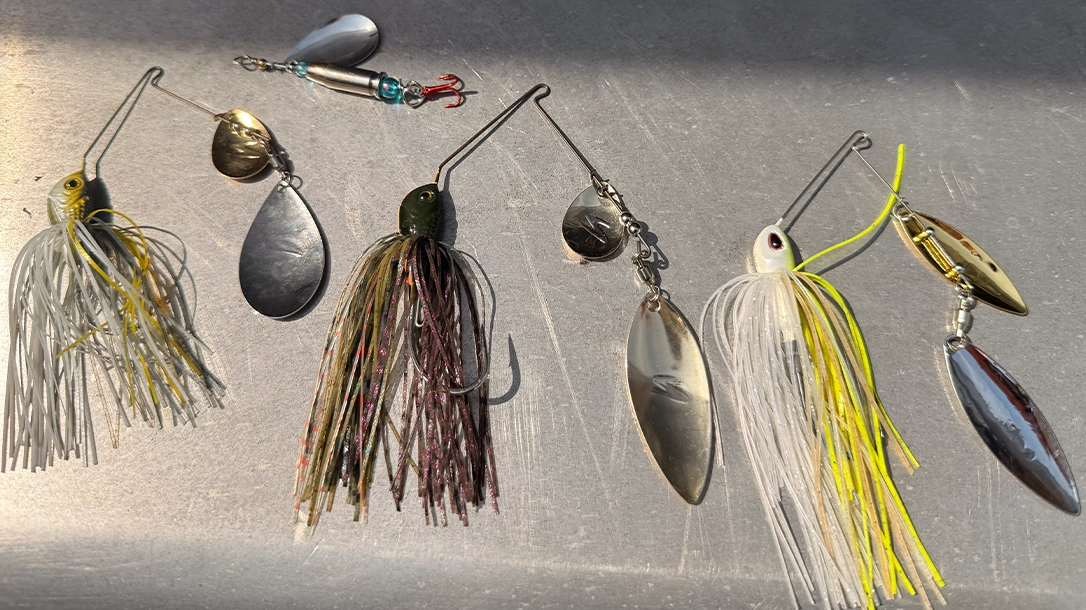
A spinnerbait is defined by its spinning blade, which imitates the flash and movement of a baitfish swimming through the water. The two most common blade styles are willow leaf style and Colorado style, and each excels under different conditions.
Willow Leaf Blades
The willow leaf blade is long and narrow. It creates maximum flash with minimal vibration, making it ideal for faster retrieves and fishing through weed lines.
When I’m trying to imitate a school of baitfish in moving water, I prefer a double willow blade spinnerbait. The two blades create even more flash while giving the appearance of multiple baitfish swimming together, making the lure especially attractive to predator fish.
Advertisement — Continue Reading Below
Colorado Blades
Colorado blades are shorter, wider, and more deeply cupped. That cupped shape creates more resistance in the water, allowing you to retrieve the bait more slowly.
The slower retrieve and increased vibration make Colorado blades an excellent choice in deeper water or low-visibility conditions. When fish can’t easily see the lure, they can still detect the strong vibration from a greater distance.
Combination Blades
To make things even more versatile, many spinnerbaits feature one willow blade and one Colorado blade. This combination gives you the flash of a willow blade along with the vibration of a Colorado blade, making it effective in a wide range of conditions.
Advertisement — Continue Reading Below
All of these blade combinations are commonly found on traditional wire-frame, or “safety pin,” spinnerbaits.
Safety Pin Spinner vs. Inline Spinner
For many anglers, the first spinning lure they ever use is an inline spinner. As the name suggests, everything on the lure is arranged in a straight line. The eyelet, spinning blade, and hook all sit on the same shaft, unlike the triangular wire frame of a safety-pin spinnerbait. Most inline spinners feature a Colorado-style blade and a skirt or dressing behind the hook to imitate the colors of a baitfish.
Advertisement — Continue Reading Below
The biggest difference between the two styles comes down to where they’re used. Safety-pin spinnerbaits excel around weeds, brush, and other cover because they’re relatively weedless. Inline spinners perform best in open water and rivers, where they can trigger quick reaction strikes from aggressive fish.
Matching the Lure to the Conditions
Before tying on any spinner bait, think about the type of water you’re fishing.

Advertisement — Continue Reading Below
In dark, stained, or muddy water, a spinnerbait with dual Colorado blades is often the better choice. The extra vibration helps fish locate the lure when visibility is poor.
In clear water, I usually switch to willow blades or an inline spinner. A faster retrieve and increased flash often trigger aggressive reaction bites from fish that can clearly see the lure.
Dialing in the Right Retrieve
Retrieve speed is just as important as lure selection. My general rule is to retrieve the bait only fast enough to keep the blades spinning and vibrating. This allows the lure to sink slowly as it moves through the water, helping you cover multiple depths during a single retrieve.
Advertisement — Continue Reading Below
Pay close attention to where fish strike the bait. Once you identify the productive depth, you can fine-tune your retrieve. Speed up to keep the lure higher in the water column or slow down to let it run deeper. This simple adjustment allows you to cover a variety of conditions without ever changing lures.
Build Confidence with Spinner Baits
Spinner baits have remained popular for over a century because they consistently catch fish. By experimenting with blade styles, retrieve speeds, and water conditions, you can develop a deeper understanding of how and when to use them.
With practice, spinner baits will become one of the most reliable and versatile tools in your fishing arsenal.
Advertisement — Continue Reading Below
WHY OUR ARTICLES/REVIEWS DO NOT HAVE AFFILIATE LINKS
Affiliate links create a financial incentive for writers to promote certain products, which can lead to biased recommendations. This blurs the line between genuine advice and marketing, reducing trust in the content.