


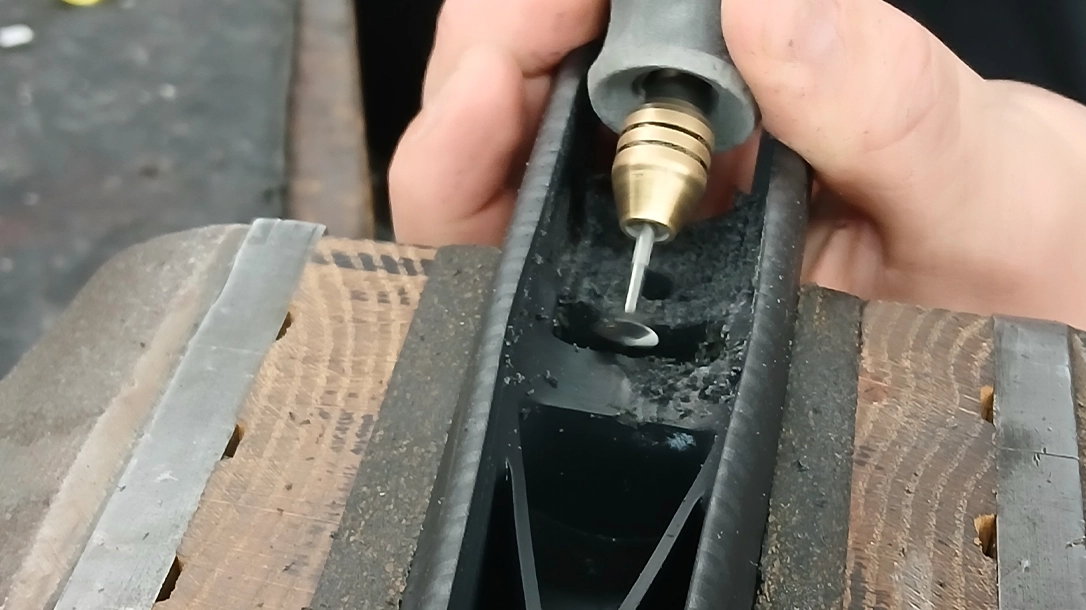
Glass bedding is the process of applying a specialized epoxy compound between a rifle’s action and stock to create a precise, stable fit. The bedding compound fills small gaps and imperfections, ensuring the action sits consistently in the stock every time the rifle is assembled. This helps improve accuracy, strengthens critical areas around the recoil lug, and prevents movement that can negatively affect a rifle’s performance. While commonly used on wood and fiberglass stocks, glass bedding can benefit nearly any rifle where consistency and precision are priorities.
Why Glass Bedding Still Matters
Before chassis guns were a thing, rifle stocks ruled the gun world. These stocks were made of wood or fiberglass. Production rifle stocks are made to fit the masses and a wide variety of actions and barrel contours and while they can be bolted directly without bedding, accuracy will be vastly improved by bedding the barreled action into the stock.
The purpose of bedding a rifle stock is to provide a stable footing for the receiver to aid in accuracy, to strengthen the recoil lug areas and to maintain enough clearance between the stock and the barrel. Contact between the barrel and the stock can rob accuracy. Many gunsmiths will argue what this proper clearance should be. Many shooters want the thickness of a dollar bill for sporting rifles whereas target shooters believe the gap should be the thickness of a newsstand magazine. No matter which school of thought you are in, the process is the same.
For the most part, the bedding from the factory is the right combination and a rifle enthusiast interested in glass bedding would be well advised to follow the factory’s choice by applying bedding where they apply it.
Glass bedding is not an excuse for sloppy inletting as some of the finest craftsman building high end wood stocked rifles will use glass bedding to seal the inletting and to keep the wood fibers from compressing over time. It is used only to enhance and protect the inletting, not create a fiberglass stock within a wood shell.
Advertisement — Continue Reading Below
A Dry Run
Fit your barreled action into the stock to see how it fits. Most modern stocks produced today fit the barreled action without much fuss. In some cases, a bit of fitting is needed. If this is the case, proceed carefully. It is easier to remove material than it is to replace it.
The height of the receiver and the barrel clearance are the two main concerns. The loading port should be level with the ejection port cut out and the barrel should not be touching the stock. If it is touching, a dowel rod wrapped with sandpaper will move small amounts of material quickly. To maintain the proper height, a set of shims should be used to keep the barreled action at the correct height. Once this height has been established, try feeding some rounds through the magazine. If the rifle doesn’t feed without bedding, the addition of glass will not help the situation.
A wrap of tape around the trigger housing ensures no bedding compound will seep into crevices around the trigger housing and the trigger itself.
Release Agents
Once you have given it a dry run, remove the barreled action and apply release agent. There are many types of release agents for use in gunsmithing, most mold releases will work. I’ve used Trewax Paste Wax for nearly 40 years and have never had a barreled action stick. I have no reason to use anything else.
Advertisement — Continue Reading Below
Apply liberal amounts of release agent on stock screws and on the bottom metal. If there are recesses the glass can get into, I will fill in the cavity with clay and apply release agent over the clay.
Mixing The Compound
Once everything meets my approval, I mix up the compound. Bedding compound is usually a two-part epoxy with a binder. The epoxy itself is often hard and brittle and can crack and fall out. The binder gives rigidity and strength to the bedding compound.
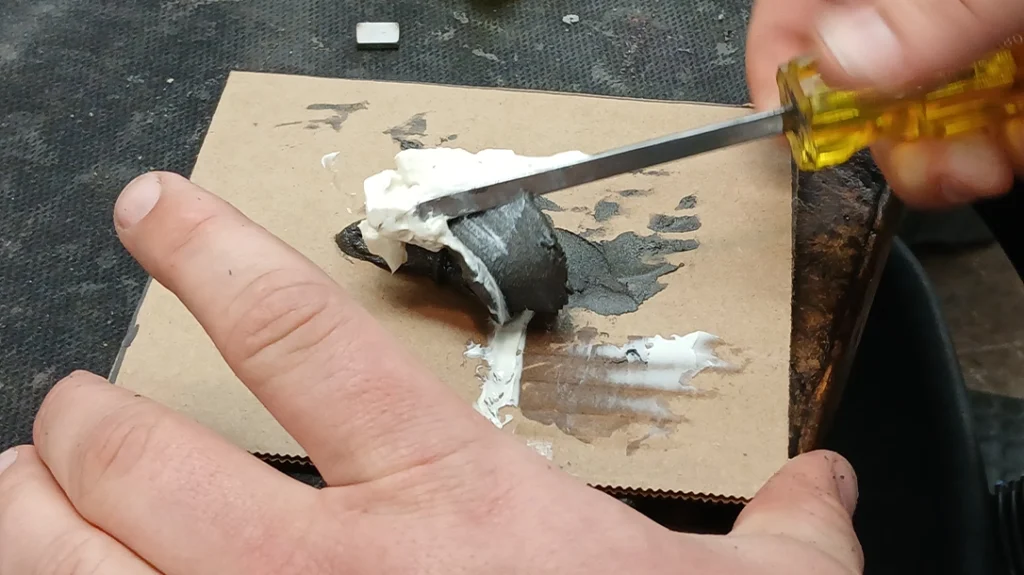
I have used Brownell’s Acraglas, both the liquid and the gel, Marine-tex and Devcon. They all work equally well.
Most rifle stocks from firms like Boyd’s Hardwood Stocks or McMillan are machined out enough to accept a small amount of bedding compound in the action area.
Advertisement — Continue Reading Below
Once you begin mixing the bedding compound, ensure you follow the directions. I have seen bedding compound not set up properly because it was not properly mixed.
Apply the compound to the action area. Use a bit more than you think you may need. The excess will ooze out when you tighten the action screws.
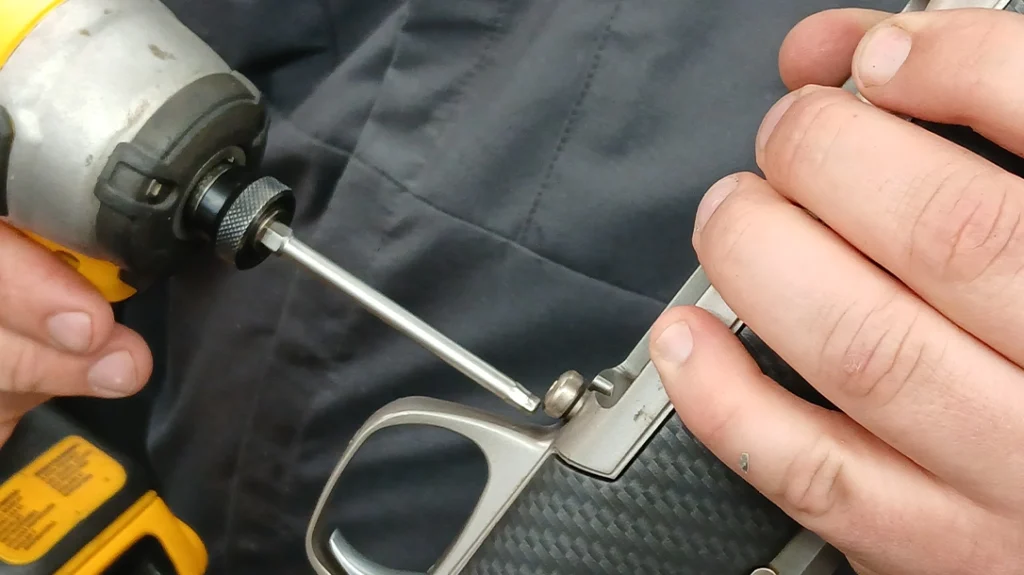
Clean-up of the squeeze out is important, and it is easier to clean up now rather than when it is set up.
The polymer Tupperware stocks are often difficult to glass bed as nothing likes to stick to it. To combat this, I rough up the stock where I am bedding. This serves as a mechanical lock, keeping the bedding in place.
Advertisement — Continue Reading Below
Breaking It Free
I let the compound set up overnight then comes the moment of truth; removing the barrel action from the stock.
A sharp rap with a wood hammer on top of the receiver will usually break the action from its stronghold. If more persuasion is needed, I will hold the stock and bump the barrel against a wood table padded with a piece of carpeting. Do not overdo this step as depending on the type of barreled action you could destroy your perfect bedding job.
The excess bedding should be removed once the barreled action is removed.
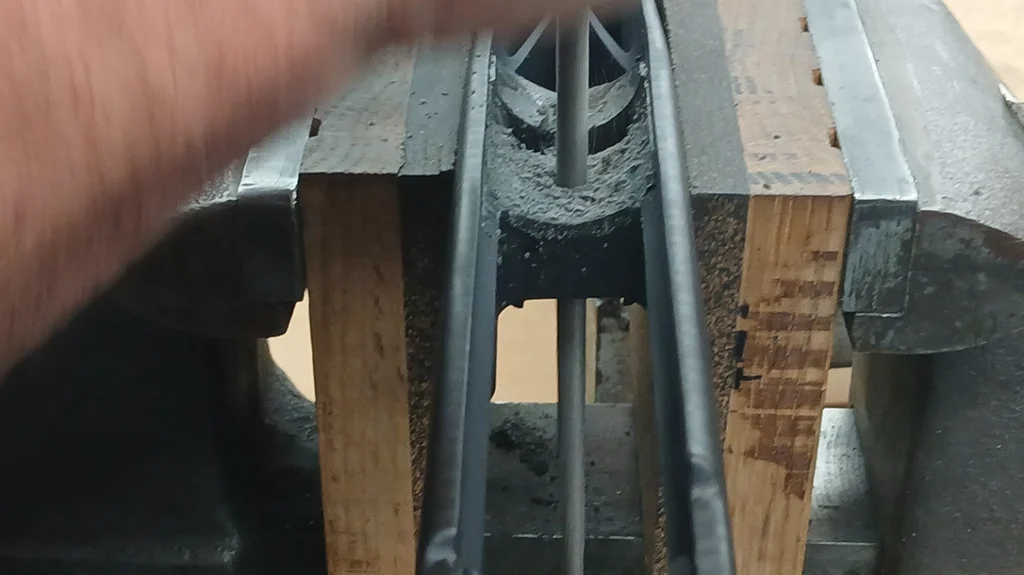
A small file will remove unwanted bedding compound. I use a chainsaw file to relieve the stock screw holes to ensure they do not make contact with the stock or the action screws.
Advertisement — Continue Reading Below
As you remove the barreled action you will notice the fresh glass bedding will be a mirror image of your receiver. It is now time to put it all together and take your rifle to the range and test your bedding job.
WHY OUR ARTICLES/REVIEWS DO NOT HAVE AFFILIATE LINKS
Affiliate links create a financial incentive for writers to promote certain products, which can lead to biased recommendations. This blurs the line between genuine advice and marketing, reducing trust in the content.