


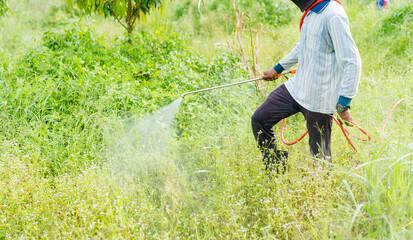
This article was originally published by Willow Tohi at Natural News.
-
- The EPA faces an emergency petition to require cancer warnings on pesticide labels after a Supreme Court ruling limited lawsuits from cancer sufferers.
-
- The EPA has approved over 200 active pesticide ingredients it links to cancer but has placed cancer warnings on only 1.4% of “likely” carcinogen products.
-
- A California federal judge recently ruled the EPA does not have to force disclosure of toxic “inert” pesticide ingredients, shielding health risks from the public.
-
- Environmental groups argue the EPA has “consistently failed” to warn consumers about known cancer risks for more than 50 years.
-
- Pesticide products with “likely” carcinogens like mancozeb, diuron and chlorothalonil only carry cancer warnings in California, not nationwide.
The Center for Biological Diversity filed an emergency petition July 8, 2026, urging the U.S. Environmental Protection Agency to require cancer warnings on all pesticide labels for ingredients the agency itself has linked to the disease. The petition follows a Supreme Court ruling that limited Americans’ ability to sue pesticide companies for harms such as cancer. Environmental groups say the EPA has failed for decades to disclose known risks, leaving consumers and farmworkers unaware that products sold at major retailers contain carcinogens at levels thousands of times above the agency’s own safety threshold.
A history of silence
The EPA has approved more than 200 active pesticide ingredients it classifies as “likely” or “possible” human carcinogens since 1985. Yet the agency has placed cancer warnings on only 69 of 4,919 labels — 1.4% — for products containing a “likely” carcinogen, and on 242 of 22,147 labels for “possible” carcinogens. Nathan Donley, environmental health science director at the Center for Biological Diversity, argued that for its entire existence, the EPA has “utterly failed at the job of protecting Americans from dangerous pesticides.” The petition asks for a “chronic hazard warning” on the front of all products deemed probable, likely or possible causes of human cancer.
The data behind the risk
A separate analysis by the Center for Food Safety found the EPA has allowed pesticides on the market with cancer risks as high as one in every 100 people exposed — far exceeding the agency’s own benchmark of one in 1 million. For the pesticide thiophanate-methyl, the EPA predicts drinking water contamination can cause cancer in up to four in 10,000 people. Residential and occupational uses of other registered products can cause cancer in as many as seven in 1,000 people, a 7,000-fold increase above the EPA’s threshold. The analysis covered 570 unique pesticide chemicals analyzed since 1985, finding that more than a third — 200 ingredients — are “likely” or “possible” carcinogens.
The limitations of current warnings
Most cancer warnings on pesticides come from California’s Proposition 65, which requires labeling for chemicals linked to cancer, birth defects or reproductive harm. That means products containing mancozeb, diuron and chlorothalonil — three EPA-designated “likely” carcinogens widely used on vegetable, fruit and grain crops — carry warnings only in California. The Center for Biological Diversity analysis also found inconsistent enforcement: some products with triphenyltin hydroxide include cancer warnings, while other products with the same active ingredient and approved for the same uses do not.
The larger picture of hidden harm
The push for cancer warnings comes amid a broader battle over transparency. A California federal judge recently ruled that the EPA does not have to force pesticide manufacturers to reveal “inert” ingredients, even if those solvents and fillers pose significant health and environmental risks. Environmental groups, including the Center for Environmental Health and Physicians for Social Responsibility, have sued the EPA over that policy, arguing consumers cannot make informed choices without full ingredient disclosure. Meanwhile, agricultural fertilizers and veterinary drugs continue to contribute to water pollution through chemical reactions that create toxic by-products.
The cost of inaction
The emergency petition underscores a fundamental failure: the EPA has linked hundreds of pesticide ingredients to cancer but has taken minimal action to inform the public. With the Supreme Court now limiting legal recourse for those harmed, warnings on labels remain one of the few protections available. The Center for Biological Diversity and the Center for Food Safety are pressing the EPA to exercise its authority before more Americans are exposed to known carcinogens without warning. The agency has yet to respond to the July 8 petition.
Sources for this article include:
ChildrensHealthDefense.org
BiologicalDiversity.org
CenterforFoodSafety.org