


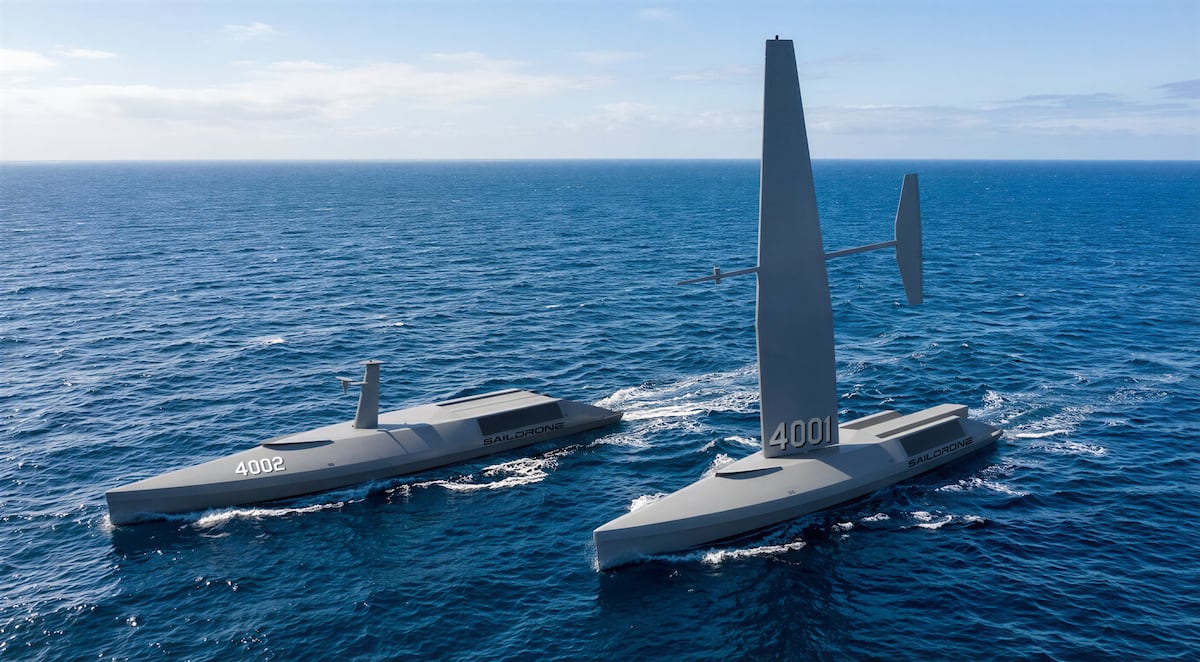
The U.S. Coast Guard will deploy autonomous wind- and solar-powered surface vessels across the Great Lakes this year from May through October to expand maritime surveillance and data collection, according to a release.
The uncrewed vessels, built by Saildrone, are being deployed as part of a contract with the Coast Guard aimed at improving maritime domain awareness in a region that spans over 90,000 square miles of water and connects to international shipping routes.
Saildrone designs and operates long-endurance unmanned surface vehicles that use wind propulsion and solar energy to sail for months at a time while collecting real-time data.
Each drone is furnished with radar and optical sensors, along with collision-avoidance technology. The USVs use a hybrid-electric propulsion system as their primary power source, with wind propulsion provided by the Saildrone Wing and solar energy that powers batteries.
The systems are also monitored by human operators, who can intervene in situations if needed.
Saildrone’s USVs are designed to support missions ranging from detecting illegal activity and gathering environmental data to preparing for emergency response and protecting maritime borders.
The deployment reflects a broader Coast Guard effort to integrate autonomous systems into maritime domain awareness.
The service’s Robotics and Autonomous Systems Program Executive Office effort is a relatively new acquisition initiative, as of summer 2025, created to accelerate the fielding of unmanned and autonomous capabilities across the service.
The RAS PEO is meant to shift robotics and autonomous systems from one-off demonstrations into everyday use across all Coast Guard missions. The Great Lakes Saildrone deployment reflects that shift in practice, pairing commercially developed USVs with Coast Guard mission requirements.
According to the Coast Guard’s Unmanned Systems Strategic Plan, autonomous systems are intended to supplement, not replace, crewed vessels.
“UxS cannot perform missions alone,” the plan states, “but they can help preserve our personnel readiness until exactly the moment when a Coast Guardsman is needed.”