


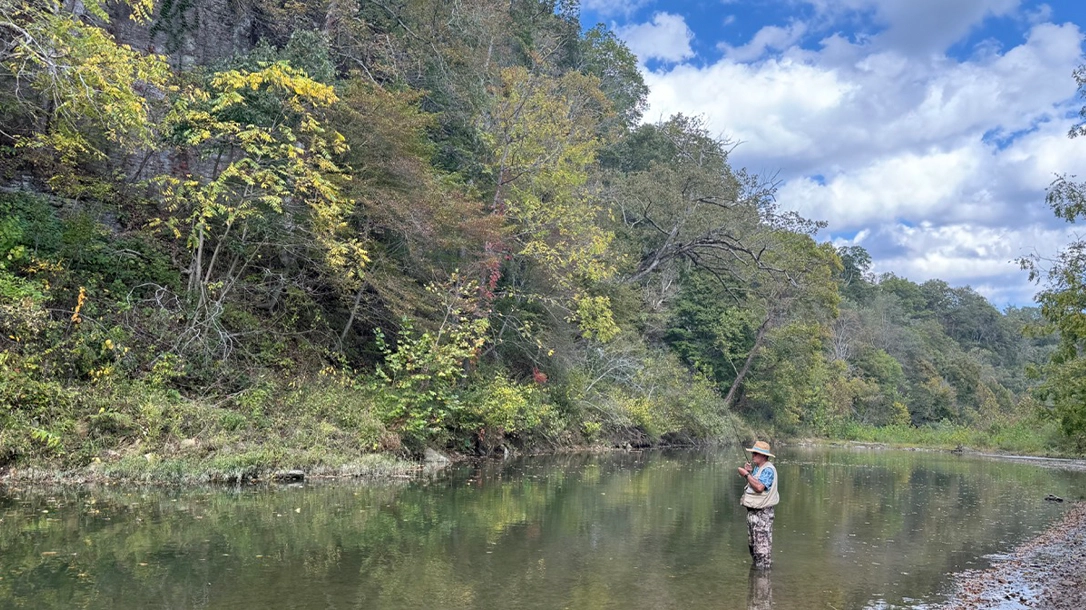
There’s a moment every kayak angler knows well. You’re drifting a promising stretch of river, watching the water ahead, and something just tells you the fish are there, but your position is all wrong. The current is pushing you too fast, the angle is off, and no amount of paddle correction is fixing it. That’s usually the moment you start eyeing the gravel bar.
Knowing when to stay in the boat and when to beach it and wade is one of those skills that doesn’t come with a manual. It develops through time on the water, a few frustrated afternoons, and eventually a kind of instinct that gets hard to separate from experience.
The Case for Staying in the Kayak
Floating covers water. That’s its primary advantage, and it’s a big one. A kayak lets you efficiently work miles of river in a single outing, covering riffles, pools, and transition zones that would take days on foot. When fish are scattered and you’re searching rather than targeting, staying mobile is often the smarter play.
Deep water is the other obvious factor. Pools that run six, eight, ten feet deep aren’t exactly wading water unless you’re comfortable swimming with your gear. From a kayak, you can position directly over structure, slow-roll presentations along drop-offs, and access mid-channel habitat that’s completely off-limits to a wader. Current seams that form in the middle of wide rivers? The kayak gets you there.
Advertisement — Continue Reading Below
Current speed also matters more than anglers tend to admit. Fast, pushy water that’s thigh-deep is dangerous wading, especially on uneven or slick substrate. A kayak keeps you out of that risk equation entirely while still letting you work the edges and slower pockets.
Reading Water for Wading Potential
Not every stretch of river deserves equal consideration for wading. The spots worth beaching the boat share a few common characteristics. Shallow, wadable water with complex structure is the clearest indicator. Think knee-to-thigh depth over gravel, cobble, or rocky bottom with visible current breaks, laydowns, or undercut banks nearby.
Slow to moderate current gives you the ability to hold position, reposition quietly, and make repeated presentations without fighting the water the whole time. When you spot a long flat with rising fish, a deep bend where the current slows along the outside edge, or a riffle tail-out that dumps into a foam line, those are clear wading targets. The kayak is just your shuttle service to get there.
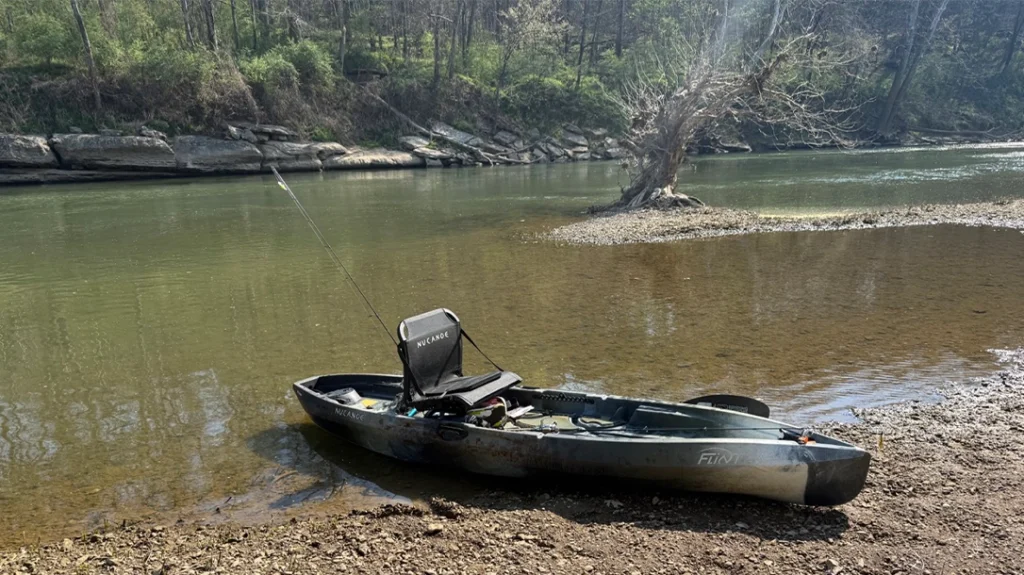
The other signal is visibility. Clear water where fish are spooking to boat shadow or hull noise is a strong argument for getting out. A wading angler who moves slowly and deliberately is a fundamentally different threat profile than a floating hull. Fish that flush the moment your hull crosses twenty feet will sometimes hold their position and let a wading angler close the gap to casting range, if you move slowly and keep the commotion to a minimum.
Advertisement — Continue Reading Below
The Practical Case for Getting Wet
Beyond fish behavior, there’s a practical argument for wading that doesn’t get enough credit. When you’re standing on bottom with stable footing, your casts are simply better. You can load the rod fully, adjust angle and distance freely, and follow through without worrying about the seat position or hull wobble throwing off your delivery.
Tight cover especially benefits from this. Skipping a jig under a laydown, flipping to a specific pocket in a logjam, or making a precise dry fly drift along a seam all become more repeatable when you’re standing still rather than managing drift at the same time. The kayak is a great casting platform for open water, but it introduces variables that wading removes.
There’s also the physical reality that getting out and moving through the water is often a relief after a long stretch of sitting or even periodic standing in a kayak. Kayak fishing is comfortable, but your body notices the difference when you finally get out, stretch your legs and start walking a flat.
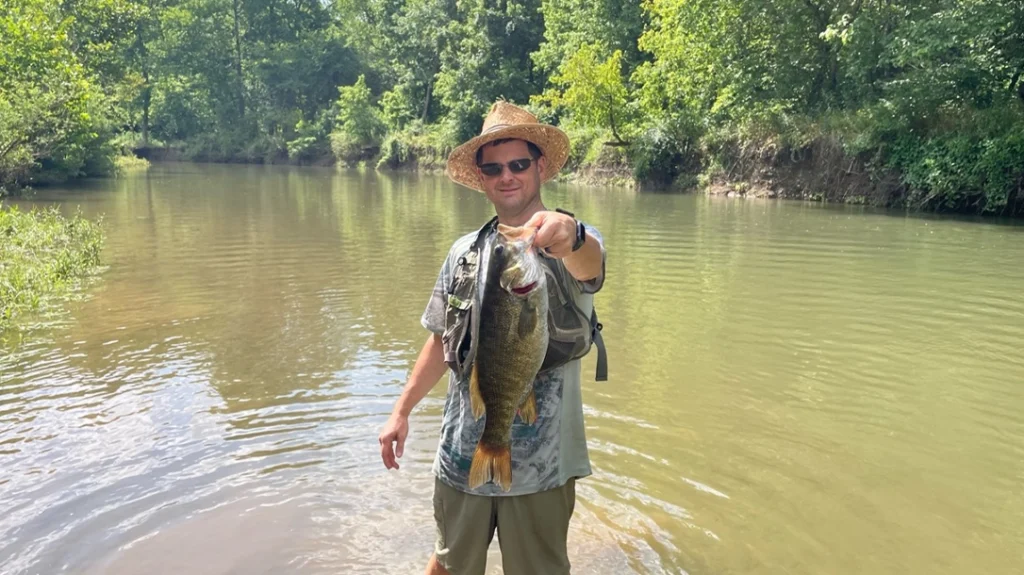
Wading also slows you down, which in the right scenario is exactly what you need. Slowing down forces you to be more deliberate, to read each piece of water carefully before moving on. Some of the best fishing I’ve experienced were from spending forty-five minutes on a single hundred-yard stretch that I would have drifted through in ten minutes from the kayak without getting half the presentations right.
Advertisement — Continue Reading Below
Logistics Worth Thinking Through
The mechanics of beaching and wading from a kayak are worth sorting out before you’re standing in the river trying to figure it out on the fly. Anchor systems matter, but they’re not always the right answer. A drag chain or stake-out pole can hold the boat in the right conditions, but in rocky or technical water, deploying an anchor creates its own noise and hassle. Sometimes the cleaner move is simply beaching the kayak on the nearest gravel bar and walking back to the spot you want to fish. Fewer moving parts, less commotion, better result.
Gear management is the other consideration. Wading from a kayak means you’re not carrying everything with you, which is often a benefit. You can leave the tackle bag in the boat, grab a small chest or hip pack with essentials, and move freely without the weight. Keep a net tethered to your person rather than the boat and think about footing. Felt soles or rubber wading boots over neoprene socks make rocky substrates dramatically more manageable than wet sneakers on slick rock.
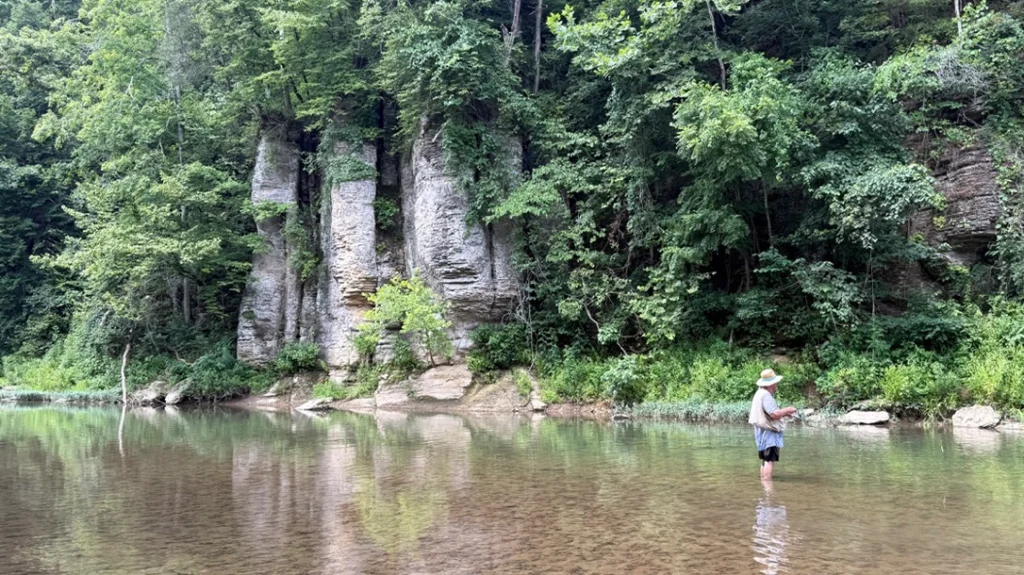
Sun and temperature factor in too. Wading in July heat in shorts and sandals is truly refreshing. Wading in late October in the same setup is a fast path to a miserable afternoon. Match your wading setup to conditions, and you’ll find the experience a lot more enjoyable.
Making the Call
The honest answer is that most experienced kayak anglers develop a rhythm that naturally blends both approaches within a single float. You cover water from the boat, identify where fish are likely holding based on structure and current, and then make intentional decisions about where the float stops and the wade begins.
Advertisement — Continue Reading Below
The best rule of thumb is simple: if you catch yourself wishing you could reposition without moving the boat, that’s the fish telling you to get in the water. Listen to it. The kayak will be right there waiting on the gravel bar when you’re done.
WHY OUR ARTICLES/REVIEWS DO NOT HAVE AFFILIATE LINKS
Affiliate links create a financial incentive for writers to promote certain products, which can lead to biased recommendations. This blurs the line between genuine advice and marketing, reducing trust in the content.