


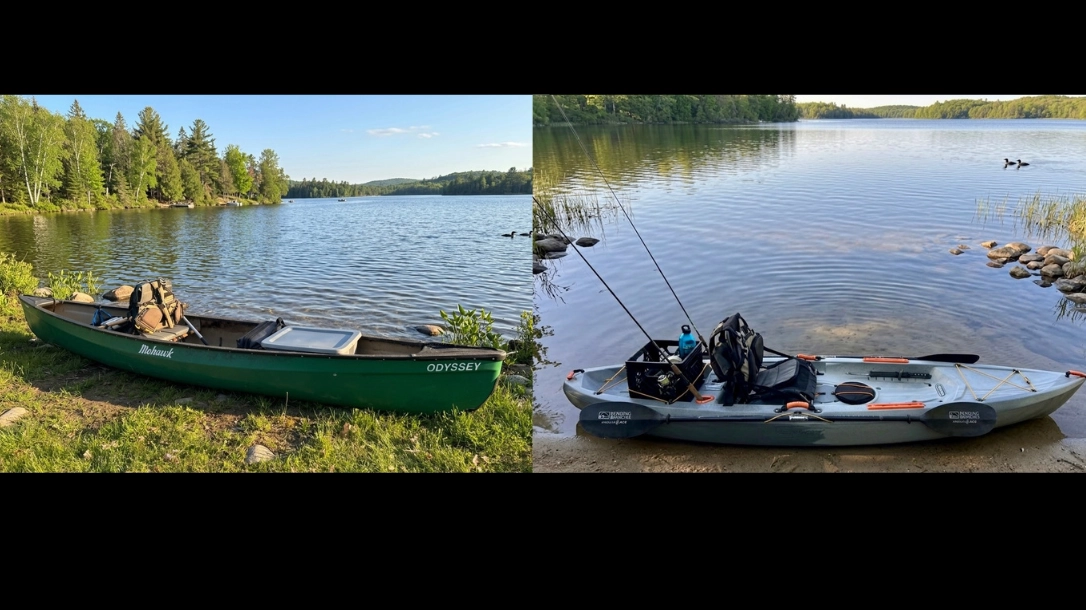
When you’re standing in the paddling aisle of an outdoor retailer, staring at a wall of boats that all kind of look the same, the choice between a fishing kayak and a solo canoe can feel overwhelming. Both will get you on the water. Both will help you catch fish. But they’re built around fundamentally different philosophies, and picking the wrong one for your style of fishing is the kind of mistake you’ll feel every single time you load up and head out on the water.
The Case for Fishing Kayaks
Purpose-built fishing kayaks have exploded in popularity for good reason. They’re designed from the ground up with the angler in mind, and it shows. Rod holders are molded in. Gear tracks run along the gunwales. Many models come pre-rigged for fish finders, and the lower center of gravity makes reaching out to work a lure or net a fish feel natural rather than terrifying.
Stability is where kayaks genuinely shine. Modern fishing kayaks, especially the wider sit-on-top designs, are remarkably stable platforms. Some, like the Hobie Compass or Old Town Sportsman series, are stable enough that experienced paddlers stand to cast. That’s a game-changer for sight fishing in shallow water. You’re not just paddling to a spot and sitting down; you’re actively hunting fish like you would from a bass boat, just with a much lighter footprint.
Kayaks also perform well in moving water and open-water crossings where wind matters. Their lower profile catches less wind, which sounds like a small detail until you’re trying to hold position on a windy lake while a crappie bite is going off thirty yards upwind of you. Low profile equals less drift, and less drift equals more time with your lure in the strike zone.
Advertisement — Continue Reading Below
The downside? Storage and portability. Most fishing kayaks are heavy. We’re talking 70 to 100-plus pounds for some of the fully rigged pedal drive models. Loading one solo onto a roof rack is a workout, and unless you have a truck bed or trailer, transport becomes a logistical puzzle. They also have less room for large amounts of storage for longer trips.
The Case for Solo Canoes
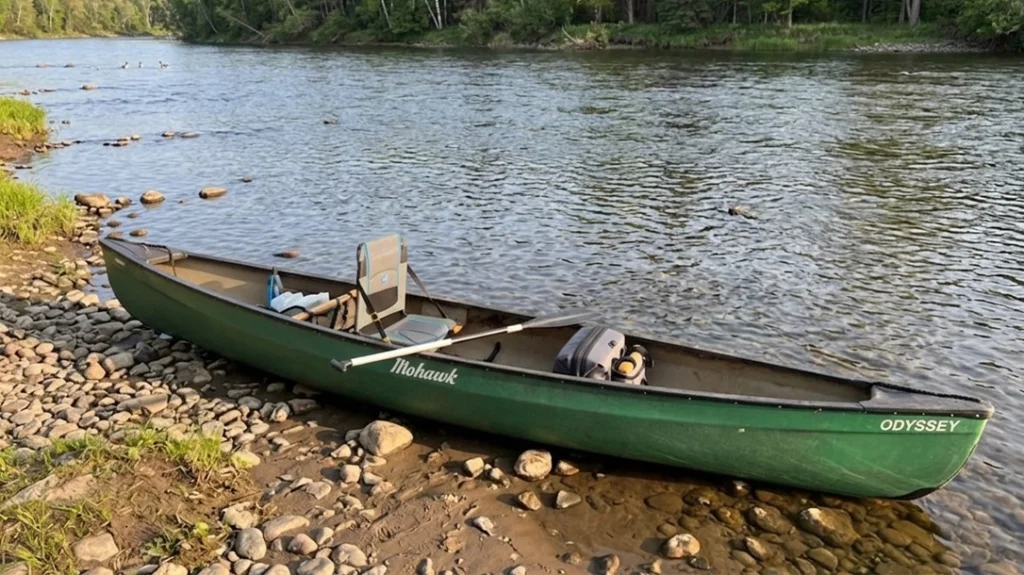
A well-designed solo canoe is a different kind of tool entirely. Think of it as the pickup truck of the paddle world: less flashy than the sporty kayak, but quietly capable of hauling a serious amount of gear over long distances.
Carrying capacity is the solo canoe’s strongest argument. The open design of a canoe handles a week’s worth of camping gear plus fishing tackle with room to spare. For the backcountry angler who wants to spend multiple days on remote lakes or floating long stretches of rivers that aren’t accessible by road, that capacity matters enormously. You can bring a full-size cooler, a camp kitchen, dry bags full of clothing, and still have hull to spare.
Portaging is another huge advantage. On multi-day wilderness trips where you’re crossing between water systems, a solo canoe that weighs 35 to 50 pounds is a far more pleasant carry than a 90-pound pedal kayak. Tripping paddlers figured this out a long time ago, and there’s a reason the canoe has been the backcountry workhorse for centuries.
Advertisement — Continue Reading Below
The cons are real, though. Solo canoes are more affected by wind. Their higher freeboard acts like a sail, and paddling one into a stiff headwind on a big lake can be genuinely exhausting. They’re also more challenging to outfit for fishing. You’ll likely be bolting on accessories yourself rather than pulling a purpose-built setup off the showroom floor. And in rough water or technical river sections, canoes demand more skill to control than most sit-on-top kayaks that have added stability.
The Hybrid Option: When You Can’t Choose
Here’s where things get interesting. A new category of boats is deliberately blurring the line between kayak and canoe, and for some anglers, that middle ground turns out to be exactly the right answer.
Hybrid canoes such as the Old Town Sportsman Discovery Solo 119 are built on a canoe hull but outfitted like a fishing kayak, complete with a mounted kayak style seat, foot braces, rod holders and gear tracks. You get the open-top accessibility and carrying capacity of a canoe with the fishing-ready features you’d expect from a purpose-built kayak. At around 11 feet and 56 pounds, it’s also lighter and more manageable than many fishing kayaks.
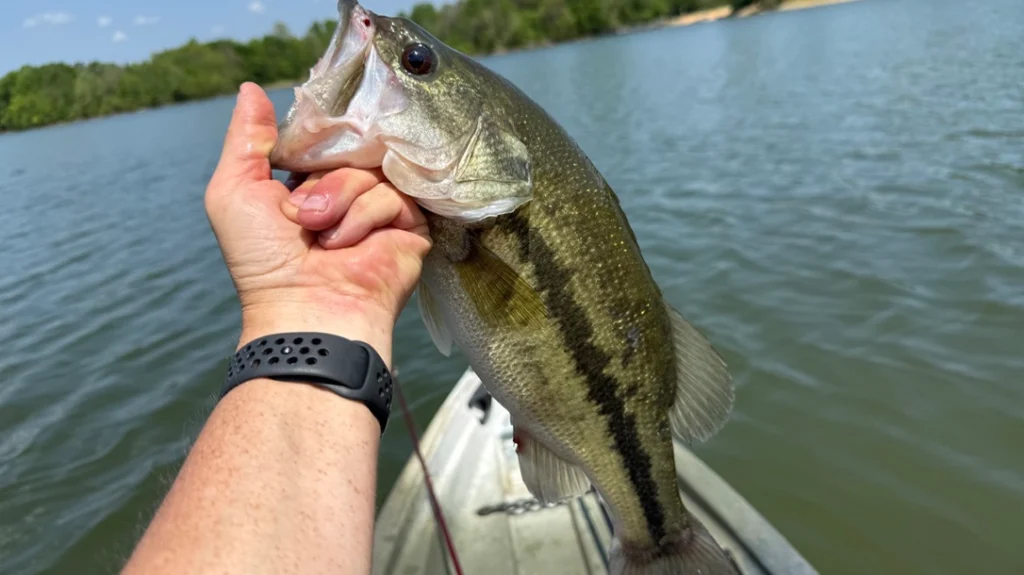
Hybrid kayaks such as NuCanoe’s lineup and Native’s Ultimate FX Series take a similar approach from the kayak side of the equation. The hull sits lower and narrower than a traditional canoe, which helps with wind resistance, but the open cockpit and deck design gives you more cargo space than most fishing kayaks. The lawn chair style seat and added stability pushes it squarely into serious fishing kayak territory while still carrying the canoe DNA in its bones.
Advertisement — Continue Reading Below
Neither of these hybrids is perfect for everyone, but they’re worth consideration if you find yourself nodding along to the benefits of both categories and groaning at the drawbacks of each. The tradeoff is usually some efficiency in each direction; a hybrid won’t portage as well as a dedicated ultralight canoe or offer the stability of a purpose-built fishing kayak. But for the angler who wants one boat that handles day trips, light overnighters, and moving water without requiring a second mortgage or a second vehicle, hybrids are closing the gap fast.
Matching the Boat to the Application
If you’re fishing local reservoirs, day lakes, coastal flats, or anything with easy boat launch access, a fishing kayak is likely the better tool. The purpose-built features, stability, and low-wind profile make it the more efficient fishing platform in those conditions.
If you’re a backcountry angler who values reach over convenience, if portaging into remote lakes is part of your strategy, or if you need serious gear capacity for multi-day trips, the solo canoe earns its place. Some anglers end up owning both, which allows them to enjoy the advantages of each for the for different applications.
The bottom line is that neither boat is universally better. They solve different problems. Know your water and your style of fishing and let that drive the decision. The right answer is the one that gets you on the water more often. Make the right choice, and you’ll find years of enjoyment from the investment.
WHY OUR ARTICLES/REVIEWS DO NOT HAVE AFFILIATE LINKS
Affiliate links create a financial incentive for writers to promote certain products, which can lead to biased recommendations. This blurs the line between genuine advice and marketing, reducing trust in the content.
Advertisement — Continue Reading Below