


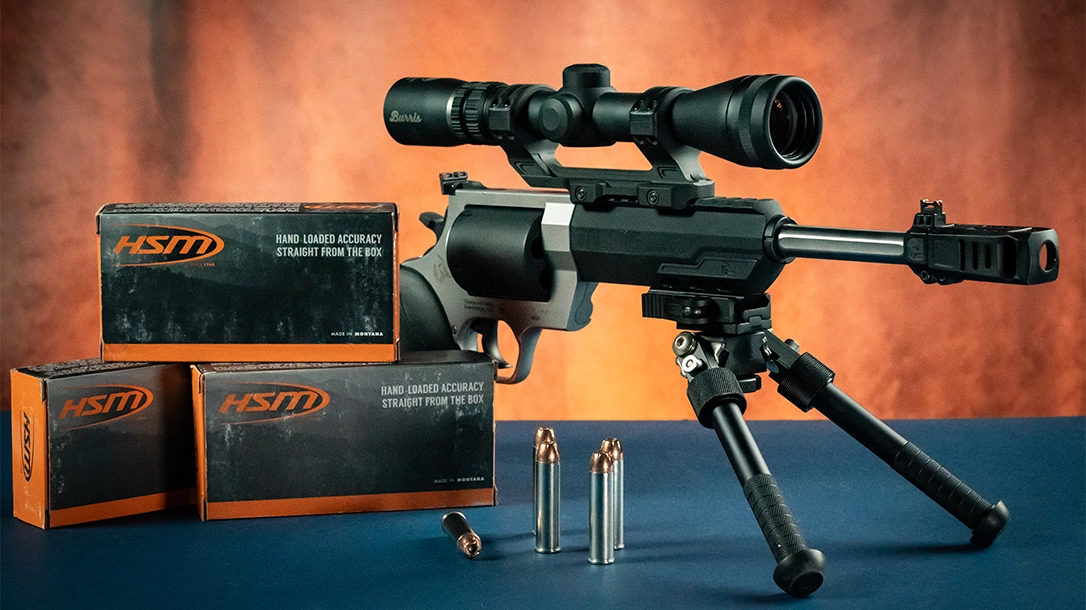
For over a century, the revolver has remained one of the most consistent tools in the firearms world. While materials, machining, and supporting equipment have evolved, the core concept has stayed the same. A rotating cylinder aligns with a fixed bore, and a projectile is delivered with mechanical certainty. It is a system rooted in reliability, and for generations it has put food on the table and meat in the freezer.
There has always been a limitation attached to that system. Power. For most of its history, the revolver has been bound by what could reasonably be achieved within a handgun format. Even the venerable .44 Magnum, long considered a benchmark, operates within a defined ceiling of performance. The .460 S&W Magnum changes that conversation entirely.
Developed through a collaboration between Smith & Wesson and Hornady in the early 2000s, the .460 was built with one goal in mind. Deliver rifle-like performance from a revolver platform. With lighter projectiles capable of exceeding 3,000 feet per second and heavy bullets maintaining tremendous energy downrange, it represents a fundamental shift in what a handgun can accomplish. The Taurus Raging Hunter in .460 is a modern platform designed to take full advantage of that capability.
A Purpose-Built Hunting Platform
The Raging Hunter series, introduced in 2019, is Taurus’s evolution of their long-running big-bore revolver line. It builds on the foundation laid by the Raging Bull, incorporating features that reflect real-world field use. Early models were offered in .357 Magnum, .38 Special +P, and .44 Magnum, but the platform quickly expanded into heavier calibers like .454 Casull and .460 S&W Magnum.
Advertisement — Continue Reading Below
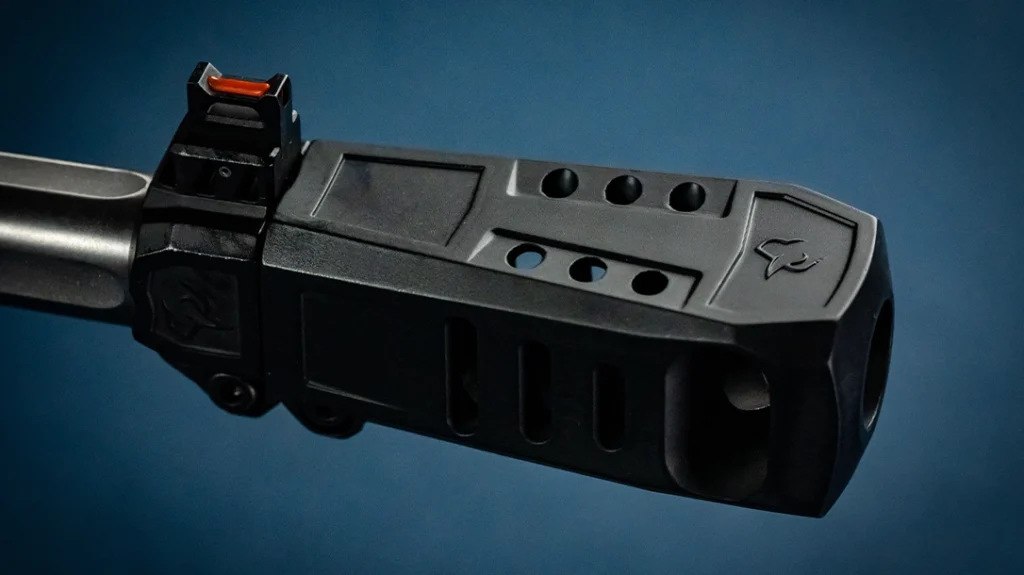
The defining features remain consistent throughout the line. A ported barrel system designed to manage recoil. A dual cylinder lockup that enhances strength and alignment. A full-length Picatinny rail that allows for proper optic mounting. Combined with ergonomic rubber grips, the result is a revolver that is clearly intended for more than casual range work.
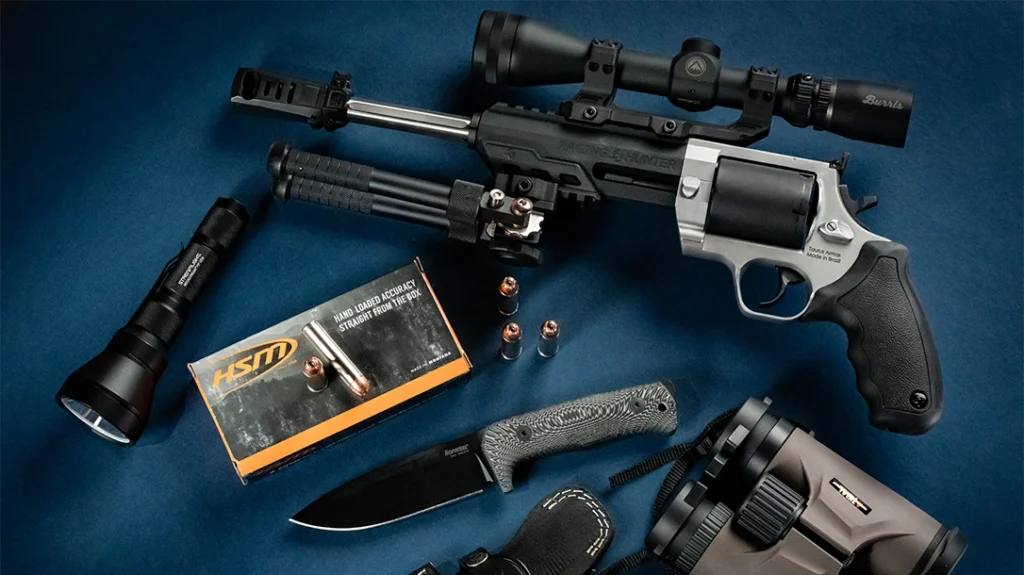
For this test, I ran the 10.5 inch variant. In my opinion, this is the correct configuration for what this revolver is designed to do. The barrel length allows the cartridge to fully develop velocity while still remaining portable enough to carry in a field environment.
Optics & Setup
Mounted up top is the Burris 3-12×32 handgun scope. This optic has proven itself across multiple platforms, and it makes sense here. The long eye relief, adjustable objective, and fine 1/8 MOA adjustments allow you to stretch the capability of the revolver without fighting the glass.
The scope is mounted in a monolithic style Warne mount, installed in reverse to achieve proper eye relief and positioning over the bore. While unconventional at first glance, the setup works. The sight picture is consistent, and the scope tracks cleanly under recoil. Most importantly nothing moved or tweaked under recoil.
Advertisement — Continue Reading Below
This is not a casual pairing. If there is any handgun platform that will expose weaknesses in an optic, it is a .460 revolver. The Burris and Warne mount ran without issue.
Ammo and Ballistics
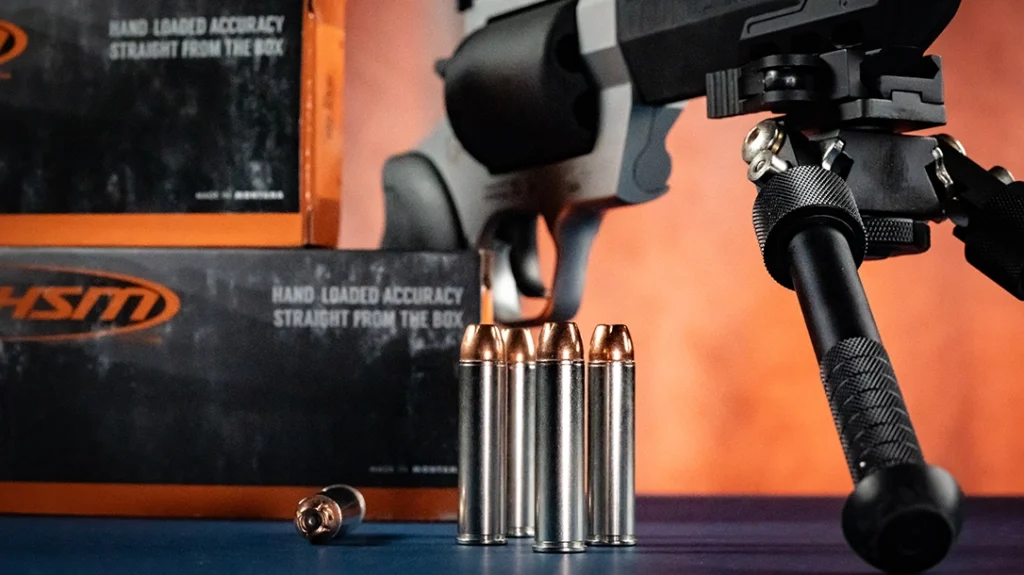
For testing, I ran HSM’s 300 grain JHP load. The cartridge uses a nickel-plated Starline case with a sealed primer, and the advertised velocity is 2000 feet per second.
Out of the 10.5 inch barrel, I recorded an average velocity of 1823 feet per second approximately five inches from the muzzle. That translates to serious energy at the gun, and more importantly, it carries that energy downrange. At 300 yards, the projectile is still moving at approximately 1300 feet per second, delivering 1125.54 foot-pounds of energy on target. To put that into perspective, that is nearly double the energy of a .44 Magnum at point-blank range.
This is where the .460 separates itself. It does not simply hit hard. It maintains performance at distances where traditional revolver cartridges have already fallen off significantly.
Advertisement — Continue Reading Below
Stability
Under the gun, I ran a generic Amazon bipod paired with a Real Avid medium shooting bag at the rear of the grip.
The bipod performed exactly as expected. While it visually mimics higher-end options, the execution falls short. Fasteners loosened during use, and overall stability suffered as a result. It is a clear example of getting what you pay for. For a platform capable of this level of performance, I would strongly recommend investing in a more robust support system.
The rear bag, on the other hand, provided excellent stability. Combined with proper body positioning, the revolver settled into a very controllable shooting platform. The Real Avid bags have a ratchet system that allows you to squeeze the bag to make it taller. Put it together with a good bi-pod and you could one-hand these shots.
Recoil and Control
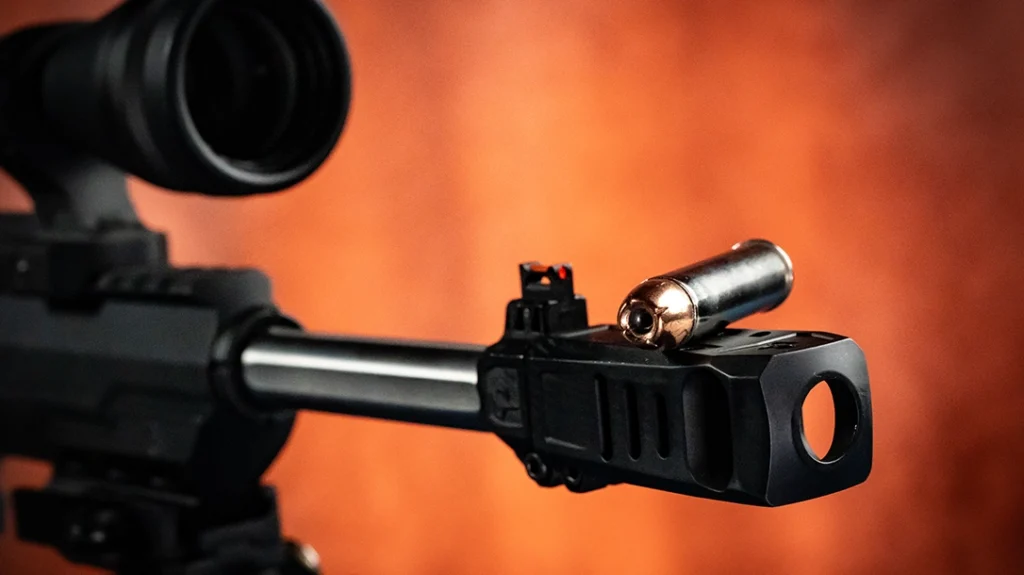
The biggest surprise of this test was how manageable the revolver felt. There is no getting around the fact that the .460 is a powerful cartridge. Even so, the Raging Hunter does an excellent job of controlling that energy. The robust muzzle brake system directs gas upward and rearward, reducing muzzle rise and keeping the gun tracking flat.
Advertisement — Continue Reading Below
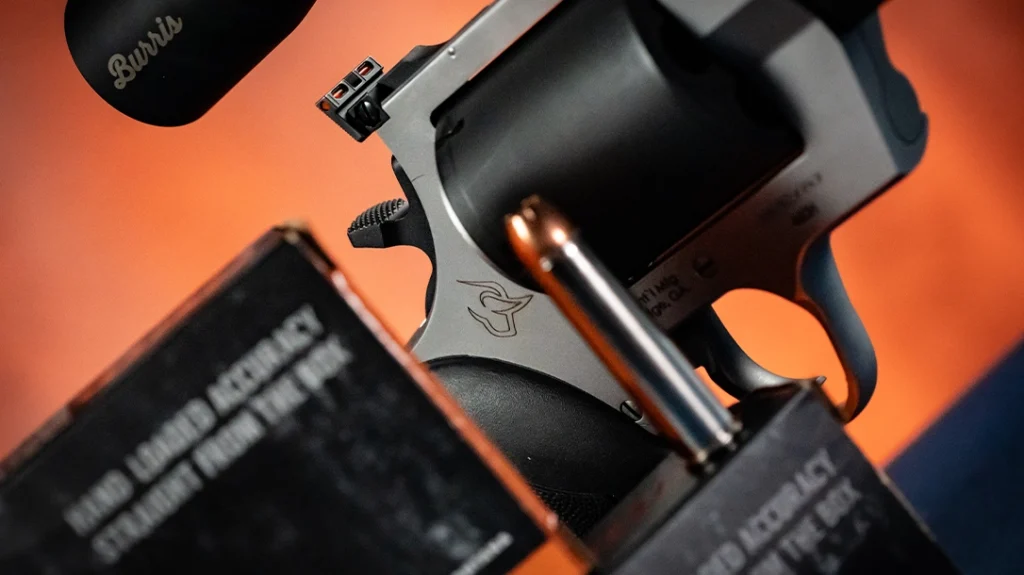
I made a point to run the revolver standing in double-action to get a sense of how it behaved under less controlled conditions. The result was impressive. The gun remained predictable, and follow-up shots were far more manageable than the cartridge would suggest.
Over the course of two boxes of ammunition, fatigue was not a limiting factor. That is a testament to both the design of the revolver and the consistency of the ammunition.
300 Yards
Getting the revolver zeroed and confirmed at distance took time. This is not a plug-and-play process. Once everything was dialed, the platform came together in a really exciting way.
At 125 yards, I was able to engage targets one-handed with the support of the bag. The stability of the platform allowed for clean trigger presses and consistent hits. At 200 yards, the demands increased. Proper body alignment and a more deliberate approach to the trigger became necessary.
Advertisement — Continue Reading Below
At 300 yards, everything had to come together. I squared up behind the gun, worked the trigger carefully, and held high-right to compensate. Some of that hold was driven by my own input on the trigger, but the results were consistent. Impacts landed inside the A-zone of a USPSA steel target, and they did so repeatedly. That is repeatable performance that I’d like to push farther.
Real-World Perspective
The target itself was a Caldwell AR500 steel plate rated up to .338 Lapua Magnum, mounted on a custom hanger. More importantly, the performance at 300 yards reinforces what this platform is capable of. While I approached this as a performance test, the implications for hunting are clear. A revolver that can deliver this level of accuracy and energy at distance opens up possibilities that were once reserved for rifles.
The added versatility of the platform can’t be ignored either. The ability to chamber .454 Casull and .45 Colt gives the shooter options for training, recoil management, and application-specific use.
Final Shots
The Taurus Raging Hunter in .460 S&W Magnum is an exceptional revolver that challenges long-standing assumptions about handgun performance.
It delivers power that rivals rifle cartridges, yet remains controllable and predictable in the hands of the shooter. The 10.5 inch configuration maximizes the potential of the cartridge while maintaining practical portability. When paired with a capable optic and quality ammunition, the system becomes something far more than a novelty.
Advertisement — Continue Reading Below
It becomes a serious tool.
This particular setup is one I would take into the field with confidence. In some cases, I would choose it over a rifle. I don’t say that lightly.
The combination of the revolver, the optic, and the ammunition works. It works in a way that is repeatable, effective, and frankly enjoyable to shoot.
For those willing to explore what a revolver can truly do, this platform delivers.
Advertisement — Continue Reading Below
WHY OUR ARTICLES/REVIEWS DO NOT HAVE AFFILIATE LINKS
Affiliate links create a financial incentive for writers to promote certain products, which can lead to biased recommendations. This blurs the line between genuine advice and marketing, reducing trust in the content.