


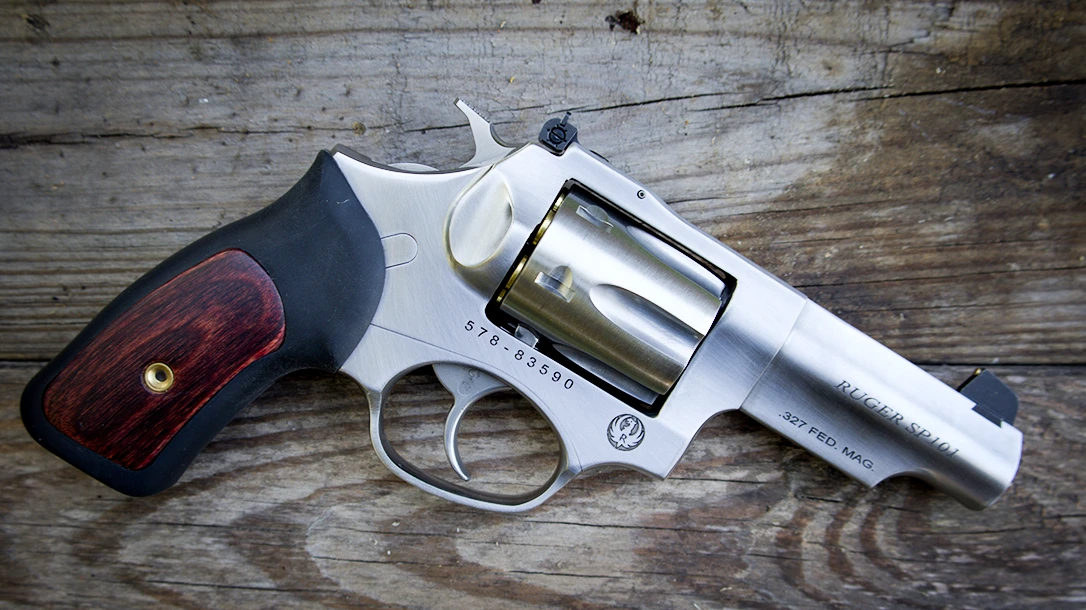
In 2008, Ruger, in conjunction with Federal Premium ammunition, debuted the .327 Federal Magnum cartridge. The cartridge was the latest .32 caliber revolver round that excels in compact six-shot revolvers. However, the chief difference is upping the ballistics to rival the renowned .357 Magnum cartridge–hence the name .327. Different revolvers in the round have come and gone, but the consistent player from the very beginning is the Ruger SP101. The new Ruger SP101 Stainless Half-Lug model represents the latest chapter for the cartridge, and Lipsey’s does it justice.
The Ruger SP101 Stainless and Lipsey’s Invisible Hand
The all-stainless steel Ruger SP101 has been a mainstay compact revolver since its introduction in 1988. Correspondingly, it has been produced in a number of variations and calibers. Until 2020, the weight-saving half-lug barrel was only available on the .22 LR version. Then Lipsey’s took the base 3-inch compact .357 Magnum, gave it a blued finish, adjustable sights, wood paneled grips, and a half-lug barrel profile.
This template classes up the standard look. However, the inclusion of adjustable sights puts the SP101 as a candidate for genuine target and field work with any conceivable load. The use of the 3-inch half-lug profile gives the end user slightly less weight for everyday carry. But it has just enough barrel to get great performance from Magnum ammunition.
Advertisement — Continue Reading Below
In 2025, the same version in .327 made an entrance. But the blued finish is not for all comers, especially in high humidity and marine environments. Now the stainless steel versions in .327 Federal Magnum and .357 Magnum are available.
For those who insist on a revolver, I have long been an advocate of the SP101. In particular, the .357 version loaded with .38 Special ammunition offers a good balance of power and low recoil.
Advertisement — Continue Reading Below
Historically, the .32 S&W Long served the same role and was used for duties ranging from small-game hunting to police work. I decided on the logical successor to the old .32 Long and got my hands on the Lipsey’s Stainless SP101 in .327 Magnum. It was a familiar platform in a new-to-me cartridge.
Features: Old, New, and In-Between
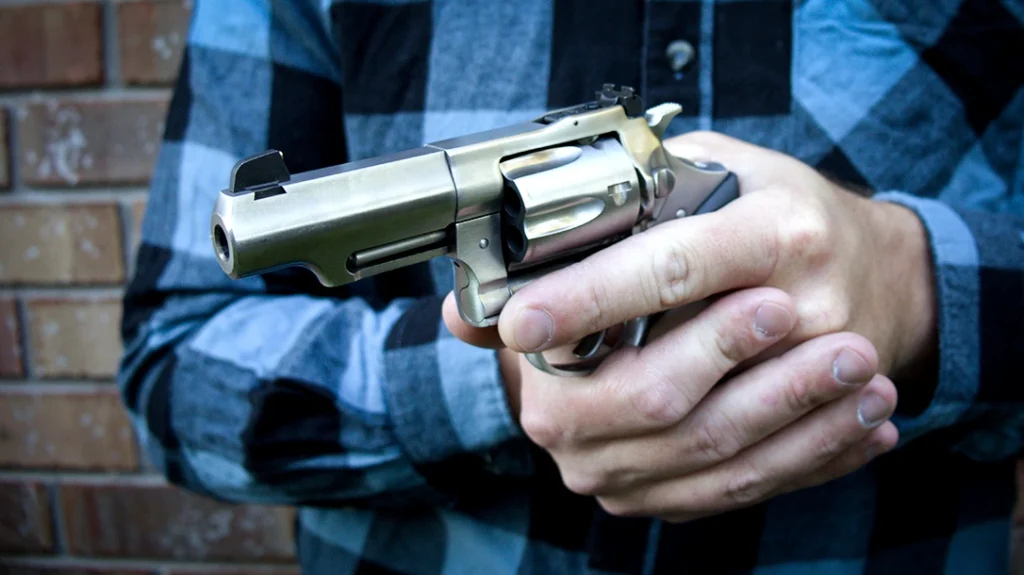
Lipsey’s .327 Stainless Ruger SP101 is a mix of features seen before, but not in one single package. The marks that immediately jump out from a standard SP101 are the sights and barrel.
The 3-inch bull barrel, as seen on the standard model, is trimmed for weight savings, while retaining enough to ensure the ejector rod is completely shrouded.
Advertisement — Continue Reading Below
In lieu of standard fixed gutter sights, this model comes with adjustable sights. The rear sight consists of a black square notch that is screw-adjustable for both windage and elevation. Its front sight is a higher-profile, dovetailed brass beaded post.
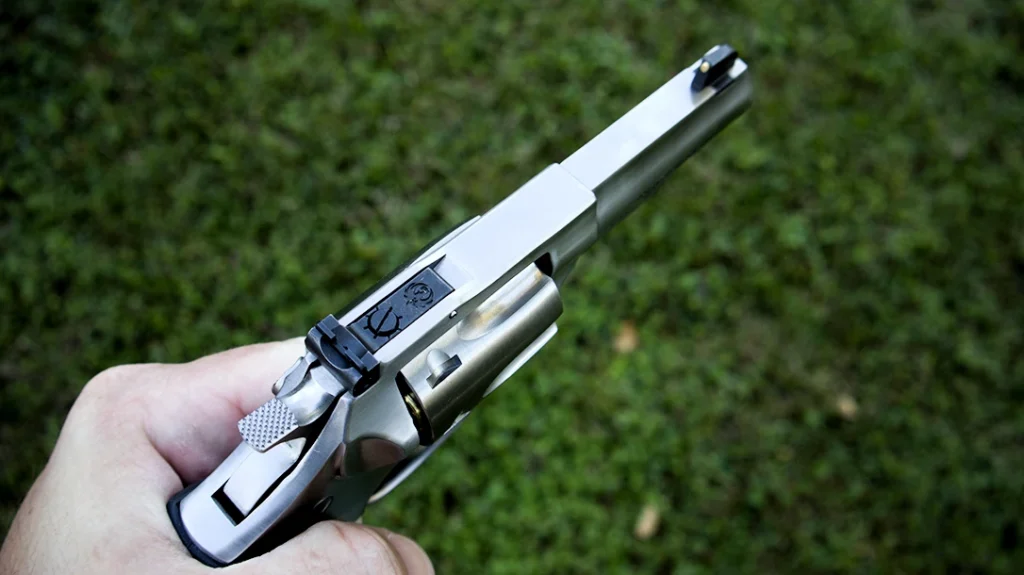
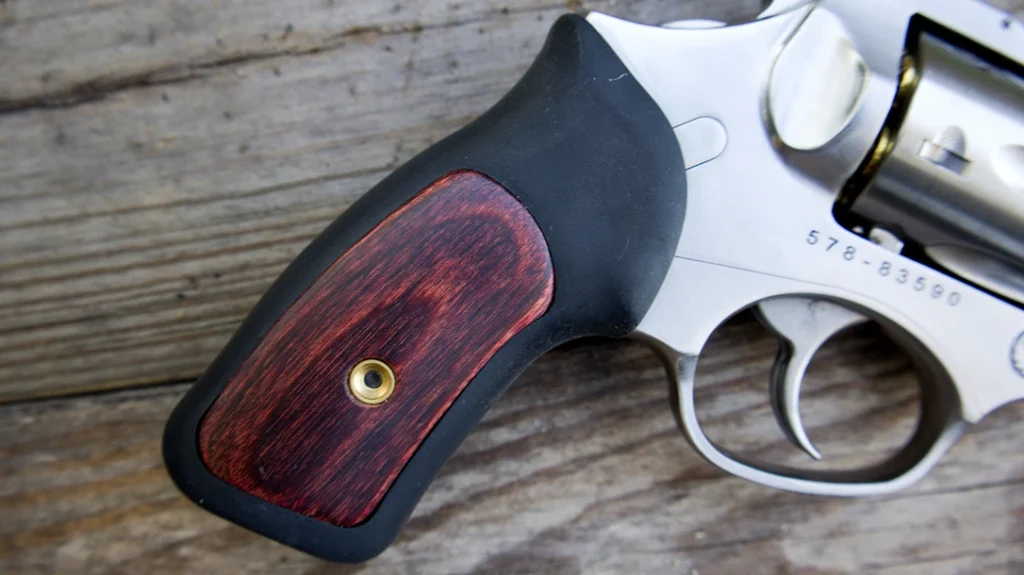
The next identifying feature is the grips. The standard SP101 has a rubber grip with plastic grip panels. However, the Lipsey’s .327 Ruger has rosewood panels instead.
Advertisement — Continue Reading Below
Like most Ruger SP101 revolvers, this one is all stainless steel and brush-finished. The revolver has an exposed hammer, which makes it a double-action/single-action. You can thumb cock the hammer for a light, short trigger pull. Otherwise, you can press the trigger all the way through to fire the revolver in double-action mode.
Other typical Ruger features include a modular grip frame, a button-style cylinder release, and a transfer bar drop safety. Because of its .32 caliber chambering, it carries six rounds instead of the usual five with the standard .357 SP101.
The Lipsey’s .327 Stainless Ruger SP101 ships with a hard case and has a tentative MSRP of $919.
Advertisement — Continue Reading Below
More on the .327 Federal Magnum
The .327 Federal Magnum cartridge was marketed as approaching the .357 Magnum in power, but with less harsh recoil and an extra round in the cylinder. In truth, it can hit two out of those three claims reliably and maybe go three for three.
If you make a moderate choice of .357 Magnum ammunition and the absolute best in .327, it can be a dead heat between both rounds. That is particularly true when you reach for Buffalo Bore 100- or 130-grain .327 rounds. But most .327 cartridges are getting .357 Magnum velocities with a somewhat lighter bullet.
Advertisement — Continue Reading Below
The .327 is superior to any .38 Special or 9mm round. But where the .327 shines is not so much the cartridge but the revolver. The .327 is backward-compatible with the older family of .32-caliber cartridges it derived from. You can fire .32 S&W, .32 S&W Long, and .32 H&R Magnum.
The .32 Long is a more established target cartridge, and both it and the .32 Magnum might be the ticket for a low-recoiling option for practice and personal protection.
On The Range with Lipsey’s SP101 .327
The Ruger SP101 has long been a proven performer, but it has its quirks compared to other compact revolvers. The inclusion of the .327 Federal Magnum chambering only adds to this.
To see if those quirks leaned toward positivity, I broke into my stash of .32-caliber revolver ammunition and ran the Half Lug .327 through 250 rounds to test for accuracy, reliability, and ergonomic feedback.
Operation and Accuracy Test
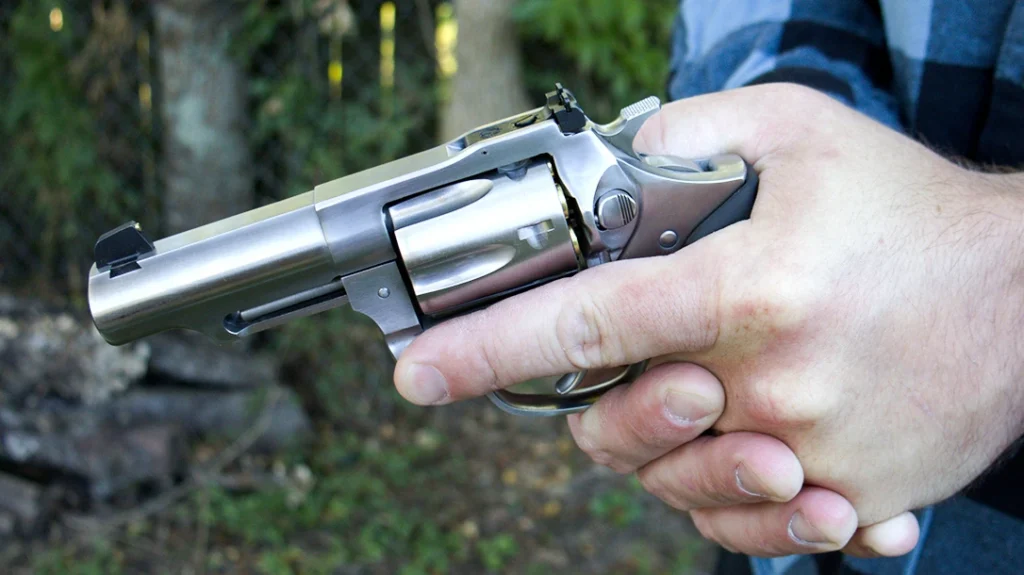
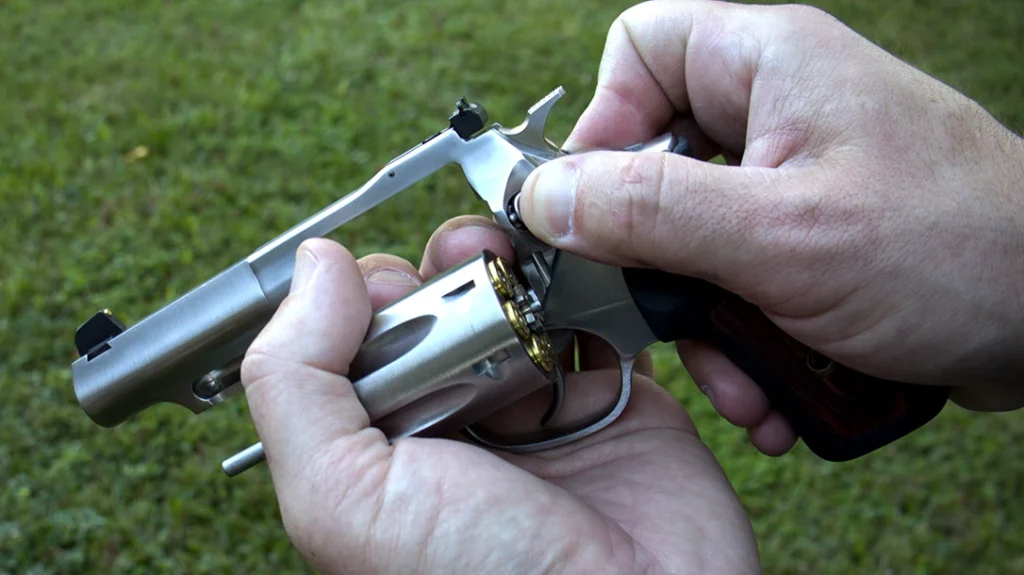
The Ruger SP101 .327 is a double-action revolver whose only controls of note are a swing-out cylinder, cylinder release button, and ejector rod. Loading is accomplished by pushing the cylinder release button in and pulling the cylinder out to the left side of the frame. The cylinder chambers are now exposed for loading. Unloading is the same process, except the ejector rod is pushed to knock out any empty cases from the cylinder.
Some prefer a push-forward cylinder release like that used on a Smith & Wesson revolver or its many clones. However, the push button used on the Ruger is intuitive. Likewise, the small grip frame of the SP101 allows for even a short thumb to reach it without breaking a firing grip.
Sighting In the SP101 Stainless
To start, I loaded the .327 with six rounds of Sellier & Bellot .32 S&W Long 100-grain wadcutters and proceeded to get on top of my sights. You can shoot the Lipsey’s Half Lug by thumb cocking the hammer before pulling the trigger. However, I did all my shooting in double action. I lined the gold beaded front sight on a bullseye target at ten yards and let fly.
I fired my six rounds and saw six hits on the target, eight inches to the right of mine. The sights were off. Fortunately, I could either use a screwdriver to drift the rear sight or drift the dovetailed front sight with a punch. A few decisive taps from a brass punch, and my subsequent shots hit right to the point of aim. Problem solved!
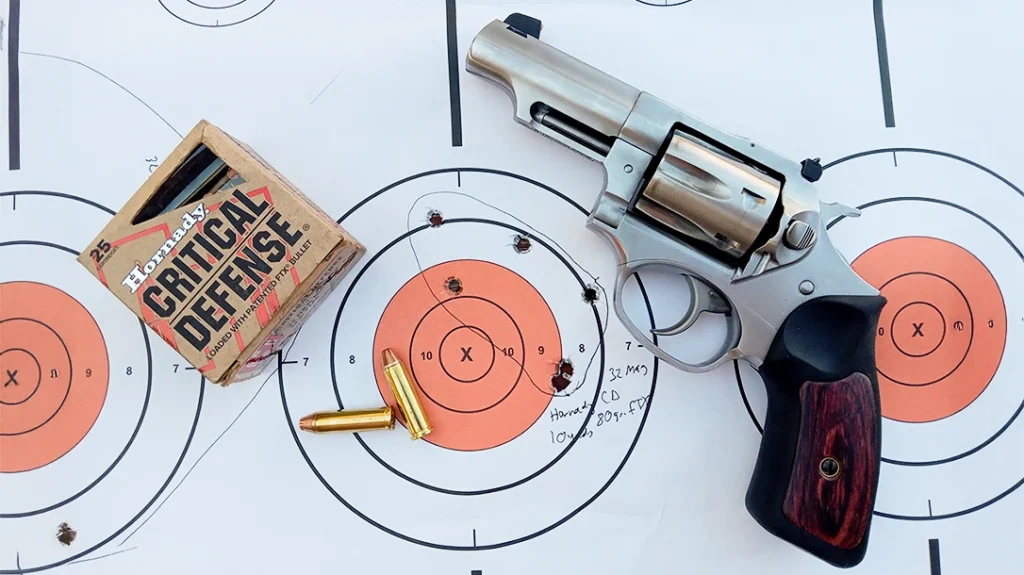
The .32 Long cartridge was a favorite target cartridge for decades thanks to the round’s low recoil, low velocity, and heavy-for-caliber bullet. In the chunky all-steel SP101, those wadcutters barely moved the sights under recoil, and noise was a pop rather than a bang.
Both cartridges clocked in under 700 feet per second on my Caldwell chronograph, and the lack of power is easy to discern. I could reliably put all six rounds into a 2-inch circle at ten yards. The same was true with some conventional .32 Long PPU 98-grain lead round-nosed bullets.
Stepping Up to Magnum
Next, I stepped up to a pair of .32 H&R Magnum loads: Hornady Critical Defense 80-grain FTX and Federal Hydra-Shok Deep 85-grain JHP. The .32 Magnum cartridges are longer and higher velocity than the .32 Long, but not as much as the .327 Federal Magnum. Recoil was more noticeable, and there was more muzzle flash, but muzzle flip was sedate.
The Hornady load proved slightly more accurate, with groups rivaling the .32 Long at two inches even. The Hydra-Shok load was slightly less consistent in velocity. So, I attribute that to the steady 2 ¾ inch group and no better.
Finally, I broke open a few boxes of .327 Federal Magnum. These consisted of Steinel Ammunition’s .327 100 grain XTP hollowpoints and Federal American Eagle 85 grain jacketed softpoints. The groups opened up to three inches between both rounds.
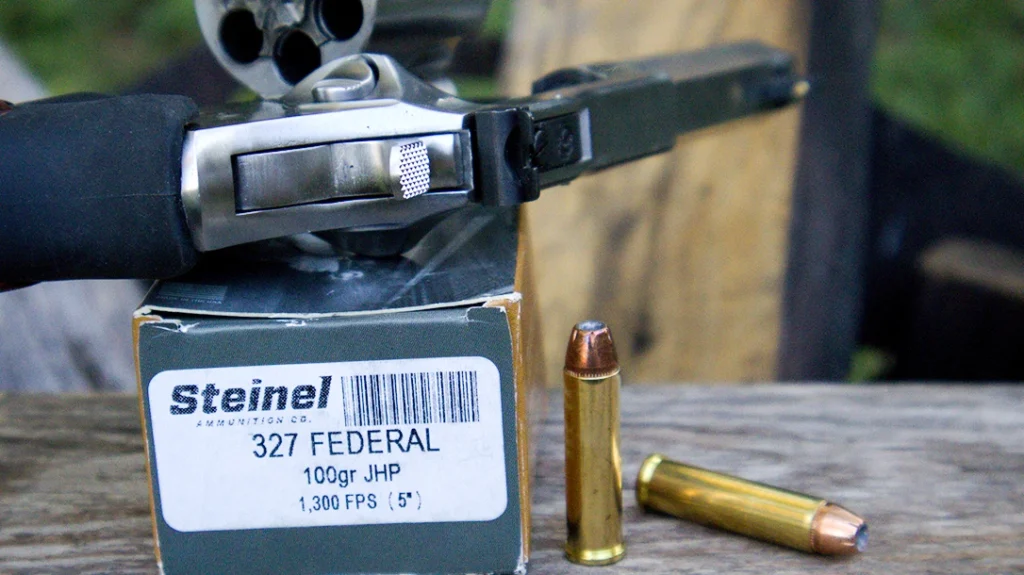
Muzzle flip and muzzle blast were substantial, particularly with the Steinel load. Some conscious thought was needed to get the sights level for the next shot. However, neither round punched the hand like a magnum revolver round should, particularly in a revolver this small.
Over my chronograph, I clocked the Steinel 100-grain load at a five-shot average velocity of 1,248 feet per second for 346 foot pounds of energy. This is the equivalent of a well-loaded 9mm or standard-pressure .45 ACP. You can feel that difference between it and the .32 H&R Magnum loads on the face, but not the hand!
Reliability and Ergonomic Feedback
Over subsequent sessions, I took the Half Lug SP101 out on both steel and paper from 10 to 50 yards. I also mixed in some reloading drills using a few HKS 32-J speedloaders I had on hand. The quirks that might be easy enough to work through with the patience of a mundane off-hand accuracy test quickly became magnified.
I am no stranger to heavier and longer double-action trigger pulls. They provide a great barrier against unintended discharge. However, a smooth trigger aids with muscle memory and guards against bad habits on the trigger press. In single action, the SP101 breaks at a crisp 3 lbs. 12 oz. The double-action pull was gritty and came in at just over 9 lbs.
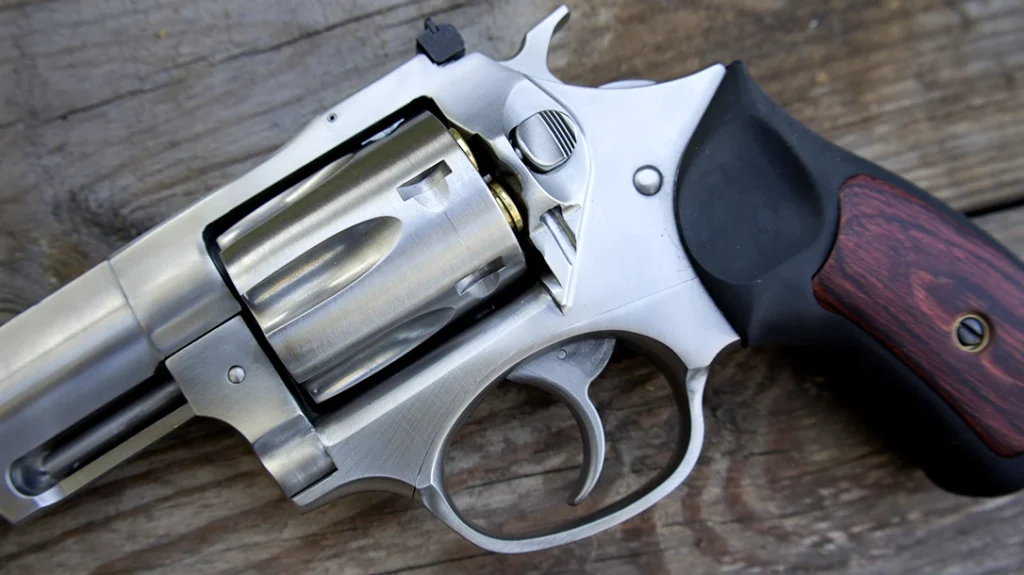
That is not surprising for an SP101. The triggers tend not to be the best out of the box. But the use of a good MCarbo spring kit or plenty of dryfire practice will turn it into magic in short order. I took the latter option, and the trigger lightened up marginally. But more importantly, the grittiness I felt in the sear smoothed out, and I knew exactly when the shots would break.
It was not difficult to get hits on an eight-inch steel plate at 50 yards. However, the gold beaded front sight tended to cover that small target a little more than I wanted. .32 Magnum and .327 Federal Magnum ammunition got there in a hurry, but the .32 Long had a bit of drop and required aiming just over the target to strike the center.
Loading and Unloading the Ruger SP101 Stainless
Loading and unloading were trouble-free. The cylinder button invites the user to push it, and the cylinder is easy to expose with the off hand. The ejector rod has no issues kicking out full-length .327 Federal brass with a gentle slap, at first. By the end of the two-hundred fifty-round string, all ammunition started to stick a bit, and the rod needed a sharper hit. Still, I had no issues extracting.
Reloading quickly was made easier because the grips are small enough not to pinch the HKS loaders as I pushed the bullets into the chambers. I only wish Safariland would make a push-style loader for the .32. The old HKS requires a knob turn to release the ammunition from the loader into the cylinder. Still, I could get rounds into the revolver in five seconds.
Ammunition reliability was not as trouble-free. Magnum ammunition has its own potential problems, including primers backing out of the cases with higher pressure loads. None of my .327 ammunition did this. However, I did experience primer drag on the frame with the Hornady Critical Defense .32 H&R Magnum load.
For every cylinder’s worth, one round’s primer would back out, making the next trigger pull very heavy to set off the next round. It was not peculiar to any one chamber. The ammunition was suspect, as I had no reliability problems with any of the other ammunition I used.
The Flaw in the Slaw
I have long been on the hunt for a compact but shootable revolver in a magnum caliber. Whether it came to shooting higher-end models like the Smith & Wesson Model 60 or the Colt Viper or taking a chance on lower-end Taurus or Charter Arms revolvers, I quickly came to the conclusion that this venture has no free lunch.
In .357 Magnum, I landed on the Ruger SP101. It lacked a Colt trigger at first, but it was miles ahead in terms of ergonomics compared to the other options. Slimming it down slightly but also stepping down to the .327 Federal Magnum cartridge seemed like it would make the magnum revolver even more approachable. At this, the Half Lug .327 Stainless surely does.
The .327 is no big magnum, but there is an increasing array of capable ammunition and a well of ammunition versatility. You also get varying degrees of recoil depending on your experience level, as well as a sixth round if you need it.
In the end, the only problem with the Lipsey’s Exclusive Ruger SP101 Stainless Half Lug .327 Federal Magnum is that its full name reads like that of an aristocratic Prussian marshal. An eye- and ear-catching name is needed.
I like the sound of the “Mariner” to denote its stainless steel construction and outdoorsy disposition. When I am griping about something so minor, it must mean the steel in the hand must be solid.
Lipsey’s Ruger SP101 Stainless Specs
| Caliber | .327 Federal Magnum |
| Capacity | 6 |
| Barrel Length | 3.1 inches |
| Overall Length | 8 inches |
| Height | 5 inches |
| Width | 1.35 inches at the cylinder |
| Weight | 1 lb. 13.6 oz. loaded |
| MSRP | $919.00 |
WHY OUR ARTICLES/REVIEWS DO NOT HAVE AFFILIATE LINKS
Affiliate links create a financial incentive for writers to promote certain products, which can lead to biased recommendations. This blurs the line between genuine advice and marketing, reducing trust in the content.