


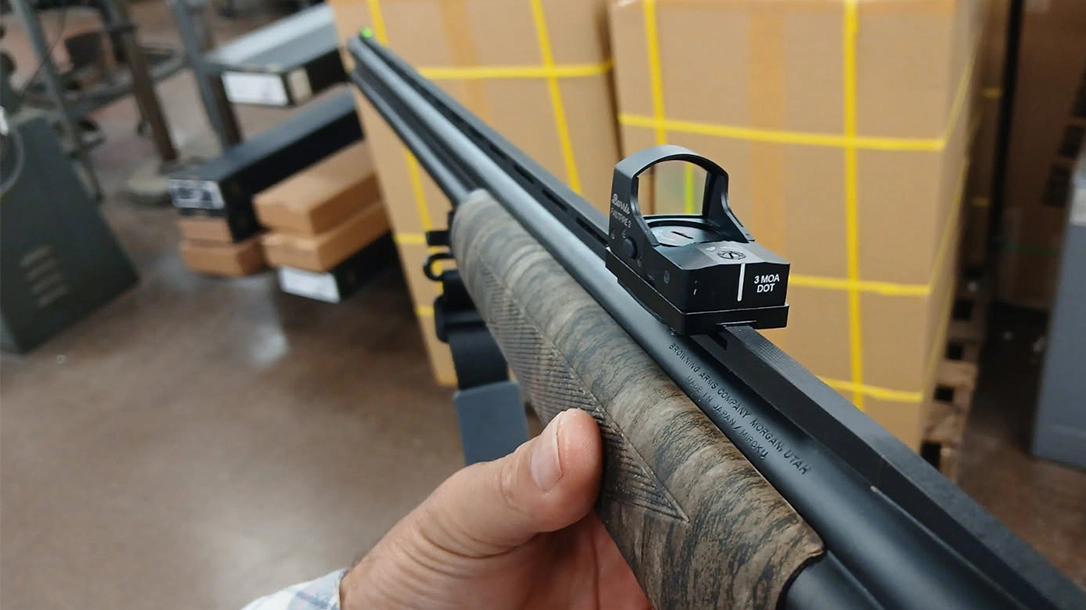
Having grown up in a shotgun-only state, meaning a state where only shotguns with rifled slugs were legal for deer hunting, I’ve seen just about every possible way to mount a scope on a shotgun. Back in the day, very few people mounted optics on their shotguns. Scopes and shotguns went together like ketchup on mashed potatoes.
One of the first scoped shotguns I ever saw was an Ithaca Model 37 Deerslayer with a low-powered, long-eye-relief pistol scope mounted to the short rib just forward of the receiver. The owner, a friend of mine, put a lot of meat in the freezer with that old Ithaca.
Today, seeing an optic on a shotgun is nearly as common as seeing one on a rifle. So how did we get here?
Shotgun Optics Progression
Prior to the mid-1980s, few shotguns came drilled and tapped for optics. The steel receivers on Brownings and Remingtons were often too thin to securely hold a scope base, but that didn’t stop gun owners. Hunters either found a gunsmith willing to do the work or drilled and tapped the receiver themselves in the garage. After that came the challenge of finding a suitable mount or simply going without.
One of the first mounts designed to address the thin receiver problem was the Da Mar mount. It wrapped over the top of the receiver, while the mounting screws were drilled and tapped into the side of the receiver at an angle, where the metal was thicker and stronger.
Advertisement — Continue Reading Below
By the early 1990s, more hunters wanted to switch to optics, but many didn’t want to permanently drill their shotguns. Side-plate mounts soon appeared, attaching to the shotgun by replacing the trigger pins with screws of the proper size. I’ll admit, I rushed out and bought one myself. Unfortunately, the single-sided plate left a lot to be desired. The slightest bump could throw your zero off.
Not long after, saddle-style scope mounts were introduced. These straddled the receiver and offered a more stable setup, but if the screws were overtightened, they could interfere with the shotgun’s function.
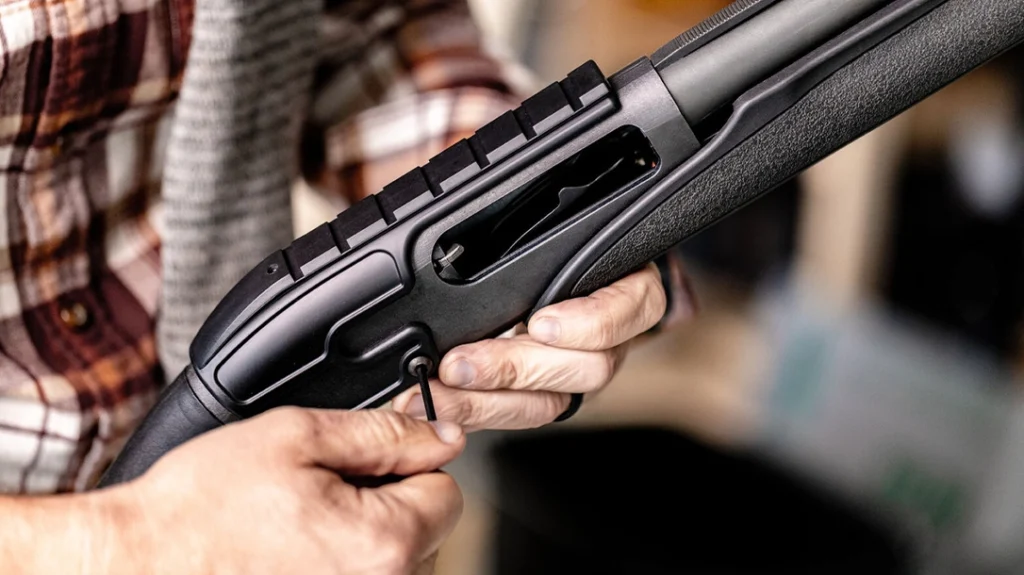
By 1997, Mossberg began drilling and tapping their receivers from the factory, and many other manufacturers soon followed suit. As optics-ready shotguns became more common, so did the variety of mounting bases available.
Advertisement — Continue Reading Below
Today, most pump-action and semi-auto shotguns come drilled and tapped, and the trend of mounting optics, especially on turkey shotguns, continues to grow.
Mounting an Optic on an Over-and-Under
Many turkey hunters still prefer over-and-under shotguns. The fast follow-up shot and the ability to run two different chokes, one for close shots and another for longer ranges, appeals to many hunters. On top of that, over-and-unders are generally shorter overall, making them easier to handle in tight woods.
Mounting an optic on one, however, can be tricky. The rib can sometimes be drilled and tapped, but first you have to determine whether it’s thick enough to hold threads securely. One solution is the Meadow Creek Universal Mount, which fits nearly any rib regardless of shotgun type.
With other mounts I’ve used, the attachment plate was either too thick to fit under the vent rib or required modification before installation.
Red Dots Take Over
Back in the late 1990s and early 2000s, nearly every scope manufacturer offered a shotgun scope in their lineup. Today, only a handful remain, and most are geared specifically toward turkey hunters.
Advertisement — Continue Reading Below
Traditional scopes on shotguns are falling out of favor, while red dots are rapidly taking their place. A red dot offers much faster target acquisition, and the brightness of the reticle or dot is usually adjustable to match changing light conditions. Shooters can keep both eyes open and shoot heads-up, and the optic can be mounted either on the receiver or directly to the rib, regardless of shotgun type.
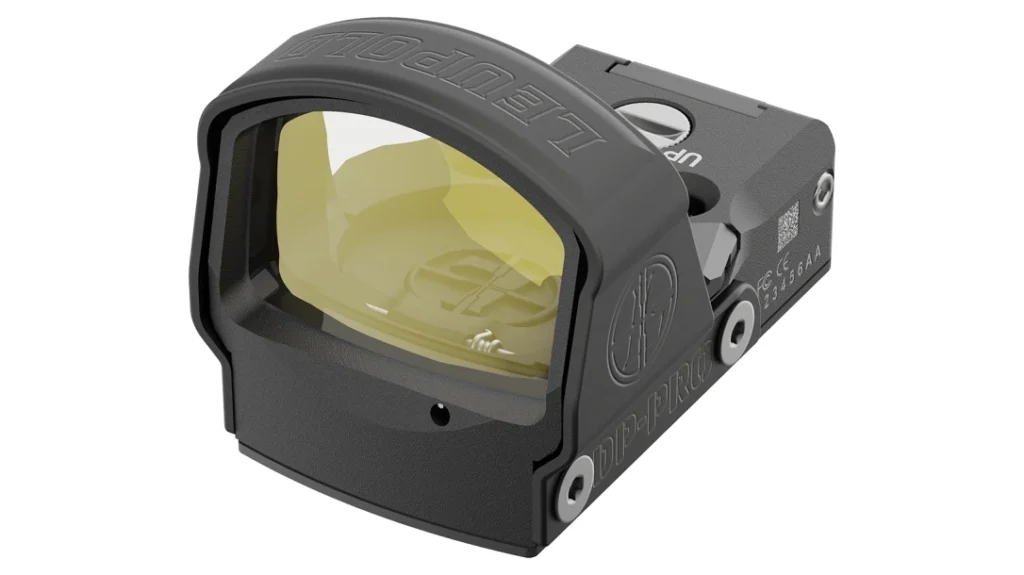
Modern Mounting Options
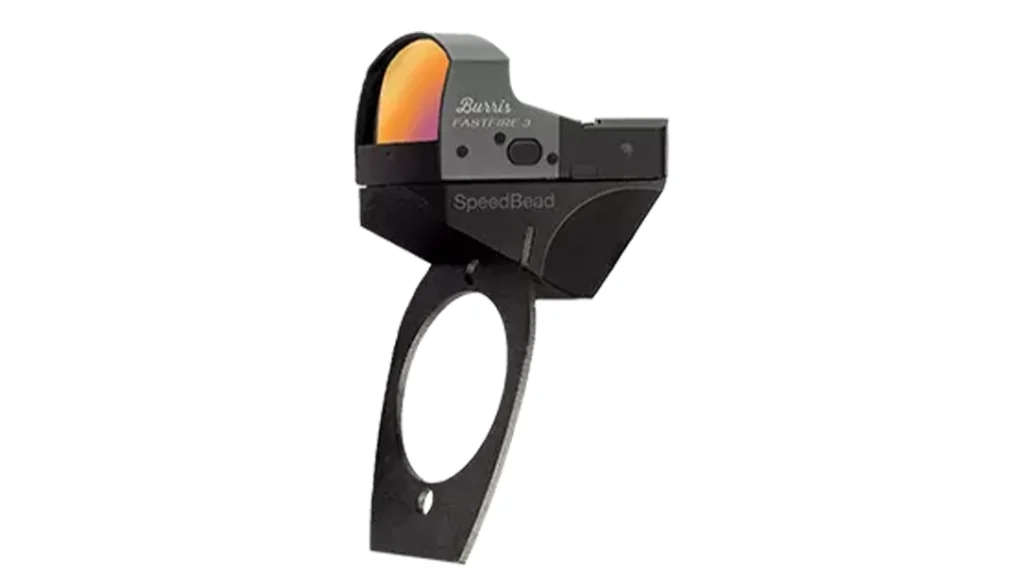
Many optic manufacturers now produce integrated mounting systems. One example is the Burris SpeedBead mount, which attaches at the junction between the stock and receiver, with the red dot mounting directly to the base.
The Vortex Viper Shotgun Enclosed Micro Red Dot takes simplicity even further. Its universal mounting system eliminates the need for separate bases or rings. That allows installation on nearly any shotgun that is drilled and tapped. There are more options than ever to get your shotgun dialed in.
Advertisement — Continue Reading Below
WHY OUR ARTICLES/REVIEWS DO NOT HAVE AFFILIATE LINKS
Affiliate links create a financial incentive for writers to promote certain products, which can lead to biased recommendations. This blurs the line between genuine advice and marketing, reducing trust in the content.