


Consistency. The key to just about every portion of precision shooting. Rifle, ammo, optic, breathing, sight picture, trigger press, follow through—the consistency crosses many categories. The shooter/spotter relationship and interaction is paramount. Partaking in these roles consistently with a counterpart can rapidly improve growth in the discipline. And I’ve long said that I didn’t know how to shoot a rifle until I learned how to spot. It changes everything. And shooting as a lone wolf often retards development, as you get stuck in a rut, recycle the same mistakes and habits, and aren’t pushed to maintain the consistency you need.
Precision Rifle Optics Teamwork
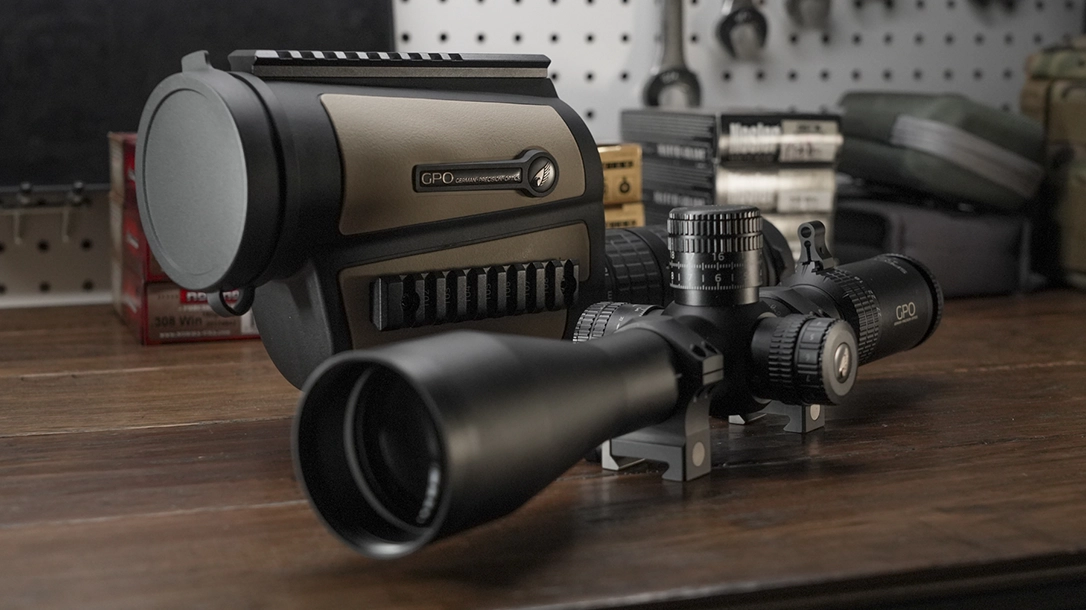
In order for a shooter and spotter to successfully work together and accomplish the tasks that dwell within precision shooting, they need to be on the same page. Speaking the same language with clear and repeatable dialog. One way to assist with this is having optics that bolster this interactivity. This happens when the optics share the same reticle system. Think of it as staring at the same sheet of music as you divide your acoustic responsibilities. You can know exactly where you are on the sheet at any time, as well as your partner. With the German Precision Optics (GPO) Spectra 6x 4.5-27x50i rifle optic and GPOTAC 45×60 spotter, users can shoot from the same sheet of music.
German Precision Optics is truly an optics underdog, at least in my opinion. While I hear many different brands mentioned in the space, especially as it pertains to performance and affordability, I rarely hear a peep about GPO. I’m no expert on the company at all but I do know that the owner and a couple of the other team members started out at Schmidt Bender before starting GPO. And I’ve seen everything from affordable opitcs to laser rangefinders that compete in price with the best of them—and outperform the larger named brands. In short, German Precision Optics is not to be slept on.
Advertisement — Continue Reading Below
The Shared PLR Reticle Advantage
These two products sport the same reticle system, GPO’s PLR, which is a tree type reticle that allows for accurate elevation and wind holds. These units are milliradian measurement, with an unexpected .5 mil subtension layout across the main horizontal stadia. This means the markings on the main crosshairs are in 1/2 mil measurements as opposed to the .2 or even .25 measurements of other reticles. That said as you move down the vertical stadia, once you get to 2 mils, the increments change to .25 mil which has become my preferred increment layout since using Leupold’s excellent PR-2 MIL reticle. Interestingly, this reticle is eerily reminiscent of that reticle. And this is a very good thing.
Like the Leupold, the GPO’s reticles feature thinner, crisp lines. This makes them easy to see and precise when it comes to measuring and communicating. I even like the font chosen for the task. It’s these details that make the difference.
Advertisement — Continue Reading Below
As I peered through the TAC 45 spotter I noticed that the reticle is oriented in the very center of the objective. On most spotters the reticle is positioned at the bottom or side of the viewing plane. This is fine as it allows the user to keep the reticle out of the way when trying to see misses and impacts. This is typically only a problem with reticles that are more clustered and busy. The cleaner nature of the PLR reticle means there’s less interference. It’s natural and more intuitive to have the reticle centered up and it correlates better to what you will see as the shooter behind the optic. I just think this works well and really like this feature.
Spectra 6x Features
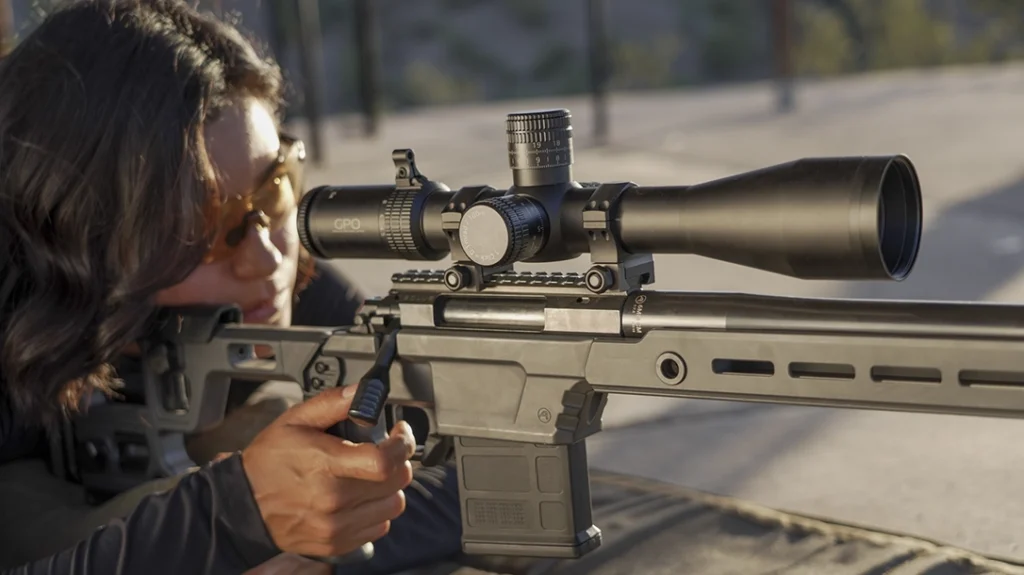
The Spectra 6x optic has a 6x magnification range. My initial walk-around of the optic was a positive one. Fit and finish is solid with a quality look and feel to all the bits and pieces. The windage and elevation knobs while not oversized in my opinion are appropriately sized. Neither too large nor not large enough. They are push/pull to lock/unlock with a short throw for either. I don’t mind this feature. I’m usually less concerned about the elevation knob as I’m most likely immediately in control of it at any given moment when on the rifle. But I’ve had non-locking, non-capped windage dials move on me during transport and retrieval and it’s always unnerving.
Advertisement — Continue Reading Below
The magnification throw is smooth with a large and included throw lever, with good tension—maybe favoring the light side just a bit but nothing concerning. I’ll take this over one that is too heavy any day. The throw lever is removable in case it gets in your way. Even with it removed there is a prominent adjustment nub. It features a quick adjusting diopter with markings so that you always know where it should be and others can use it it with ease as well.
The side parallax features a battery compartment and adjustment for the PLRi (illuminated) reticle. Designated iControl microdot illumination, It features stepless brightness control so that you can dial it in perfectly to any lighting conditions and it’s well beyond daylight bright. The main tube is 34mm with 50mm objective and it features a zero stop as well. At initial glance, its a well featured optic.
GPOTAC45 Spotting Scope Features
Advertisement — Continue Reading Below
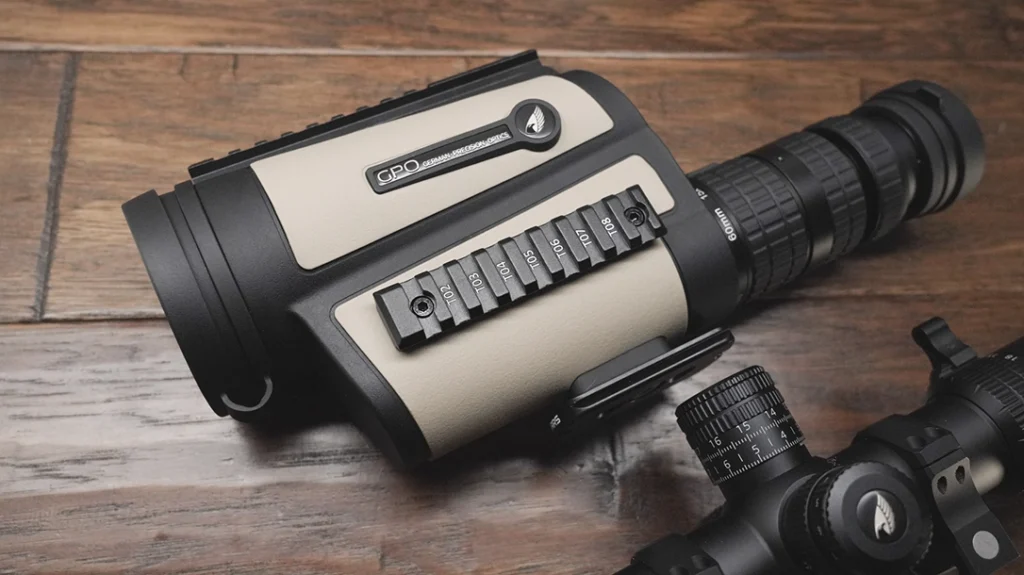
The GPOTAC45 spotter is an impressive piece as well. As soon as you open the box your eyes and senses are treated to an heir of quality. It’s a handsome spotter with that classic MK4 prismatic design so it’s rather compact. Thanks to a tough rubberized exterior it feels solid and durable.
Picatinny rails are attached at the 3, 9, and 12 o’clock positions so that you can attach any necessary accessories and a 1/4” thread resides at 6 o’clock. A nice honeycomb objective filter is included to reduce reflection as well as aid in protection of the lens. That said the GPOTAC45 include objective and ocular lens covers as well. Nicely knurled individual magnification, focus, and reticle focus rings top it all off. Again, this is a nice spotter from the outside. Attention was definitely given to the TAC45.
Both the rifle optic and spotter feature GPS double HD objective lens so resolution is good and image is clear. Light transmission is excellent thanks to GPO Bright high-transmission lens coatings.
Advertisement — Continue Reading Below
Range Performance
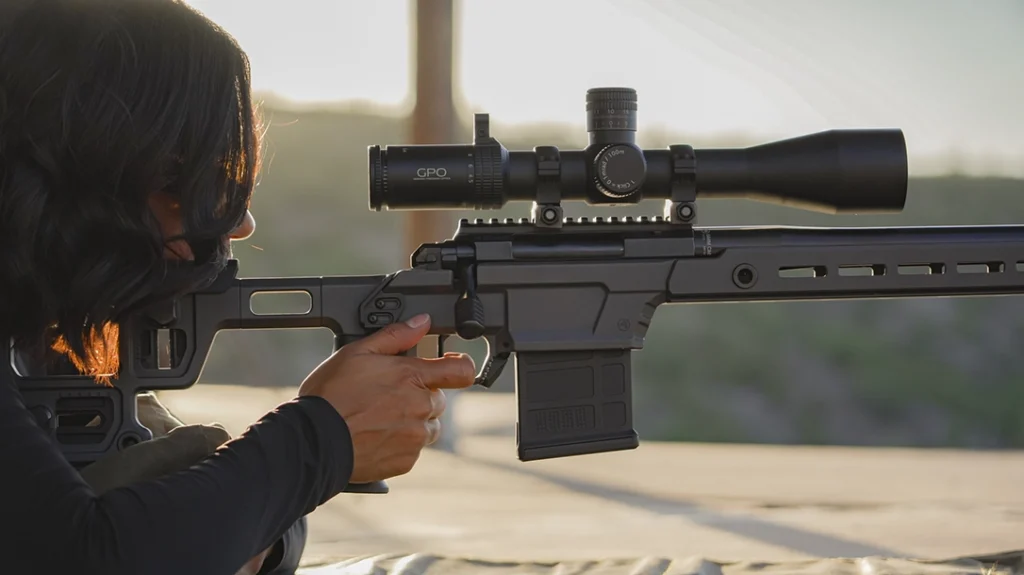
On the range the GPO units were easy to use. Easy enough that I put a brand new shooter on the spotter and a slightly more experienced shooter on the rifle optic at the same time. I proceeded to go over the reticle markings and layout and then set them loose to utilize their respective units.
Both found the spotter to be bright and clear, a response that I hadn’t expected as they weren’t prompted about it. The shooter, Rebecca, did note that the eye-box of the rifle optic was unforgiving, leaving little margin of error for the shooter. Beyond that, everything functioned as it should.
Advertisement — Continue Reading Below
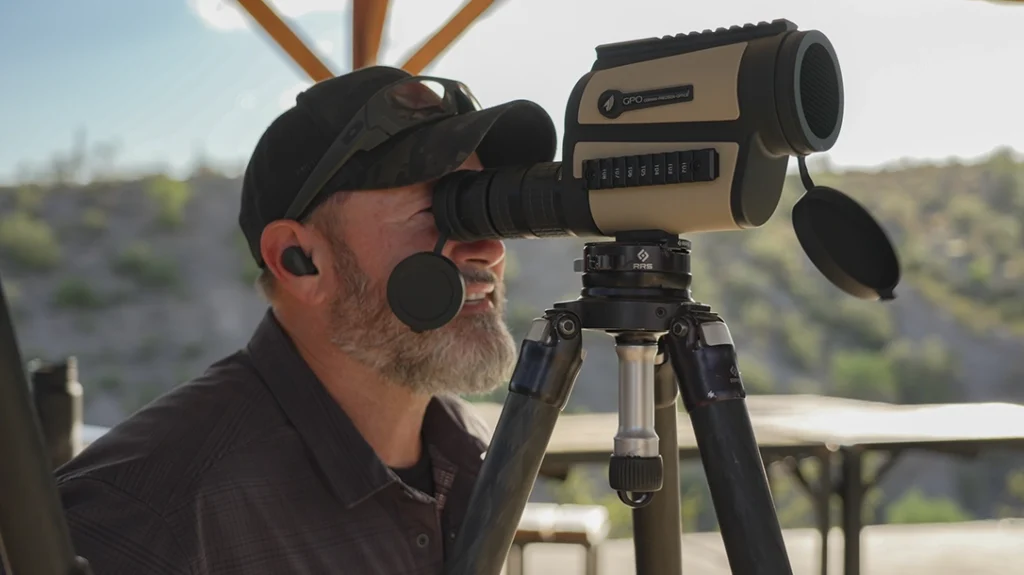
With very little interference from me they were able to make solid use of the GPO optics and get impacts. Winds were twitchy that day and the spotter, Chuck, had some challenges getting the shooter on target. It was a baptism by fire of sorts but it did prove my point that when you have the shooter and spotter looking at the same reticle, it’s easier for each to visualize what the other is saying, communication is better, and the experience for both is better as well.
Final Thoughts
GPO has some solid units on their roster. If you’re wanting an optic/spotter combo that could make your two-man sessions a bit easier the Spectra 6x 4.5-27 and the GPOTAC 45×60 are worth a look.
WHY OUR ARTICLES/REVIEWS DO NOT HAVE AFFILIATE LINKS
Affiliate links create a financial incentive for writers to promote certain products, which can lead to biased recommendations. This blurs the line between genuine advice and marketing, reducing trust in the content.