


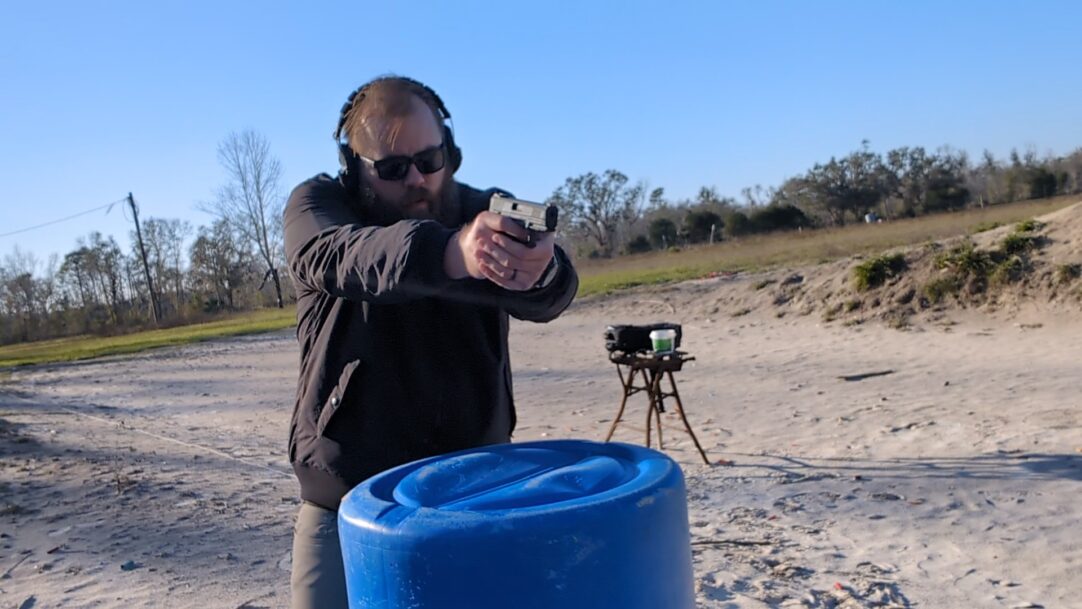
More than likely, every time you’ve ever been tested, you had some form of evaluator. Be it a teacher with an answer key or a coach holding you to a standard. Serious firearms training is no different. There has to be some form of standard you’re held to. You can’t always train under the eyes of a watchful instructor, but that doesn’t mean you don’t do self-evaluation.
How do we self-evaluate our firearms training? That’s actually pretty easy. You need targets and a shot timer. Both provide objective data you can use to evaluate your skills, find your weaknesses, and just plain get better.
Advertisement — Continue Reading Below
Too often, solo training is all about the feels. That draw felt fast, that felt good, that group looks tight, and guess what? Feelings lie. Targets and timers work, especially when they are backed by historical data you gather from each.
When training, how do you evaluate your skill?
The Self Evaluation – Ego vs. Data
If you are a relatively new shooter, you’re in the right place. Too much of my training used to be based on feels. At 21, I would go to the range and feel good about what I was doing. In reality, I was turning ammunition into noise and not accomplishing much.
Advertisement — Continue Reading Below
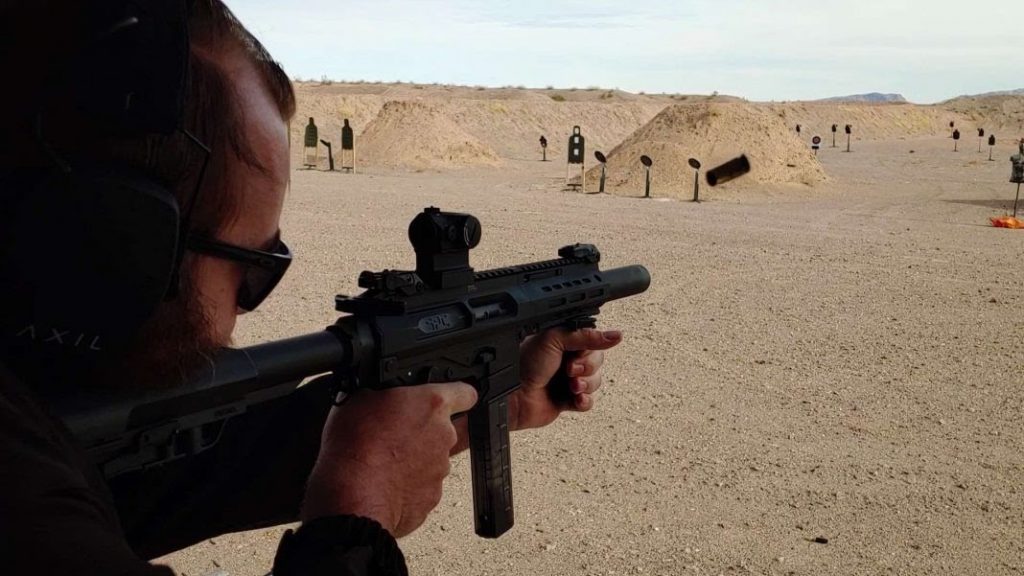
For a truly new shooter, sometimes turning ammo into noise becomes valuable. Powering through a few hundred rounds makes the firearm experience more familiar, less intimidating, and it takes sand and water and turns it into clay. We can mold clay into a good shooter.
Self-evaluation is how we mold that clay. Our objective evaluators are our timers and our targets.
Advertisement — Continue Reading Below
Shot Timers
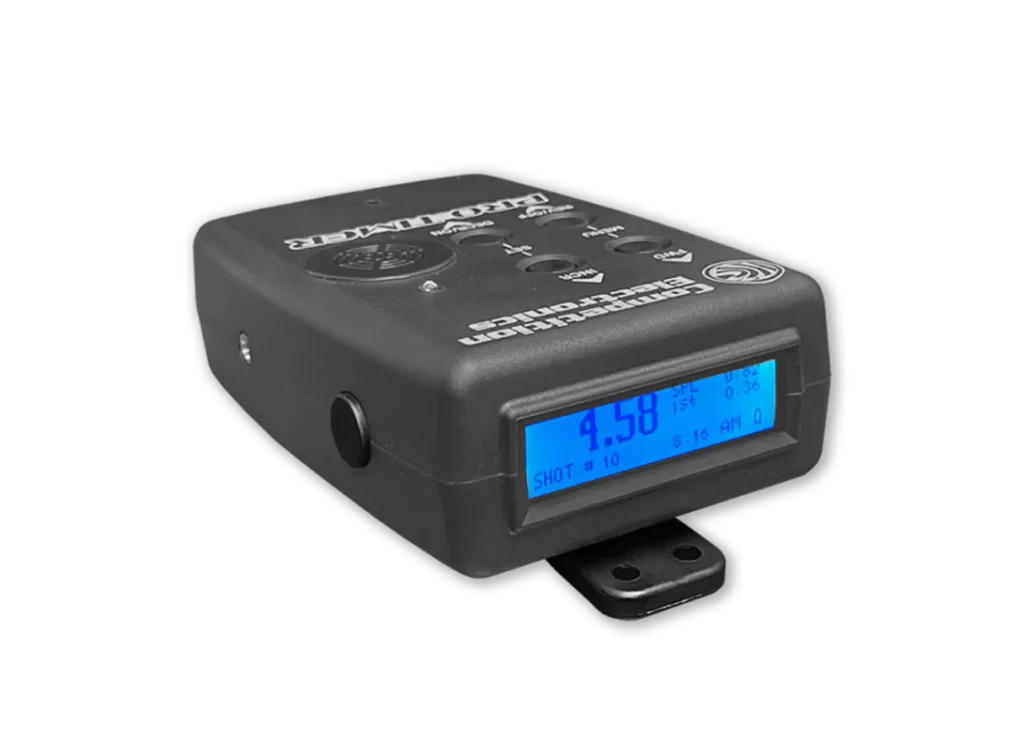
Shot timers are simple devices. They act as a go signal and record the time it takes you to fire a shot or multiple shots. At the end of a string of fire, they can provide a variety of useful data.
First, you get the time it took to accomplish the drill total. Second, it provides the time of each shot in the drill from the time of the signal. Finally, between each shot there is a split time. That’s the time between shots and might be one of the most overlooked data points.
Advertisement — Continue Reading Below
Split times provide you with a metric to observe for error during a string of fire. It’s easy to tell when you fumble a draw on your way to a Bill Drill. It’s tougher to know that you press the trigger faster or slower with every subsequent shot.
Each of these times is a valuable metric for a particular skill. We all aim to be a little faster, but how can we be fast if we can’t observe our objective speed? There is a Grand Canyon-sized gap between what feels fast and what is fast.
Targets – All About Accountability
Speed without accountability is just a waste of ammo. I can shoot at a Grand Master level if I don’t ever need to hit a target. Targets provide the harshest self-valuation. Getting a .98 draw to first shot means diddly if the round isn’t at least close to where you want it.
Advertisement — Continue Reading Below
Targets provide a visual representation of your shots and are a critical part of training. Not all targets are equal for training, either. Large steel targets are great for stroking ego, but what do they really tell you?
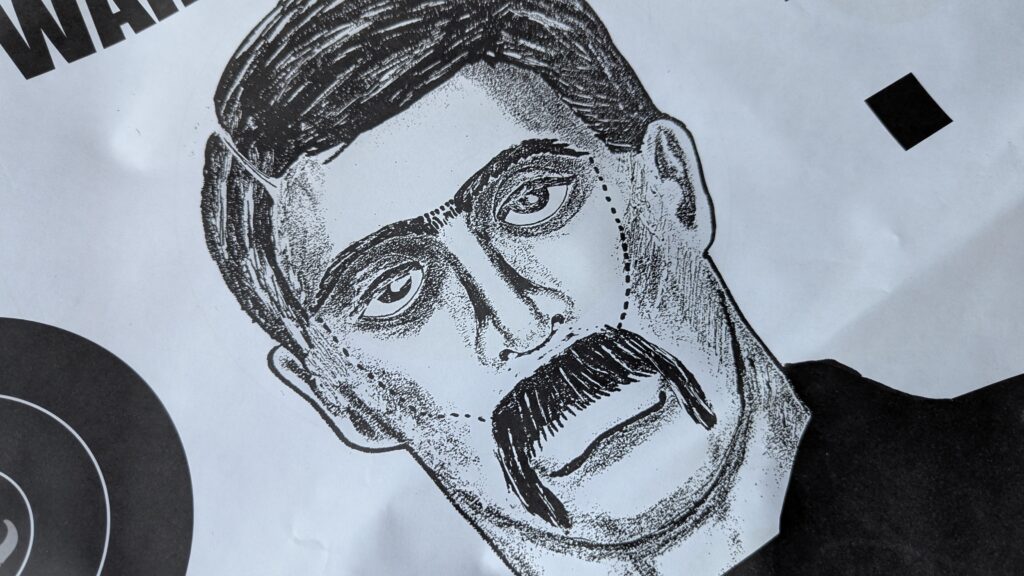
Smaller steel and paper targets force a measure of precision alongside speed. Paper or cardboard, in particular, provides the accountability and precision we need to self-evaluate our shooting. Not just any targets, I go for targets with designated scoring areas that are standard and easy to track.
Advertisement — Continue Reading Below
Self-Evaluation – Putting It All Together
Targets and timers come together to provide a full picture of your skill level. If your grip sucks, you’ll see it in your groups and time. If you can shoot fast and hit nothing, you’ll know. If you can hit the target twice in ten seconds, you’ll know you’re going too slow.
Combine the two for every drill to see where you need work. This can laser-focus your training to address weak points. Whether it’s speed, distance, or accuracy.
If you shoot straight but shoot slow, find drills like the Bill Drill to improve your speed.
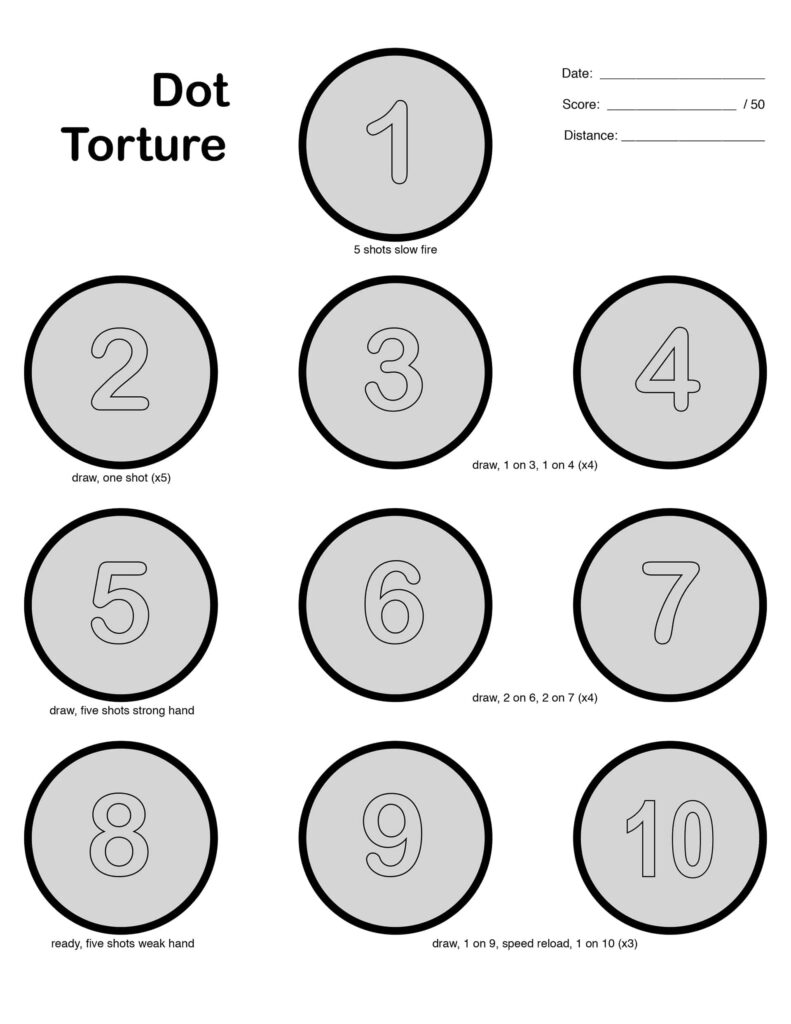
If you shoot fast but don’t make consistent hits, give the No Fail Pistol Drill a try.
Outside of self-evaluation, you need to record your drills, hits, times, and everything in a log. This includes your accuracy on target, your split times, your total time, your first shot time, everything you can record, record it.
Use that data to drive improvement.
If your split times are slow, now you know what you have to do. If your first shot is slow, but everything else is fast, you know where to start. Is your first shot poor, but everything else consistent? Figure out the bug.
Self-Evaluation is all about finding the bugs. Then squashing them by improving. So get targets, timers, and drills that can challenge you, and get better.