


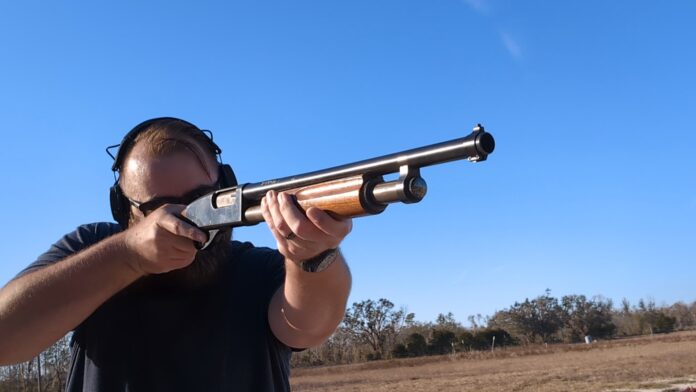
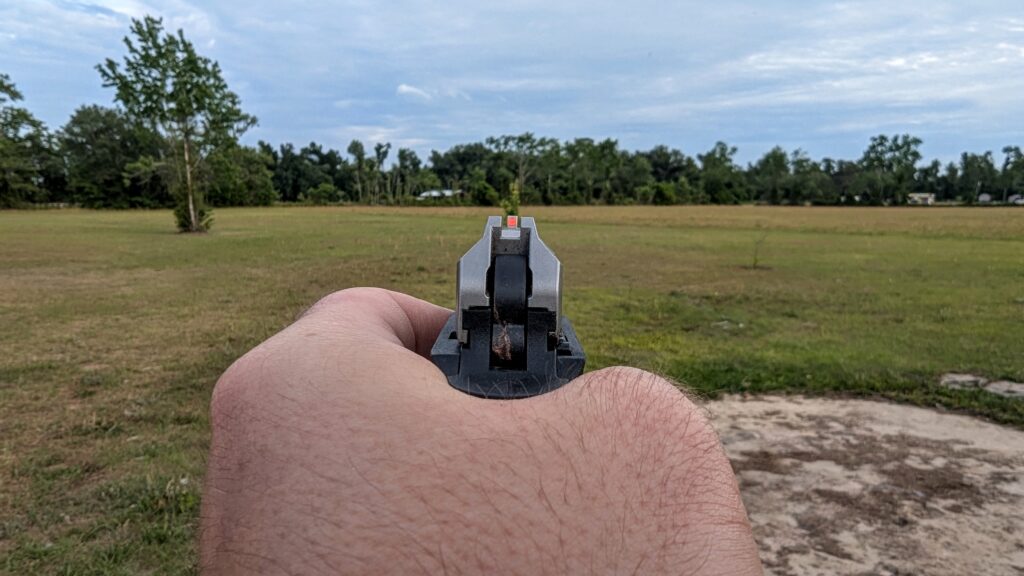
Something I’ve gotten oddly good at is shooting handguns at extended ranges. I hit way more than I miss at 50 yards. I make more than half my hits at 75 yards. I can do this with ease with full-sized duty guns wearing dots, and do pretty well with small guns and iron sights. I’m not sure when I cultivated this talent, or how, but I find myself doing it fairly often, and recently I realized I wasn’t training, I was performing.
The Importance of Proper Training
I knew I could make those hits, so I made them, and hearing the ring of steel at 50 yards with a handgun made me incredibly happy. I like the little dopamine hit I got from succeeding, but the realization that I wasn’t getting better hit me like a brick through a plate-glass window. I was sacrificing my precious time and ammo not to build skills, but to validate my own ego.
Advertisement — Continue Reading Below
I’m sure there are other shooters out there who have developed a skill they are proud of. I can put two rounds of buckshot into an A-zone in less than a second with a pump-action shotgun, and that feels pretty good. The problem is that when you perform rather than train, you get stuck in a positive feedback loop.
Performing Versus Training
If you’ve developed a skill to a certain level and you constantly engage that skill at the same range with the same par time you won’t ever really advance those skills. It’s like benching 180 every day for three sets of twelve and never pushing past the reps or weight. You’ll eventually get really good at lifting that weight for those reps, but you won’t do much more than that.
Performing is a friction-free experience. Training is the act of trying to find that friction. We want to push to the point where we are failing, and when we fail, we can evaluate what failed to fix it. Was your draw inefficient? Was your grip sloppy? Did you press the trigger before your sight was truly on the target?
Advertisement — Continue Reading Below
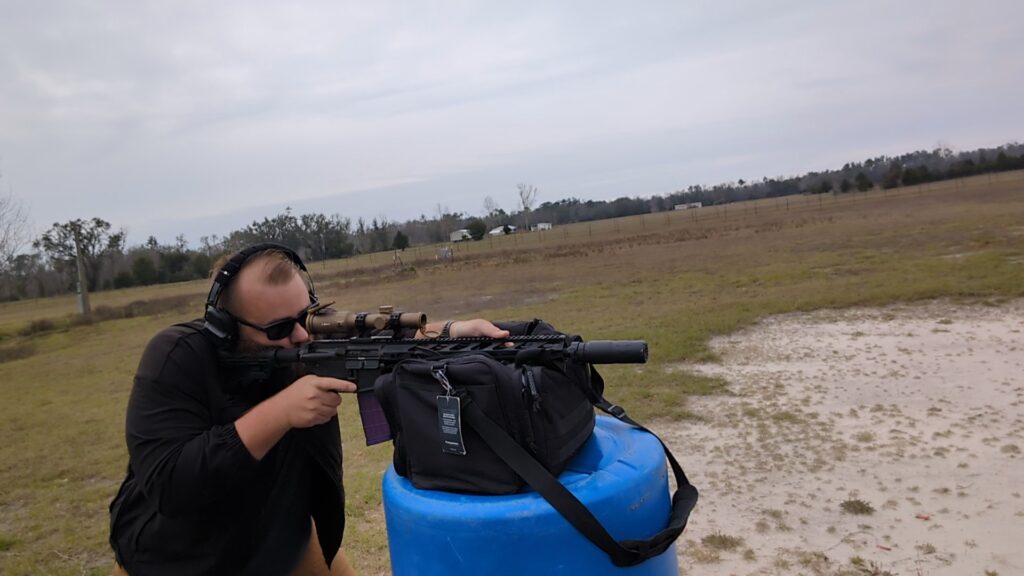
You’ll see your failures on the timer or target, and from that point it’s up to you to self-evaluate and find the fix. Every failure is a data point you can use to improve. This isn’t just something you’re actively doing, but your brain is also passively doing it.
Frustration releases a dose of neurochemicals that help you learn and excel. As you find friction, your brain begins to myelinate neurons, improving your process. To put it simply, you have to press the gas until the car swerves off the road to learn anything.
Advertisement — Continue Reading Below
Start Experimenting
Let’s say you are pushing the gas to the floor, and it falls apart. What can you do to fix it? It’s typically easy to identify major issues. You didn’t see the sights before you pulled the trigger, your group opened widely cause your grip sucks, you overswung the transition, or you found nothing but air as you attempted to reload.
Why exactly did you not see your sights? Was it a bad presentation? Why did your grip fall apart? Was it a loose grip? A low grip? A lack of finger pressure? It can be tough to tell as a small explosion goes off in your hand.
Advertisement — Continue Reading Below
If you can’t tell, that’s fine, but don’t do the same thing again. Focus on where you think the weak spot is and try something different. If it’s a grip issue, try to ensure you’re grabbing as high as you can, or increase pressure.
If it’s a presentation, remind yourself not to pull the trigger until you see the sights on the target. Experiment with your draw, your grip, your presentation, and even your stance. If you failed, make an adjustment and see if it helps or hurts.
Practice Blocks
Of course, pushing the gas isn’t all we should do. We should break down our training into blocks. The first being deep block practices, the second being randomized.
Advertisement — Continue Reading Below
A deep block practice is a repetitive task. Maybe you practice reloads over and over, or draw strokes. This isolates your skills and builds the skill. Your speed should increase gradually until you’re pressing the gas a little too much. I can get a pretty fast draw to the first shot, but am I sacrificing my grip to do so? These are the self-evals you’ll have to notate and work to improve.
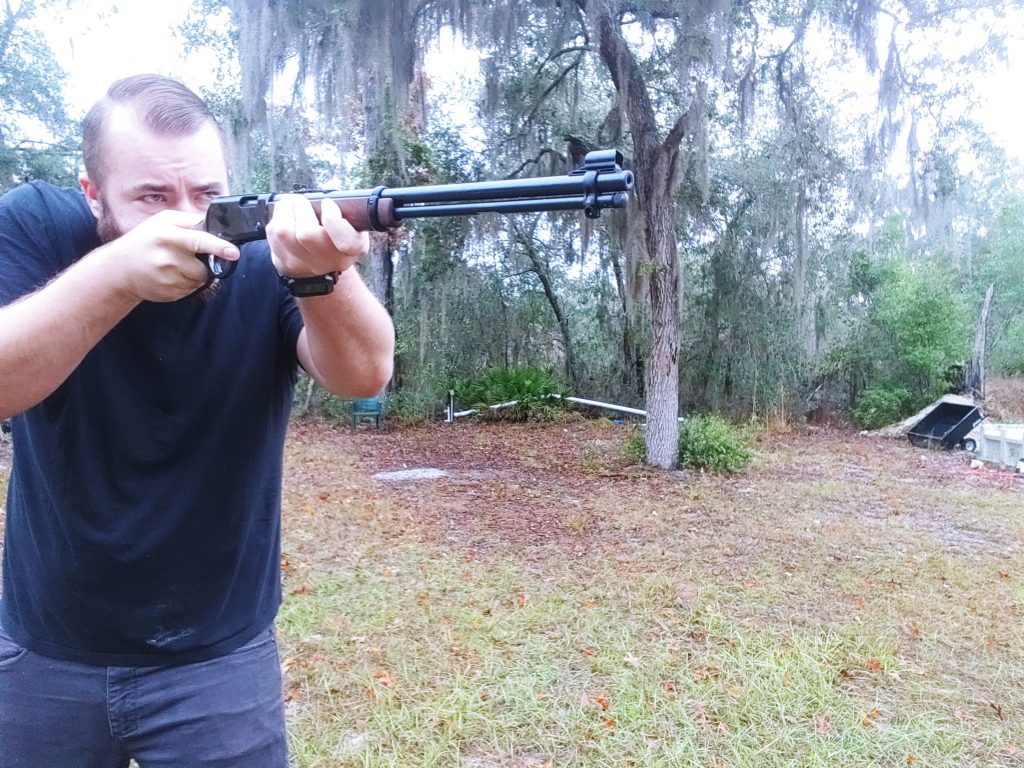
Random blocks are where you work a skill in a less isolated manner. If you’re practicing your draw, you can also practice a Bill Drill. You’re getting a draw rep in, but also working on other skills. The goal is to break the spell of isolation and get numerous skills working together. Working in isolation helps build the skill, but random blocks allow you to integrate it.
Advertisement — Continue Reading Below
This can be done dry or live. Pick an isolated skill, practice it, then integrate it into randomized practice.
Never Be Comfortable
If you feel good about a skill, then you’ve come to a fork in the road. Road 1 means working the skill in a more difficult fashion. Road 2 is to work on a different skill, increase your proficiency with something uncomfortable.
If you’re good at shooting a target at increased distances, then add a par time and see if you can do it. Maybe you should start testing your ability to reload. Whatever you do, it should be a little uncomfortable. As soon as you start to feel satisfied with your performance, make it harder.
Advertisement — Continue Reading Below
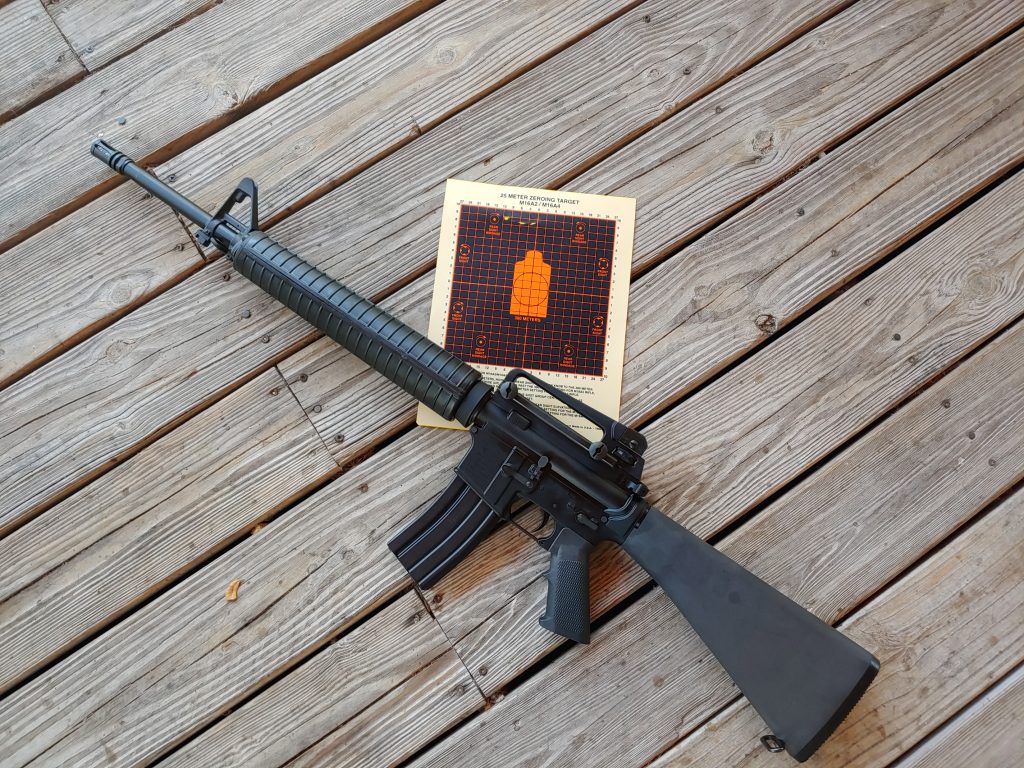
That’s how you’ll improve your skills. Never be comfortable. Don’t practice your ego, train to get better.
To get better, you have to be willing to be pretty bad at whatever skill you’re training. Dedicate a good portion of your training to what you’re bad at, and you’ll grow.
Advertisement — Continue Reading Below