


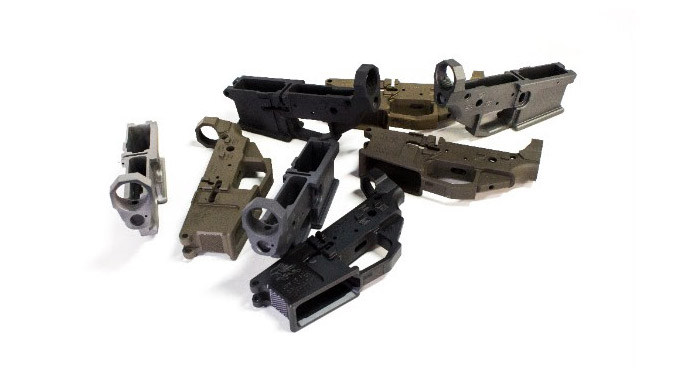
The AR world is just a blooming with different types of lower receivers. The three main categories are forged, billet, and polymer. Forged and billet are made from aluminum, and I’ll give you three guesses what polymer lower receivers are made of. We are going to take a look at each one and go over what exactly they are and how they affect your build.
Lower Receivers
Forged
Forged is what the vast majority of AR lowers are. Forging is a fancy way of saying the material is basically forced into shape. A chunk of aluminum is basically hammered into the general shape of an AR 15 lower receiver. This is a simple method to explain it, but that is how it works. This hammered chunk of aluminum is then finished with a CNC machine into the lowers you know and love.
Advertisement — Continue Reading Below
Forged aluminum is the strongest type of lower receiver on the market. Forged lower receivers are stronger because of how forging works. Due to the pressure applied to the lower receiver the grain follows the same overall shape. Because the grain is basically continuous the forged receiver is stronger. I’m not a metallurgist, but this is the general consensus among experts and people smarter than I.
Billet
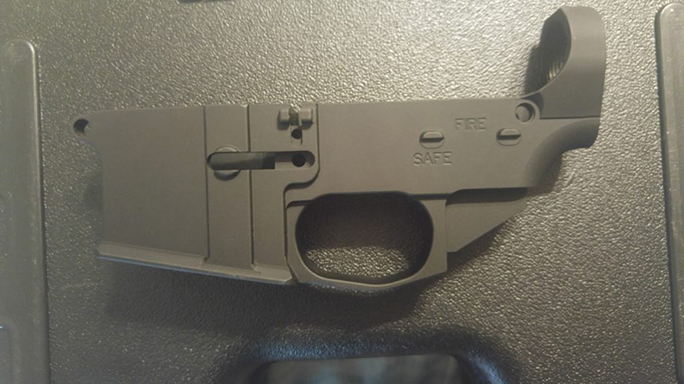
Billet lowers are really interesting and some of my personal favorites just do to their uniqueness. These lower receivers are cut from a block of aluminum. This aluminum is known as bar stock. These lowers start life as a chunk of raw aluminum and is then put through a CNC machine. This CNC machine works its technical magic to turn aluminum into an AR 15 lower.
Advertisement — Continue Reading Below
As you can see the difference is major. The lines are smooth and sharp. This gives your receiver a unique look. Some billeted receivers are just works of art and 100% unique. Others are just different enough to catch the eyes of an experienced AR enthusiast. These lowers are weaker than forged, but the difference is minimal. You aren’t going to break a billeted lower with normal use. Take a sledge hammer to both of them and there may be an undetectable difference in the force it takes to break one. Billet lowers are a bit heavier than standard forged lowers, and that is the only important difference.
Polymer

The new kid on the block is polymer lower receivers. Poly lowers could be the future of AR 15 lower receivers, but I feel they have a way to go. Polymer lowers can be cast, or cut from a chunk of polymer. You can even cast poly lowers at home with the right kit.
Advertisement — Continue Reading Below
A lot of naysayers poo-pooed polymer-framed handguns thirty years ago and look what we have now? The FN SCAR uses a polymer lower and it seems to work pretty well. Lots of bullpups maintain a healthy dose on polymer in their design. Is polymer set to take over? Maybe one day, but right now it’s still in its infancy. Polymer lowers often have issues with being out of spec, weak buffer tube extensions, and they can flex under recoil which causes accuracy issues. Polymer lower receivers are often hit and miss, and I’d always suggest buying one in person so you can inspect it.
The advantage of polymer lies in weight, price, and customization. It’s easier to make unique lowers from polymer and poly lower receivers are often much cheaper than aluminum receivers. They are quite light as well and are the most affordable lightweight material on the market.
Know Your Lower Receivers
So those are the big three lower receivers on the market. While there is room for preference, there is also room for frustration. As someone who’s been burned by a polymer lower, I don’t have all the faith and confidence in them. All my current builds are forged lowers, but I do have high hopes for this billeted lower. At this time, I’d stick to aluminum and let polymer develop a bit more. The good news is this is America, and we have plenty of choices for our AR 15 builds.
Advertisement — Continue Reading Below
This post was updated on May 8, 2026.
WHY OUR ARTICLES/REVIEWS DO NOT HAVE AFFILIATE LINKS
Affiliate links create a financial incentive for writers to promote certain products, which can lead to biased recommendations. This blurs the line between genuine advice and marketing, reducing trust in the content.