


Within the U.S. Army’s $253 billion budget request is a proposal to boost research and development spending by 12.9%.
While officials say that extra $2.1 billion will allow the Army to “keep a technological advantage,” congressional leaders have expressed concern that it could come at the expense of accountability.
During the Army’s congressional budget hearing, Rep. Betty McCollum, D-Minn., the ranking member of the House Appropriations Subcommittee on Defense, noted that while R&D spending is increasing, funding for financial management and audit readiness is declining.
McCollum said that although much of the budget is aimed at “applications, infrastructure, data and transport,” it provides less detail on how those investments will be tracked. She added that the number of budget lines dedicated to auditing has been reduced from 41 to four.
“It has an unintended consequence when you compress these activities to make it easier for the Army to move funds without keeping Congress involved,” she said. “We might have a discussion about what you’re going to do, but without the lines, we don’t have the accountability for both of us.”
While the accountability concerns are clear, they also raise a practical question: where will the R&D money go?
According to the Army’s budget highlights, R&D spending will increase from $16.6 billion in 2026 to $18.7 billion in 2027. Of that, $2.9 billion will be set aside for a general science and technology fund, which officials say will be “dedicated to developing the next-generation systems and platforms that will support the Army of 2040 and beyond.”
The budget highlights also include a variety of procurement items, such as loitering munitions, Infantry Squad Vehicles, Next Generation Squad Weapons (with ammunition) and advanced night vision goggles.
Other specific investments include:
- $904 million for Next Generation Command and Control (NGC2), an initiative to modernize the Army’s communications and networking technologies. Last year, Anduril Industries developed a prototype for $99.6 million. The finished system integrates technologies from a range of industry partners, including Palantir and Microsoft, to support real-time decision-making. The proposed R&D funding would be used to deliver the system at scale.
- $2.1 billion for the MV-75 Cheyenne II tiltrotor aircraft, which the Army describes as “a revolutionary platform” capable of providing the speed and range needed for future conflicts. Introduced last year, the aircraft is intended to supplement — and eventually replace — the Sikorsky UH-60 Black Hawk, which has been in service for more than 50 years.
- $474 million for Abrams M1E3 modernization, part of a yearslong effort to upgrade the Army’s main battle tank. In 2023, the Army announced plans to move beyond the M1A2 upgrade package and develop the M1E3, with fielding targeted for 2030. The modernized platform is expected to include a hybrid-electric drive, improved armor, advanced munitions and enhanced networking and artificial intelligence capabilities.
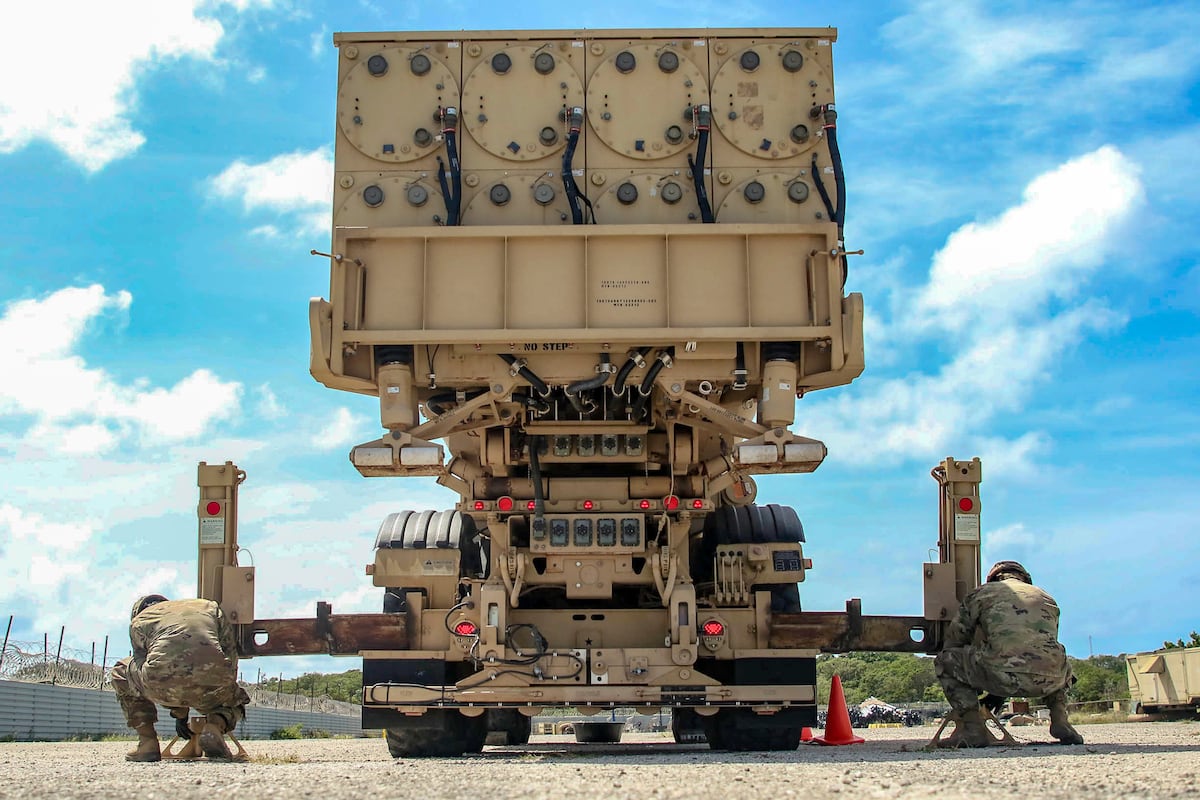
- $1.1 billion to transition the Terminal High Altitude Area Defense system, or THAAD, from the Missile Defense Agency to Army control. The Army began developing the system in the early 1990s to intercept ballistic missiles inside or outside the atmosphere, and it became operational in the mid-2000s. According to the Congressional Research Service, the transition is intended to simplify “integration and oversight.”
In response to McCollum’s questions, Army Secretary Dan Driscoll acknowledged that the service has struggled in the past to manage taxpayer dollars effectively.
“We have a history of spending money in a way that didn’t defend taxpayers’ right for their dollars,” he said, adding that lengthy acquisition timelines often mean new systems are outdated by the time they are fielded.
He argued that the increased budget, and the flexibility that comes with it, is necessary to keep pace with rapid technological change.
“The purpose, from our perspective, for something like the Next Gen C2 is the speed of innovation requires us to shift dollars between back end systems,” he said. “The speed of these innovations doesn’t allow us to stay as predetermined where the dollar will go.”
In the end, Driscoll suggested that technology — specifically, the Army’s Vantage dashboard by Palantir — might be the compromise they need because it “basically gives us a lot more visibility into where the dollars are going and [gives] your team access to run their own reports.”
But McCollum still wanted the audit, saying that budget discussions “needs to be a two-way conversation.”