


Each summer, when a heatwave hits, the power grid gets overwhelmed. Power is interrupted, and many apartment and condo dwellers rush to the store to buy whatever they can get their hands on to cool off. By then, anything that might have helped is sold out. If you live in an urban environment, brick, concrete, and glass make the heat worse, as these materials all radiate stored heat back into your living space.
Let’s look at various ways to keep cool during a heat wave and a power failure.
TL;DR: To stay cool at home during a power outage, block heat during the day with closed windows and blackout curtains, then vent hot air at night with fans and cross-breezes. Use water on skin, reduce indoor heat sources, and set up one cool zone to make a small space safer and more comfortable.
Quick Look at What You’ll Learn
How to Keep Heat from Coming In
In an apartment, heat enters in three ways: through walls and ceilings, through airflow, and through direct sunlight. During the hottest part of the day, your goal is to keep the heat out. If you live on a floor that receives direct afternoon sun, those windows will act as heaters. Without AC, you need to create a barrier. Keep windows shut, and blinds closed tightly during the day. Use heavy blackout curtains as an extra layer over your windows. If you don’t have blackout curtains, try using light-colored sheets pinned over your windows to reflect sunlight and keep out the heat.
Many people feel like cracking open a window in the hopes of getting a breeze. Avoid that urge if the outside air is hotter than the inside air. If it’s 95°F outside and 80°F in your living room, opening the window will only raise your temperature, so resist the urge to open it.
Cooling Without the Grid
Once the sun goes down, you want to let the heat out. This is where cross-ventilation can help you. In a small unit, this is easier to achieve than in a large house. Identify the side of your apartment that lets heat in versus the side that lets it out (the exhaust side).
If you have battery-operated room fans, now is the time to bring them out. Instead of pointing a fan at your face, place it in a window frame facing outward. This creates a vacuum effect, drawing in fresh, cooler night air through your windows. This will help cool a room more than just moving stagnant air around.
Use Water
Cooling off with water is the most efficient way to lower your body temperature.
Instead of trying to sleep under a heavy blanket, lightly moisten a thin sheet with cool water and drape it over yourself. As the water evaporates, it will make you feel cooler.
You can also try having a few spray bottles on hand. Lightly spray water on your pulse points, such as your wrists, neck, and ankles, to provide immediate relief. Because you are in a small unit, keep a few gallons of potable water dedicated purely to “cooling use” in your emergency kit. You don’t want to ration your drinking supply just to keep your skin temperature down.
Managing Your “Internal” Heat
We often forget that household electronics are heat sources. In a small apartment, this effect is compounded. If your fridge is struggling (or if you are running it on a backup battery), ensure the coils are clean. A dusty refrigerator works harder, generating more heat in your kitchen.
During a heat-related outage, avoid using any cooking appliances, such as a gas stove. Try to avoid cooking by using up your canned goods that don’t require heating.
“Low-Tech” Prep
Try these low-tech solutions.
Reflective Window Film: Buy reflective film that can be installed quickly and blocks 70% (or more) of solar heat gain. It’s an invisible, low-profile way to keep your apartment cooler year-round. If you cannot afford window film, aluminum foil, or even cardboard can be used to insulate south-facing windows to block and reflect sunlight.
The “Ice Jug” Method: Freeze several gallon-sized jugs of water in your freezer before the heat hits. If an outage occurs, you can place one in front of a small, battery-powered fan to create a “swamp cooler” effect.
Foot Soaks: Dip your feet in a bucket of cool water. A foot soak is a fast way to lower your body temperature.
Door Sweeps: If you live in an older building with drafty doors, heat can seep in from the hallway. Just like cold drafts in the winter, the heat can come in. Use a draft stopper to keep the heat out.
Personal Fans: I picked up a battery-operated personal fan that provides instant relief. They are inexpensive and portable. Keep extra batteries on hand. Some personal fans are also rechargeable—just make sure you charge them regularly.
Peppermint Tea: Peppermint contains menthol, which gives you a cooling sensation when you drink it. Try it iced and see if it gives you some relief.
Keep Your Cool
The heat can increase your stress level. Being in a small, warm space can lead to irritability and poor decision-making. If you’ve done everything and your apartment is still unbearably hot, identify a couple of places you can go during the day, such as a shopping mall or a coffee shop, where you can hang out until power is restored. Some cities have cooling stations where residents can find relief. Take the opportunity to identify these places by checking your city’s resources.
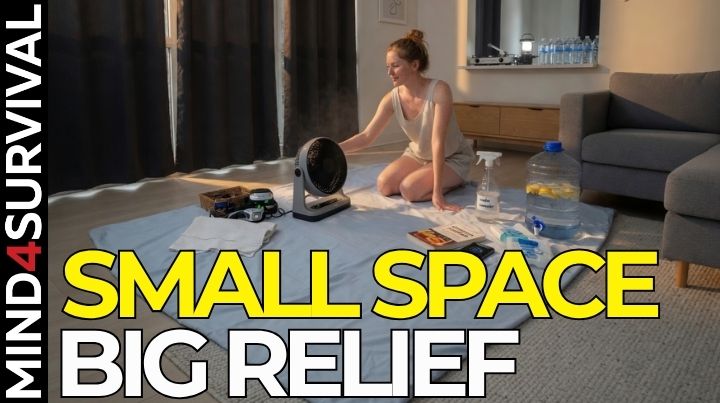
Create a designated “cool zone” in your apartment. Choose the room with the least amount of glass or the one that’s on the shady side. Move your essential supplies there and do most of your activities there. By centralizing your activities, you minimize the space you need to keep cool and give yourself a sense of control in a chaotic situation.
Preparing for a heatwave in an apartment isn’t complicated. By making a plan to manage the heat with low-tech methods, you’ll be ready for the next heat wave and avoid panic when power goes down.