


On June 23rd, the number of New World screwworm cases stood at sixteen. Now, there are 32 known cases of the flesh-eating parasite in the United States. Researchers are fast-tracking options in an attempt to slow the population growth of the devastating screwworm before it does widespread economic damage.
US Screwworm Cases At 16
The latest effort comes through a $300,000 research investment announced this week by the Foundation for Food & Agriculture Research (FFAR), which is partnering with biotechnology company Agragene and researchers at North Carolina State University to develop genetically sterile male screwworm flies that could outperform the insects currently used in eradication programs, according to a report by Hoosier Ag Today.
The sterile male fly method helped eradicate the screwworm previously, so it’s a known effective strategy. The implementation of this idea aided in the elimination of the New World screwworm from the United States by the 1960s and has remained a cornerstone of international eradication efforts.
Sterile Fly Facility Opens To Combat Screwworm
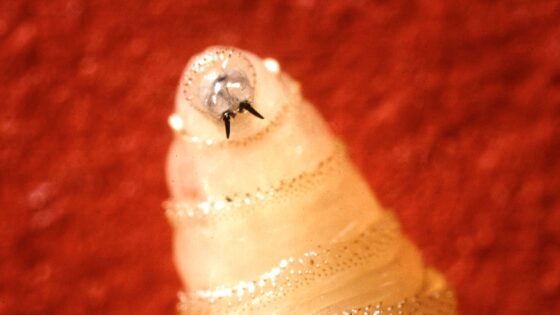
The screwworm has become a threat because its larvae feed on the living tissue of warm-blooded animals rather than dead or decaying flesh. Infested cattle, sheep, goats, horses, wildlife, and other animals can suffer severe wounds, rapid weight loss, and, if left untreated, death.
Is The Screwworm A Problem For The Meat Supply?
“There are major advantages to releasing only sterile males for New World screwworm control,” said Maxwell Scott, an entomology professor at North Carolina State University leading the project. “The goal is to develop an alternative way to produce competitive sterile males without the cost and liabilities of gamma irradiation.”
“The stakes are high, and we need to ensure that all possible options for addressing this invasion are on the table,” Miriam Martin LeValley, scientific program manager at FFAR, added to the conversation. “New World screwworm poses a dire threat to the U.S. livestock industry.”