


Nearly 150 military family members died by suicide in 2023, a drop of 22% in the past six years.
Despite the decline, however, the rate of suicides among military spouses and dependent children has actually risen slightly, the result of a declining population and continued deaths, according to the Defense Department.
According to the DoD’s 2024 Annual Report on Suicide in the Military released last month, 146 military family members, including 98 spouses and 48 dependents, died by suicide in 2023, the same number as the previous year. But the rate — 6 deaths per 100,000 people — rose from 5.8 per 100,000 in 2022 as the number of total family members dropped over the time frame.
Moreover, based on data the DoD received in 2024, the rate has increased steadily since 2011, with a rising rate of suicide among male spouses factoring heavily into the increases. In some years — 2012, 2013, 2015, 2018, 2019 and 2020 — male military spouses had higher suicide rates than the U.S. male population, according to the data.
“Male spouses accounted for nearly two-thirds of suicides among military spouses despite representing a much smaller share of the overall military spouse population (14%). These findings are similar to the U.S. population, which consistently shows ”males are more likely to die by suicide than females,” the report noted.
The Pentagon began publishing data on military family suicide in 2019 as part of a requirement in the fiscal 2015 Carl Levin and Buck McKeon National Defense Authorization Act. Lawmakers expressed concern at the time that no one knew the extent of the problem among military family members.
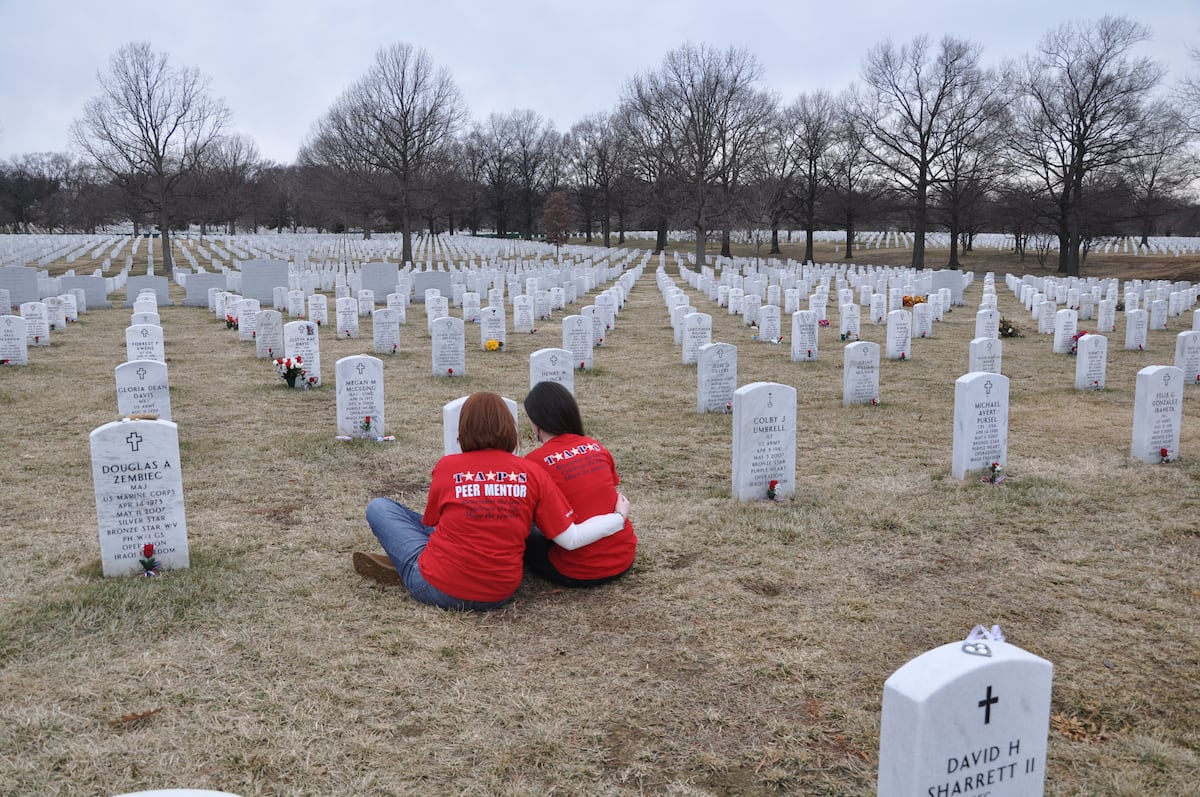
The data is important because in addition to tracking the deaths, it acknowledges the problem and can influence prevention efforts, explained Carla Stumpf Patton, vice president of suicide prevention and postvention for Tragedy Assistance Program for Survivors, or TAPS,
“We’re acknowledging the mental health care around family members and dependents, which oftentimes [i]s overlooked,” said Stumpf Patton, whose first husband, Marine Sgt. Richard Stumpf, took his own life in 1994. “There’s so much more emphasis around prevention and education efforts on service members and not enough focus on the family as a system, so the fact that we are [tracking] that is critical.”
According to the report, 98 spouses died by suicide in 2023, including 67 spouses of active-duty personnel, 18 Reserve spouses and 13 National Guard spouses.
More than a third were on active duty themselves in dual military marriages and another quarter were veterans. The findings are significant because both the military and veterans populations have experienced increases in deaths by suicide in the past 25 years coinciding with the decades-long wars in Iraq and Afghanistan.
“Given differences in population size and demographics, comparing Service member and military spouse suicide rates may be misleading. For example, a majority of male military spouses who died by suicide had a history of military service,” the report noted.
According to the report, 48 dependents died by suicide, including 31 who were under age 18. Seventeen of those deaths were ages 18 to 22. The latter group is notable, according to the report authors, because although that age group makes up just 7% of the dependent population, it accounted for 35% of the suicide deaths among dependents.
“This finding aligns with U.S. population trends, as suicide rates are typically higher among young adults,” the report stated.
The report contains data for 2023, the most recent year that information is available from the Centers for Disease Control and Prevention. That same year, the suicide rate for the U.S. general population was per 14.1 per 100,000, more than twice the military family rate, according to the CDC.
The report also found:
- Firearms were used in nearly 70% of the suicide deaths of military spouses, while asphyxiation or hangings accounted for 44% of dependent deaths, followed by firearms.
- 81% of the spouses were under age 40.
- More than 60% of military dependents who died by suicide were male.
- Suicides declined for military dependents, falling from 53 in 2022 to 48 in 2023, a rate of 3.5 suicides per 100,000 in 2022 to 3.2 per 100,000 in 2023.
The authors also noted the unique aspects of military life that have an impact on children’s mental health.
“Military dependents face their own unique life experiences such as the stress of having to change schools every few years or the worry that comes with a parent being deployed. The impact of these stressors may vary with age,” they wrote.
Stumpf Patton noted that while the numbers are specific and drawn from state and federal resources, they may not show the entire picture of military family suicide because often suicides are not recorded accurately on death certificates or another cause of death may be listed.
The DoD and the military services have implemented numerous programs to prevent suicide among military members and promote the self-storage of firearms, mental health treatment and spouse employment to address issues in military families that could lead to self-harm.
Stumpf Patton said the DoD has taken tremendous steps in the past two decades to support service members and families affected by suicide.
She added, however, that even with resources available, the community needs to continue to reduce risk, increase safety and foster a sense of community to support military families.
“Access to quality care, making sure we can increase support systems, making sure that it’s known to military family members that the services are there, that they can trust in those services [and] that they are not alone” are important, Stumpf Patton said.
TAPS and other organizations that support military families are critical to reducing suicides in the military, she added.
“When we can support all of those after a suicide loss, including the immediate family members, we always are trying to reduce risk and increase safety and ultimately save lives,” she said.
Patricia Kime is a senior writer covering military and veterans health care, medicine and personnel issues.