


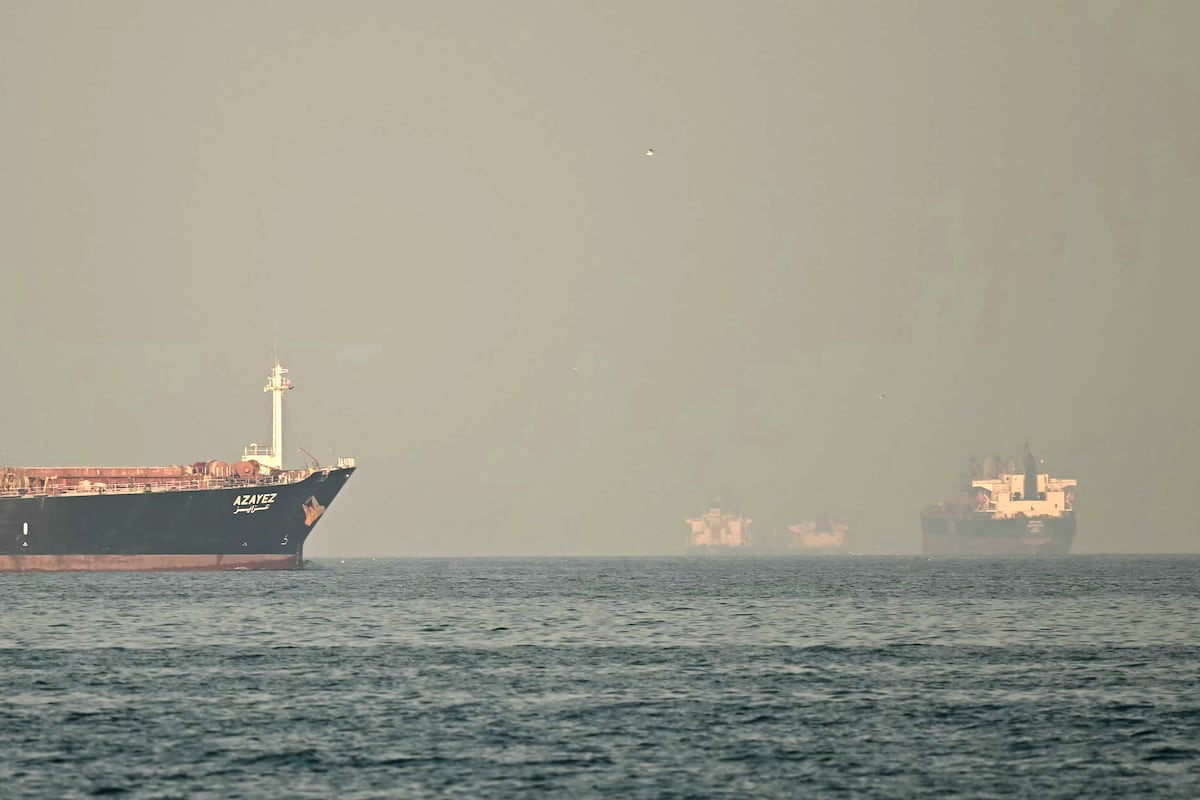
PARIS — European NATO allies pushed back against demands by U.S. President Donald Trump to help reopen the Strait of Hormuz by force, weeks after Iran shut down the majority of shipping through the critical trade artery in response to the American-Israeli war against the country.
British Prime Minister Kier Starmer said on Monday the United Kingdom “will not be drawn into the wider war,” while German Defence Minister Boris Pistorius said “this is not our war.” Kaja Kallas, the European Union’s foreign policy chief, said member states have no appetite to expand their maritime-security operation in the Red Sea to the Strait of Hormuz, the gateway to the Persian Gulf.
Iran declared the strait closed to traffic on March 2, following the start of strikes against the country by the U.S. and Israel two days earlier. While saying the U.S. doesn’t need anyone’s help, Trump has simultaneously called on allies to aid in securing navigation in the waterway, reportedly going as far as to threaten consequences for the NATO alliance if European countries reject those demands.
“The feeling is, this is not Europe’s war,” Kallas told Reuters in an interview on Tuesday. “Of course we are allies with America, but we don’t really understand their moves recently. We haven’t been consulted, and we don’t really understand, what are the objectives of this war.”
RELATED
The EU’s foreign-policy chief said there is no willingness on the part of member states to change the mandate of the bloc’s Aspides naval mission, tasked with securing navigation in the Red Sea, and “nobody is ready to put their people in harm’s way in the Strait of Hormuz.”
Iran has attacked more than a dozen commercial vessels with drones, missiles and small boats in the strait since the start of the conflict, while multiple media reported the country has started laying sea mines, citing U.S. intelligence. The Strait of Hormuz is relatively narrow, around 50 kilometers wide at some points, well inside the range of Iranian coastal attacks.
Around 20% of the world’s oil consumption transits via the waterway, and Brent crude oil futures have jumped to more than $100 a barrel following the closure, causing anxiety among economists and policymakers about the impact on the global economy.
Trump in recent days explicitly linked U.S. involvement in NATO and support to Ukraine to the efforts by allies with what he called “a very small endeavor, which is just keeping the Strait open.” The president on Sunday told the Financial Times that “if there’s no response or if it’s a negative response I think it will be very bad for the future of NATO.”
French President Emmanuel Macron has said he is working on a mission of European and non-European partners to escort shipping to “gradually” reopen the waterway, but only once the hottest phase of the conflict is over.
Setting up a mission of warships accompanying tankers through the dangerous passage would be a “complex undertaking,” requiring collaboration with “all stakeholders in the maritime transport sector,” including insurers, Macron said at defense Cabinet meeting here today.
“We are not a party to the conflict,” Macron said. “And so France will never take part in operations to open or liberate the Strait of Hormuz in the current context.”
France has sent around half of its fleet of major surface combatants, including the aircraft carrier Charles de Gaulle, to the Middle East to protect navigation, French citizens and allies in the region, though the country has emphasized the deployment is strictly defensive in nature.
Germany’s primary responsibility is towards NATO territory, and any deployment outside the alliance area would require both an international framework and a mandate from the Bundestag, the country’s parliament, Pistorius said in Berlin on Monday. The defense minister said he sees “no reason whatsoever” for such a move, saying “it is not our war, we did not start it.”
Germany is calling for diplomatic solutions and a swift end to the conflict, and more warships will likely not contribute to that, according to Pistorius.
“What does Donald Trump expect from, let’s say, a handful or two handfuls of European frigates in the Strait of Hormuz to accomplish what the powerful U.S. Navy cannot manage there on its own?” Pistorius said. “That’s the question I ask myself.”
The U.K. will defend itself and allies, but will not be drawn into the wider war, Starmer said on Monday. He said the country is in talks with allies, including European partners and Gulf states, on a viable collective plan to restore freedom of navigation as soon as possible, to ensure stability in the market and ease the economic impacts, emphasizing no decisions have been made.
Starmer said ultimately the Strait of Hormuz will need to be reopened, “not a simple task.” U.K. assets in the region that could help with reopening the strait are autonomous mine-hunting systems, according to the prime minister.
Smaller NATO allies have also been keen to keep their distance from the conflict, with Norwegian Prime Minister Jonas Gahr Støre saying on Sunday that “it is not our war,” with the outlook for how the conflict will develop “pretty unclear.”
“We are not part of this war, we did not initiate it, but we are all affected by it,” Gahr Støre said. “It should be the responsibility of the concerned parties to find ways of ending the hostilities that now have great impact around the world.”
Finland’s President Alexander Stubb responded positively to a suggestion that Europe could make demands on the U.S. regarding Ukraine, in exchange for assistance in the Gulf.
“I think it’s actually a really good idea,” Stubb said at a Chatham House meeting in London on Tuesday, in response to an audience question. “I’ll talk about it with my colleagues.”
Rudy Ruitenberg is a Europe correspondent for Defense News. He started his career at Bloomberg News and has experience reporting on technology, commodity markets and politics.