



In the late 1800s and early 1900s, a man named George C. Parker pulled off one of the most unbelievable scams in American history. He didn’t just trick a few people with small schemes. He repeatedly “sold” the Brooklyn Bridge to unsuspecting buyers who genuinely believed they were acquiring ownership of one of the country’s most iconic structures.
Advertisement — Continue Reading Below
Why People Believe Misinformation
His pitch was simple but compelling. He claimed he had legal rights to the bridge and offered buyers the chance to control it and collect tolls from the thousands of people crossing it each day. To support the story, he produced forged documents that looked official and convincing. In some cases, buyers were so confident in the deal that they attempted to set up toll booths, only to be stopped by authorities who had to explain that they had been deceived. It’s easy to look at a story like that and wonder how anyone could fall for it, but if you stop there, you miss what actually made it work.
It Wasn’t About Intelligence
The people Parker targeted were not all careless or unintelligent. Many were immigrants trying to establish themselves in a new country, looking for opportunity and a way to get ahead. They were ambitious, willing to take risks, and open to the possibility that a single decision could change their trajectory and move them closer to the American dream. Parker understood this.
He didn’t rely on people being uninformed. He relied on them being human. At its core, this is why people believe misinformation. He knew that if he could present something that felt legitimate, speak to their desire for opportunity, and layer in a sense of urgency, people would be more likely to believe it. The story didn’t have to be flawless. It just had to feel real enough in the moment. That distinction matters because it shifts the focus away from the victims and onto the dynamics that enabled the deception.
Advertisement — Continue Reading Below
The Power of Presentation
What made Parker effective wasn’t just the idea he was selling. It was how he delivered it. He created an environment that reinforced his credibility. Parker dressed the part, used legitimate-looking offices, and spoke with confidence. He backed his claims with documents that looked official, even if they were completely fabricated. He understood something that still holds true today. People don’t just evaluate information. They evaluate how that information is presented. When something looks professional, sounds confident, and is delivered with certainty, it becomes much easier to accept without deeper scrutiny. That effect becomes even stronger when the message aligns with what someone hopes is true. In those moments, logic tends to give way to possibility.
Why We Don’t Walk Away
What makes stories like this stick isn’t just that people believed the pitch. It’s that many of them stayed committed even when something didn’t fully add up. Once someone had invested time, money, or belief into the idea, walking away became harder. Admitting it might not be true meant admitting they had been wrong, and that’s a difficult thing for anyone to do. So instead, people look for reasons to justify the decision they’ve already made. That pattern hasn’t changed. We don’t just want to be right. We want to feel right about the decisions we’ve already committed to. And the more visible or personal those decisions are, the harder it becomes to step back and question them. At that point, it’s no longer about evaluating information. It’s about protecting a belief.
Advertisement — Continue Reading Below
Why People Believe Misinformation Hasn’t Changed
It’s tempting to think that a scam like this belongs to a different time. Today, we have instant access to information, the ability to verify claims, and more awareness of how deception works. In theory, that should make us less vulnerable. In reality, many of the same dynamics are still at play, just on a much larger scale. We live in a world where information moves quickly and constantly. Ideas are shared, reshaped, and amplified in real time. People build credibility not just through expertise, but through visibility, confidence, and repetition. When something is presented clearly and often enough, it begins to feel familiar, and familiarity has a way of being mistaken for truth. The tools have changed, but the psychology hasn’t.

The Modern Version of the Bridge
We’re not buying bridges today, at least not in the literal sense, but we are constantly being presented with ideas, narratives, and claims that ask for our belief. Every day, we encounter information that is packaged to look credible, delivered with confidence, and framed in a way that encourages quick acceptance. Whether it’s news, social media, financial opportunities, or emerging technologies, there is a constant stream of messages competing for attention. Many of them are well-intentioned. Some are not. The challenge is that they often look very similar on the surface. In that environment, it becomes easy to accept what’s familiar without ever tracing where it came from or why it feels true in the first place.
Advertisement — Continue Reading Below
The Cost of Not Examining
The real risk is not that people occasionally believe something that isn’t true. The greater risk is that we stop examining what we’re taking in. When information is constant and immediate, it’s easy to move from one idea to the next without ever pausing long enough to understand it. Over time, that shapes how we interpret the world. Decisions become more reactive. Opinions become more influenced by what is most visible or most confidently expressed. Instead of evaluating information, we start absorbing it. That shift is subtle, but it has real consequences.
Learning to Think Again
The solution isn’t to distrust everything or assume every message is misleading. It’s about becoming more intentional in how we process what we see and hear. That starts with creating space to actually think. It means asking better questions and following them far enough to get real answers. We must learn to be willing to sit with uncertainty instead of rushing to a conclusion. It means recognizing when something is designed to push you toward a quick reaction and choosing not to engage on those terms. In a world that rewards speed and certainty, that kind of discipline stands out.
Looking back, the story of a man selling the Brooklyn Bridge sounds ridiculous. It is easy to assume we would have seen through it immediately and walked away. But that assumption is where the real risk lives.
Advertisement — Continue Reading Below
Because no one thinks they are the one being convinced. No one believes they are the one accepting something without questioning it. And yet, every day, people buy into ideas, narratives, and opportunities that feel right in the moment but have not been fully examined.
Todays Fake News
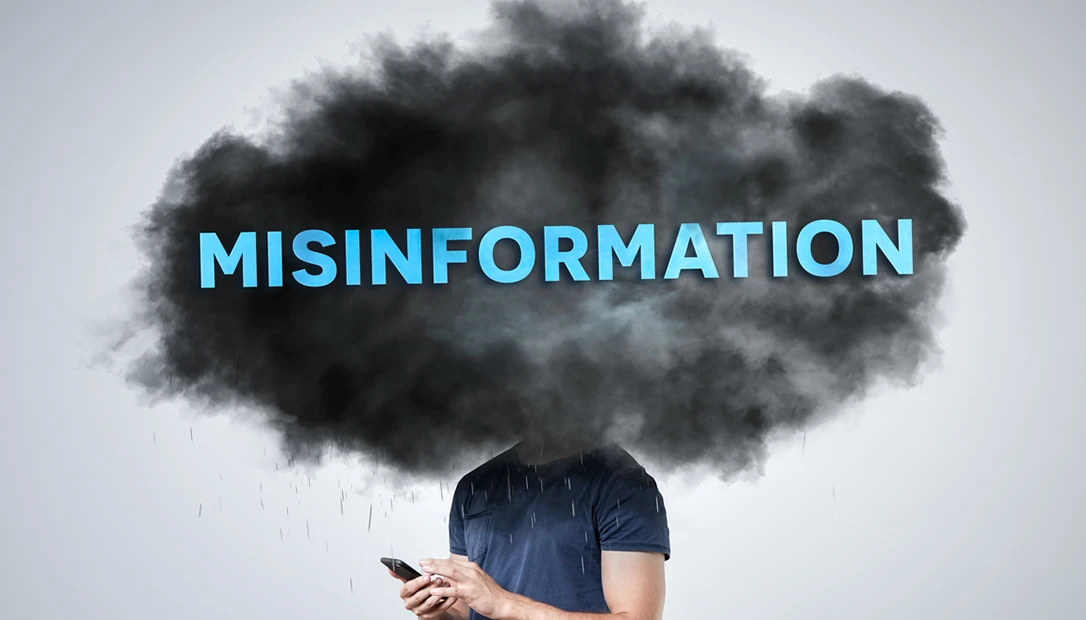
The difference today is not that we are smarter. It is that the pitch is better. It is faster, more polished, and delivered at a scale that makes it harder to pause and think.
Advertisement — Continue Reading Below
When something shows up with confidence, urgency, and just enough credibility, it does not feel like a lie. It feels like something worth paying attention to. That is what makes it effective. It is also why people believe misinformation today, even when the signs are right in front of them.
So the question is not whether you would have bought the bridge. It is what you are being sold right now, and whether you have taken the time to actually look at it.