


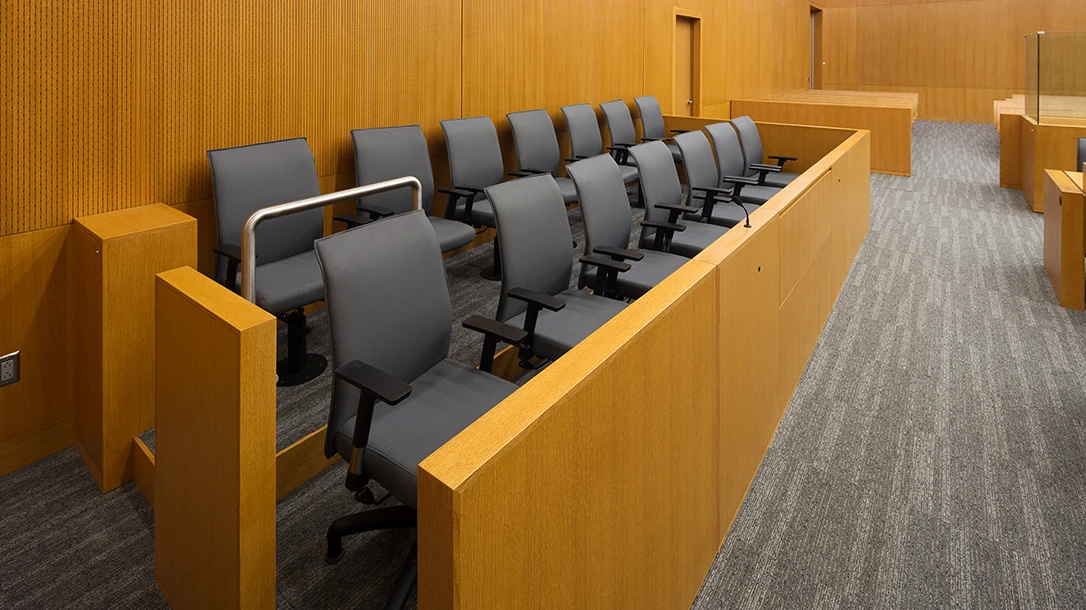
When your future is in someone else’s hands, you want to make sure that those hands are fair and capable. That is what the jury selection process–which is really a de-selection process–is for. Known as voir dire, this process allows the attorneys for each side to question prospective jurors as to their experiences, biases, and prejudices.
Voir Dire: Understanding Jury Selection
Both sides will generally be allowed a certain number of peremptory exclusions. These allow them to strike–that is, remove from the jury–a prospective juror for no particular reason. They will generally have an unlimited number of strikes “for cause.”
That would be something like “Your Honor, this prospective juror has already formed an opinion and come to a verdict without hearing the evidence” or “Your Honor, this prospective juror has articulated strong feelings which will make it impossible for him or her to weigh evidence and testimony objectively.”
Advertisement — Continue Reading Below
But there is much more to jury selection than this. There is an entire profession, jury consultants, whose job is to sit with the attorneys and quietly advise them as to the suitability of this or that potential juror. This is based on their facial expressions during questioning, body language, or experience, which might prejudice them against one or the other side of the case.
Bench Trial or Jury?
Does the defendant in a self-defense shooting case want a jury of their peers? Or would they be better off with a bench trial, in which the sole trier of the facts is the sitting judge? The conventional wisdom among trial lawyers is this: “If it’s a question of the law, go with just the judge. If it’s a question of who’s telling the truth, go with a jury.”
Advertisement — Continue Reading Below
Everything I’ve seen in 47 years as an expert witness in such cases makes me agree with that. However, with one proviso: you want to make sure that the judge in question is not prejudiced against you himself!
Case One: Freddy Gray
For Case One, let’s bunch together the six police defendants in the famous case of Freddy Gray in Baltimore. Arrested for carrying an illegal switchblade knife, he was put into a paddy wagon. Another prisoner later said Gray was banging himself around inside as if to deliberately injure himself. Gray died of a broken neck.
Six officers (three white, three black) were charged with his death after the incident created a major civil disturbance. The one cop who went with a jury saw them deadlocked into a mistrial. The two who chose a bench trial were acquitted, and the prosecution eventually gave up.
Advertisement — Continue Reading Below
Case Two: Commonwealth of Virginia v. Mark Branham
Case Two was another matter of multiple trials. When indications of jury misconduct told defense attorney Gene Compton to go with a bench trial in the case of Commonwealth of Virginia v. Mark Branham, a fatal self-defense shooting by an armed citizen, he went with a bench trial. The new judge announced that the evidence “fit hand in glove” with the defendant’s account. He acquitted Branham, ending a long ordeal.
But, as noted, your defense team has to know they have a fair and unbiased judge. Over the decades, I’ve seen very few judges who were clearly prejudiced against armed citizen defendants. In such an instance, you definitely want a jury trial if defense counsel can’t get the judge to recuse (bow out of the case).
Advertisement — Continue Reading Below
Critical Questions in Voir Dire
Prior to trial, defense counsel needs to know how the jury feels about people with guns. In Case Three, the highly publicized trial of George Zimmerman in the death of Trayvon Martin, the prosecution fought to keep off the jury the one woman on the panel who had a carry permit, and fortunately failed.
Expect the other side to try to strike members of the NRA or other pro-Second Amendment groups for cause. They will argue that the case involves the polarized issue of gun control, and this prospective juror has strongly taken a side in that issue and will thus be biased. Accordingly, defense counsel should also be asking if they belong to anti-gun groups, and strike them for cause if so.
I firmly believe every juror seated in such a case should have answered “Yes” to the voir dire question, “Could you kill a criminal if you had to, to save your own life or that of another innocent person? I know you’d find it repugnant, but assume the situation is happening and the gun is within your reach: could you?”
Advertisement — Continue Reading Below
If they answer “No,” your attorney’s response should be, “Thank you. I appreciate your honesty and respect your opinion…and, Your Honor, I move to strike. This prospective juror has just told this court that they are inimical to the core theory of the defense and cannot possibly be impartial and objective.”
Law professor Elizabeth Bochnak tells of one self-defense shooting trial–call it Case Four. A juror explained why she voted for a guilty verdict: “She was troubled by (the defendant’s) ownership of the gun. The juror said, ‘Right away, it hit me. How come she had a gun at home? I don’t have one. Why did she?’”
Burdon of Proof
I would also suggest to defense counsel that they make sure the jurors understand right from the beginning, in voir dire, it will be up to the prosecution to prove that it wasn’t self-defense. Yes, the judge will give them that instruction. However, Bochnak points out some interesting misconceptions in the jury pool.
Advertisement — Continue Reading Below
She cites a study for the National Center for State Courts, which found 37% of Americans believe the defendant should have to prove their innocence. Likewise, surveys by the National Jury Project show that a huge number of people eligible for jury duty believe that an indictment is tantamount to guilt.
Says Bochnak, “They expect defendants to prove their innocence despite judges’ instructions to the contrary.”
She quotes yet another source, which found 52% to 57% of those surveyed believed defendants should be required to take the witness stand and prove their innocence.
Yes, a precept of American criminal justice is that the defendant must be considered innocent until proven guilty. Yes, defendants are not required to take the stand in criminal cases, and juries are always instructed to take no inference of guilt if they don’t.
Nonetheless, a self-defense case stipulates that the defendant shot the person in question. So, it now becomes a “why did he or she do it,” not a “who done it.” Only the person who fired can truly answer that question.
Sometimes, unfortunately, a defendant who was the real victim is too physically or emotionally fragile to testify. The point is, a judge’s instructions may not override human nature. So, it is important to determine bias and prejudice at the very beginning of trial—the jury selection stage.
Jury (Mis)understanding
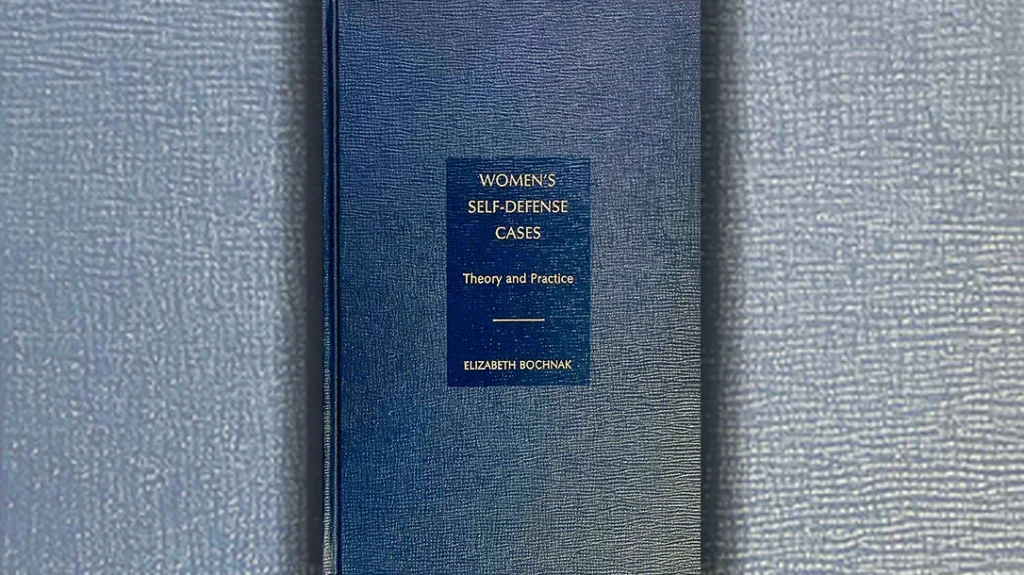
Let me close with more wisdom from law professor Bochnak in her book Women’s Self-Defense Cases: Theory and Practice:
“The practical reversal of the burden of proof is more problematic when the defendant freely admits that she killed the deceased and asserts she was acting in self-defense. Despite the fact that the burden is on the prosecution to prove that she did not act in self-defense, jurors expect her to prove that she did.”
The law professor adds, “Frequently, jurors simply do not understand the law. Even after receiving the judge’s instructions at the close of a case, many jurors still believe that self-defense shifts the burden to the defendant to prove her innocence.
“Other jurors may say they accept the abstract principle of justifiable homicide, but nonetheless will find it impossible to acquit, even if they believe that the defendant acted in self-defense. Many people simply cannot accept the idea that someone who has killed is not guilty of a crime.”
Closing Argument
We’ve all heard that it’s better to be tried by twelve than carried by six. But once your lawfully used firearm has delivered you from the hands of the six pallbearers, you want the hands of the jurors who judge you to be untainted with prejudice or misunderstanding.
Jury selection is where those hands are determined not to be holding false ideas or hostile beliefs that would not be in keeping with fair and impartial justice.