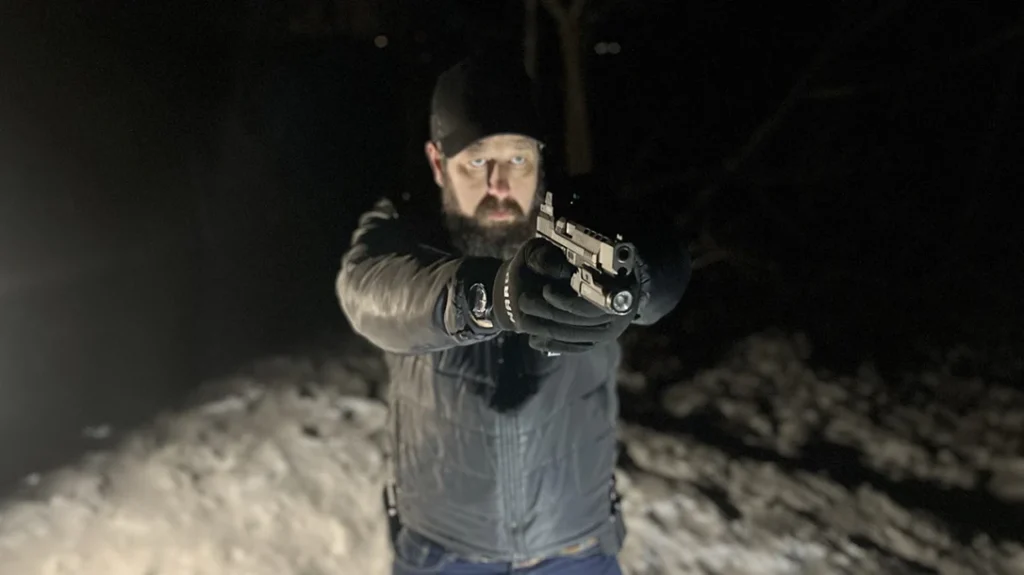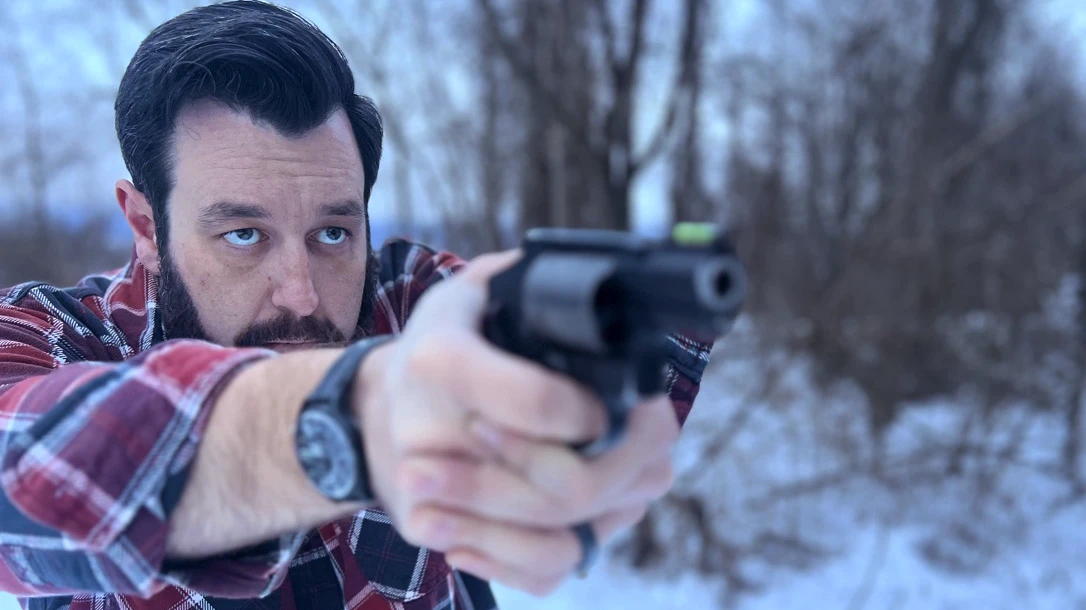
Shooting with both eyes open sounds like something that should be easy. After all, we do everything else with both eyes—drive, read, walk, talk, and observe the world. However, when you raise a firearm to your eye line, it’s like your brain short-circuits. Let’s fix that.
Shooting with Both Eyes
I’ve watched brand-new shooters pick it up instantly and seen lifelong outdoorsmen twist themselves into frustration trying to force the habit. But despite the challenges, shooting with both eyes open is one of the most valuable skills you can build into your visual shooting discipline—especially in a defensive context.
Your Eyes in a Shooting Environment
Your eyes don’t just provide sight—they give you context. Under stress, your eyes perform differently. Pupil dilation, light intake, convergence, and visual processing all shift to maximize threat detection.
Advertisement — Continue Reading Below
The trouble is, most of us train to narrow our field of view. We close one eye to better focus on the front sight. This isn’t wrong in terms of marksmanship. However, it limits how much of the world we can actually take in while that gun is up.
When you shoot with both eyes open, your peripheral vision expands dramatically. Instead of locking into a tunnel, you get a near 180˚ field of view. You’ll start picking up motion—like a person entering a doorway or a vehicle pulling into frame—much sooner than if you were monocular. That extra information matters.
Advertisement — Continue Reading Below
In a self-defense or tactical scenario, context is everything. Seeing the second person, catching that shadow move, or spotting an approaching shape in your peripheral can give you the time advantage that determines the outcome.
Binocular Vision
Two eyes working together offer more than width—they also deliver depth and brightness. In low light, binocular vision gathers more ambient light and provides better clarity in shadowed areas.
It’s like the difference between looking through a peephole and opening the door just a crack wider. You don’t get more light entering your pupils—you get a better interpretation of what that light means. That translates to better decision-making in dim or transitional lighting.
Advertisement — Continue Reading Below
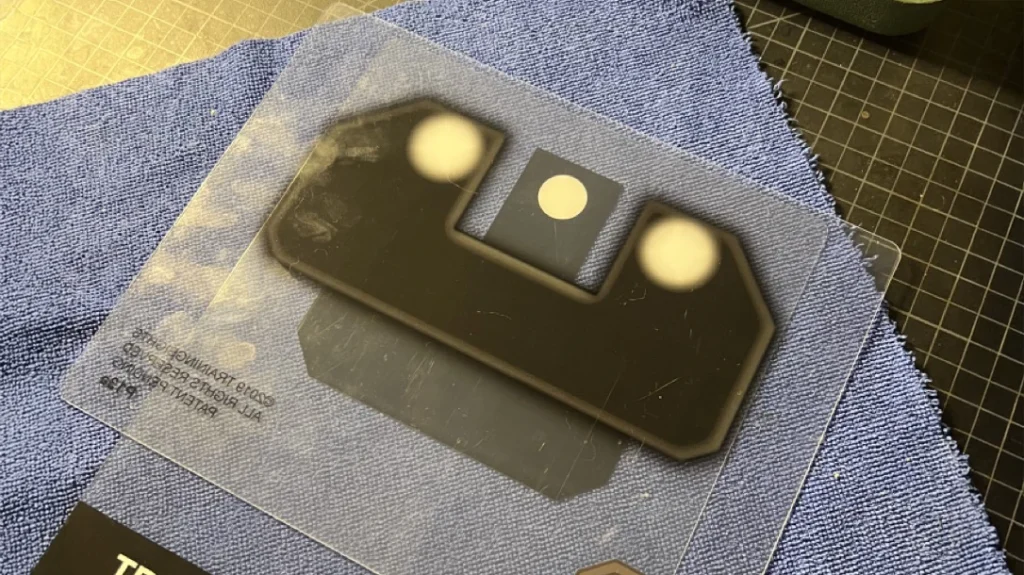
What you should expect when aiming with both eyes open is a little visual confusion. You may see a double image of the gun itself, or a shimmering effect where both eyes are sending slightly different signals. That’s okay. The eye-brain relationship is smart—it will decide which image to prioritize.
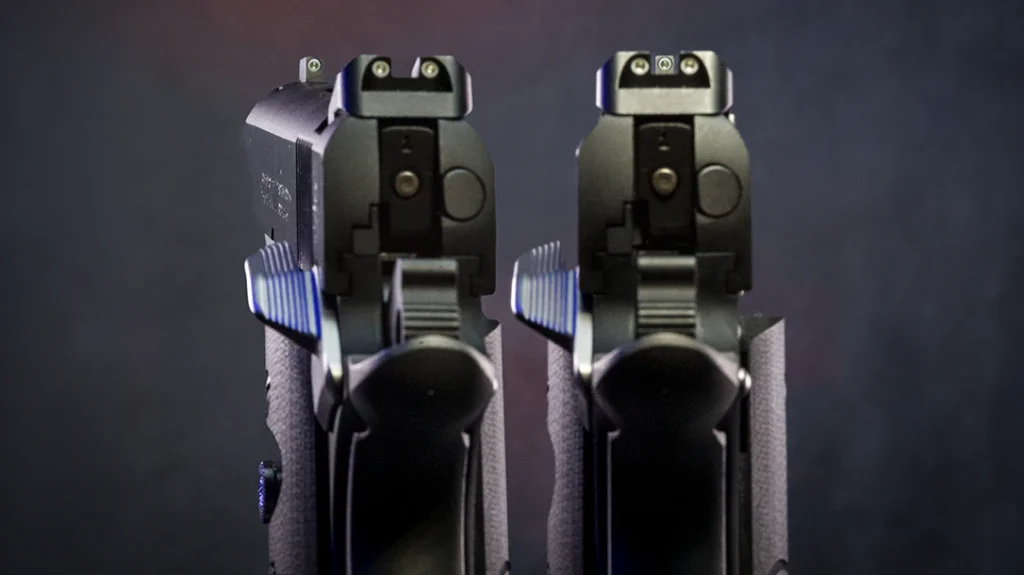
Usually, your dominant eye sees the sights, and your non-dominant eye helps with spatial orientation and awareness. It’s like a stereo image, and over time, it becomes second nature. Just like learning to focus through a stereogram or those “magic eye” posters from the 90s. (I’m old).
Advertisement — Continue Reading Below
Get Started: Determining the Dominant Eye
You need to know which eye is “Dominant.”
Not sure which eye is in the lead? Try this: extend your hands, overlap your thumbs and index fingers to make a triangle, and focus on a distant object through the triangle. Now, close one eye—if the object shifts, that’s your non-dominant eye. If it stays centered, that’s your dominant eye.
The key to getting good at shooting with both eyes open is to start without stress. Dry fire is your best friend here. No timer, no recoil, no performance anxiety—just you, your gun, and your focus. Start by presenting the gun as you normally would, but simply leave both eyes open. Don’t overthink it. Don’t “try” to see anything specific. Just observe. Then do it again.
Advertisement — Continue Reading Below
Once you’re comfortable with the visual experience—whether it’s double images or selective focus—pay attention to how your dominant eye interacts with your support-side eye. You should be able to discern the difference between them and eventually shift focus deliberately between your gun and your target. The more you do this, the more natural it becomes.
Using Your Hands
Another good trick is to use your hands. Make a finger gun, extend your arms, and stare past your “barrel” at a wall target or distant object. Notice how the image splits depending on which eye you focus through. This little calibration exercise can help you practice the concept anywhere, anytime.
Advertisement — Continue Reading Below
If one eye dominates too strongly during dry fire, try placing a piece of translucent tape on your shooting glasses over your non-dominant eye. This blocks detail but still lets in light, helping both eyes stay open while allowing your dominant eye to take over.
Eventually, move into live fire. Start with slow, deliberate shots. Don’t worry about split times or precision—just feel it out. As with anything visual, eye fatigue is real. If your eyes start to strain or you feel your focus slipping, take a break. Switch back to one eye if needed and revisit the technique another day. The learning curve is real, but so are the benefits.
Common Challenges with Both Eyes Open
Some shooters find they can shoot with both eyes open immediately, while others struggle for months. Sometimes your dominant eye wants to shut down, or your support eye will squint to shield from light. That’s not failure—it’s just feedback. Work around it.
Advertisement — Continue Reading Below
Adjust your stance, your grip, or your lighting. And remember that eye dominance can shift under stress. That’s why regular practice matters. You’re not just training your body—you’re training your brain to manage input under pressure.
If you find your non-dominant eye taking over the sight picture, you might be cross-dominant. That’s common—and manageable. Some shooters choose to train their dominant eye to take over, while others adapt with red dot sights or modified cheek welds.
Advertisement — Continue Reading Below
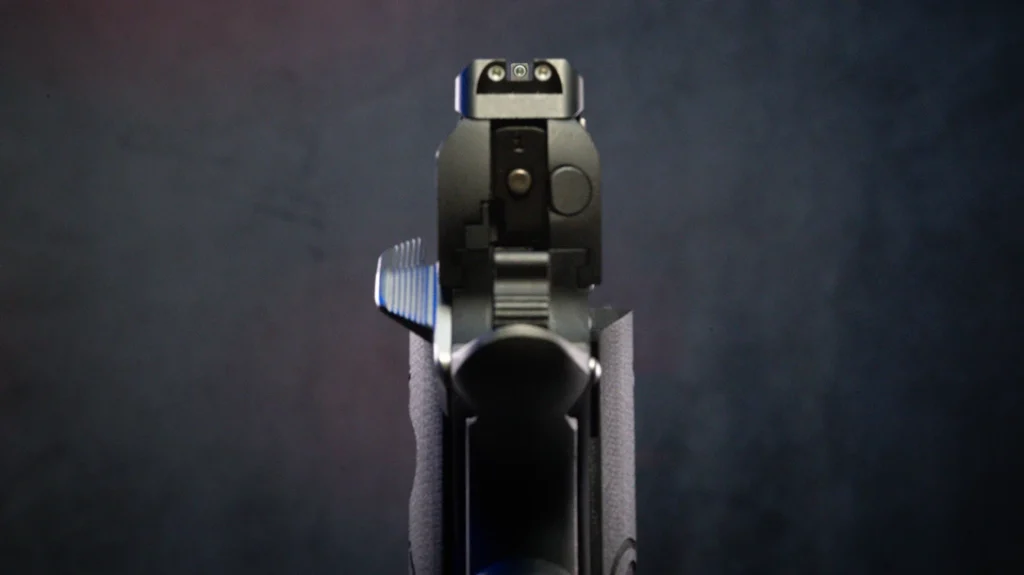
It’s also worth noting: you don’t need a tactical optic or red dot sight to train this way. Iron sights work just fine. In fact, shooting with both eyes open using iron sights builds even more control because it forces you to resolve multiple visual planes with precision.
Last Look
Shooting with both eyes open isn’t just a neat party trick—it’s a practical skill that sharpens your awareness and efficiency. In defensive shooting, more information equals better decisions, and better decisions keep people alive. When you can aim, assess, and observe all at once, your shooting becomes an integrated system—not just an action.
Give your eyes the time and space to learn. Don’t force it. Be patient. Whether you’re a brand-new shooter or a seasoned hunter trying to rewire years of muscle memory, this is a discipline worth pursuing. Stick with it, and you’ll see the difference—literally.
Shoot Safe.