


Most readers who know my work think of me as a revolver guy, and they are not wrong. I love spinning cylinders, exposed hammers, and the kind of simple mechanical honesty that comes with a good wheelgun. For me, the 1911 lives in that same mechanical space. I call them the stick shift of the handgun world. They are analog guns, hammer-fired, with a level of user responsibility baked into the design. The gun will do its part if you do yours. That bargain is part of the appeal. But, how about carrying a 1911? I did it for six months, and this is how it went.
Report: Six Months Carrying a 1911
As an instructor, I do not encourage students to jump from platform to platform without purpose. My thinking is simple. Train on a platform, carry that platform. If you want to explore something else, that is fine, but you owe it to yourself and those around you to put in extra dry fire when you put your actual carry gun back on.
That extra time acts as a mental buffer. It tells your brain, “This is the gun we live with. This is what matters.”
Advertisement — Continue Reading Below
That separation between training experiments and actual daily carry is important.
So, when I decided to spend six months carrying a 1911 instead of a revolver, I treated it as a serious project, not a casual fling. I wanted to know how the gun would carry, how the manual of arms would feel over time, and what kind of discipline it would demand in day-to-day life.
From Revolvers to 1911s
Carrying revolvers involves a big, heavy gun that needs the right holster setup and well-practiced reloads. Full-size 1911s are not very different in terms of weight and demands on the belt line.
Advertisement — Continue Reading Below
There are plenty of eight-shot revolvers out there, and a traditional single-stack 1911 in .45 is not winning any capacity contests. What changes is the entire format. Controls move. Reloads change. Safeties are different. The way the gun talks to your hand and your brain is completely new.
If you are used to a revolver, you are used to a gun that sits heavy on the hip and offers a very straightforward manual of arms. Draw, grip, press, run the trigger, reload with a cylinder that swings out and back. The 1911 gives you a slimmer profile, a different recoil impulse, and two mechanical safeties that you must run correctly. None of that is bad, but it is different, and different always requires training.
Switching Formats
Before I ever put a 1911 on as my carry gun, I spent time in consistent dry fire. I ran strings from the holster and practiced magazine changes until everything landed where it was supposed to. I wanted my hand to find the gun naturally, establish a firing grip that fully depressed the grip safety, and bring the sights up in line without hunting for them.
Advertisement — Continue Reading Below
The manual safety needed its own attention. For some people, that thumb safety is a real hang-up. They either forget it on the draw or they ride it in a way that lets it toggle on during recoil. I did not want to discover those problems during live fire or worse, when it truly mattered.
My mindset: Safety on in the holster, safety off as the gun comes on target, thumb resting positively on top of the lever through the string of fire, safety back on as the gun returns toward the holster. Over and over until it feels like one motion rather than a checklist.
The grip safety on a 1911 is not a suggestion. If you come out of the holster with a compromised grip that fails to depress it fully, the gun will not fire. That is not a mechanical flaw. It is a signal that your draw needs work. Dry fire helped, but there is nothing like recoil and stress to expose inconsistencies. I had to hold myself accountable for every bad start to a string.
Finalizing the Switch to the 1911
Once I felt confident in dry practice and had a few days at the office coming up, I made the switch for real. I put the 1911 on and made sure that the guns around me were also 1911s. If I were going to handle other handguns at work, I wanted them to share the same format. That environment of repeated, similar movements helps solidify the change. Everything you touch reinforces the new pattern.
Advertisement — Continue Reading Below
The 1911s
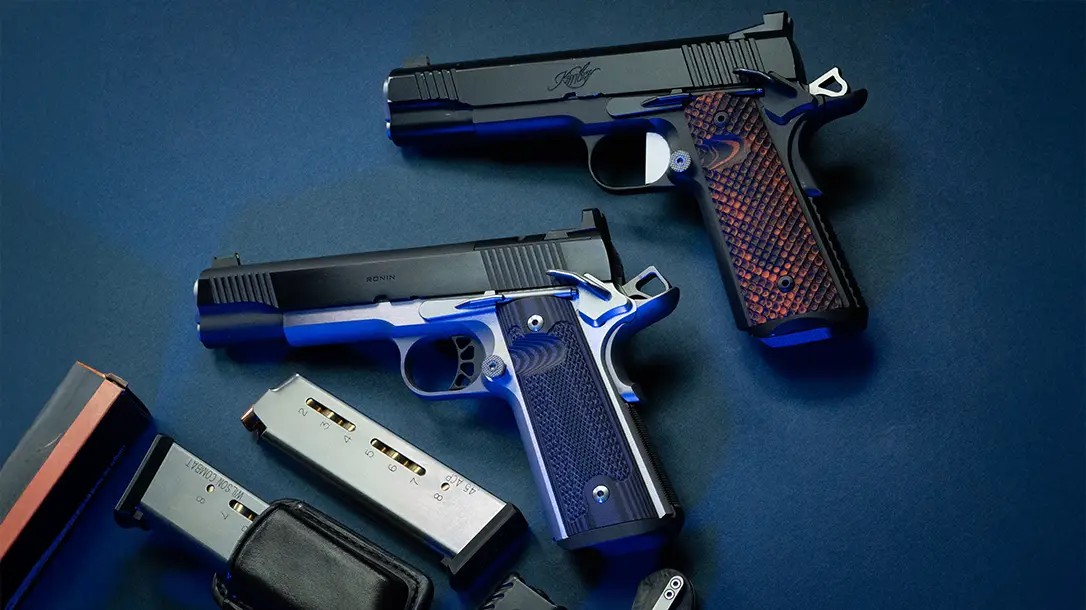
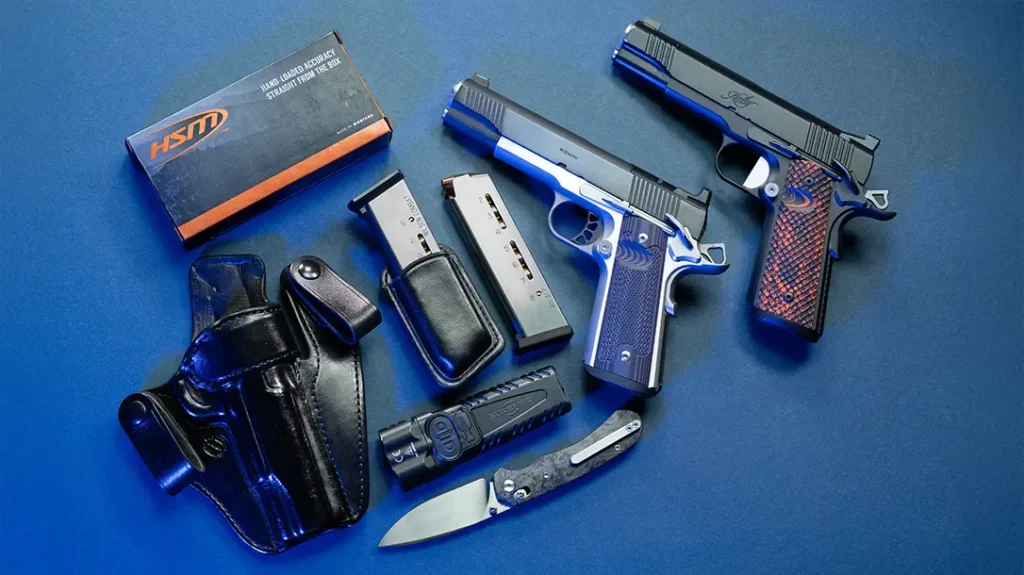
In the primary image for this editorial, there are two pistols, both of which represent the guns I carried during this six-month trial. Truth be told, there were five total in rotation, but these two are a good cross-section and two of my favorites.
The first is a steel-framed Springfield Ronin. It is a full-size, forged frame 1911 with classic looks and solid bones. The second is an alloy frame Kimber Custom LW. Even though it wears a five-inch barrel, the Kimber is as light as many Commander-length guns. Of the group, it was the lightest pistol I carried and the one that spent the most time on my belt.
Advertisement — Continue Reading Below
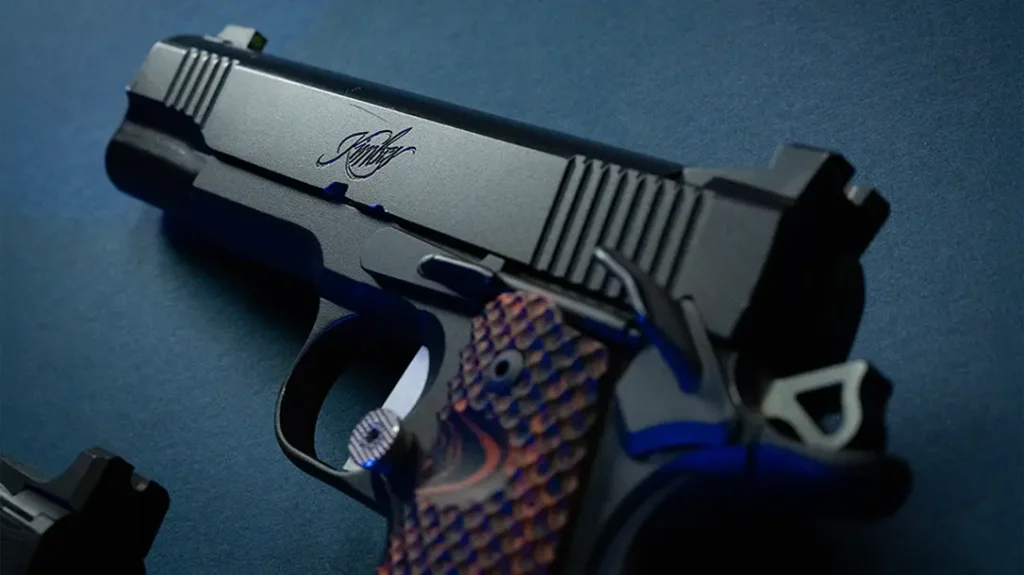
There is a full build editorial on that Kimber with a long list of parts and upgrades, so if you are curious, you can dig into that separately. For the purposes of this article, it stands in as an example of a budget-friendly 1911 that punches well above its price.
Wilson Combat Upgrades
Across all of my personal 1911s, I standardize controls as much as possible. Wilson Combat has become my preferred supplier for the critical small parts. Every carry gun gets an extended magazine release, extended slide stop, and Wilson’s extended thumb safety.
Advertisement — Continue Reading Below
This does two things. First, it makes the gun easier for my hands to run under stress. Second, it makes every gun feel like the others. When I reach for the safety, it is exactly where I expect it. When I go for the slide stop or mag release, my thumb does not have to search.
I also run Wilson Combat’s eight-round magazines, specifically its #500. That mag has a wide, flat base pad that seats confidently in a magwell and a taper that keeps your hand from getting pinched during reloads. Small details like that matter when you are running the gun hard in training or competing.
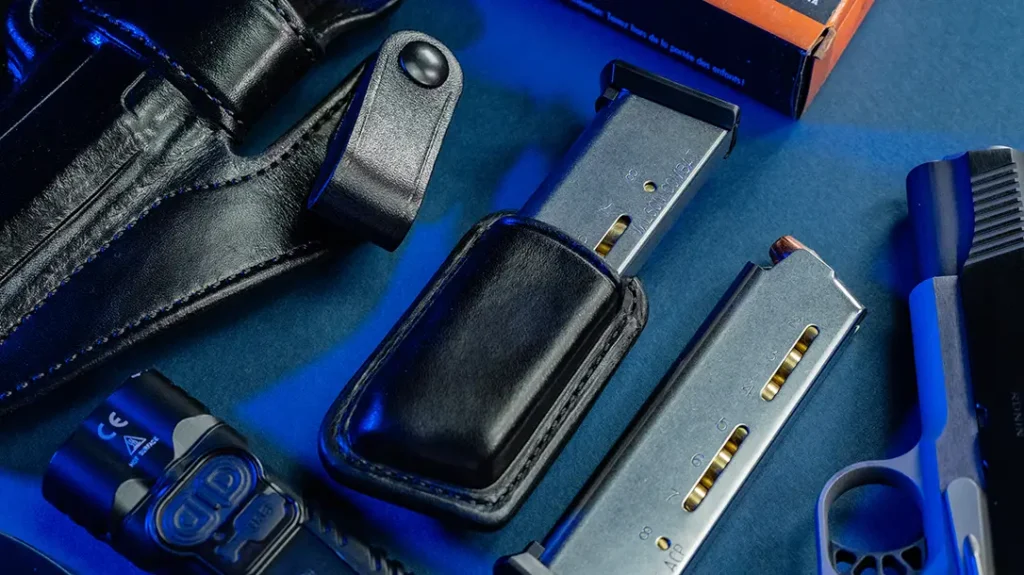
Grips get adjusted based on the gun’s weight and recoil character. On lighter alloy frame guns, I lean toward more aggressive grip textures. The extra bite offsets the snappier feel and gives me confidence when drawing from concealment with cold or wet hands. On heavier steel-frame pistols, I sometimes choose slightly milder textures to keep comfort high on long days.
Carry the Weight
The most important asset for anyone carrying concealed is the holster and magazine pouch. Too many times, I see excellent guns trapped in mediocre holsters. Comfort, concealment, and access all suffer, and the shooter ends up blaming the gun instead of the gear.
Milt Sparks has the solution. The Versa Max 2 is, in my view, one of the finest leather IWB holsters ever built for a full-size pistol. It has a steel-reinforced mouth that keeps the holster open for safe, confident reholstering. The loop locations spread the weight across the body so a full-size, heavy gun feels surprisingly manageable. Heavy-duty snaps make it easy to put on and take off when daily life demands it.
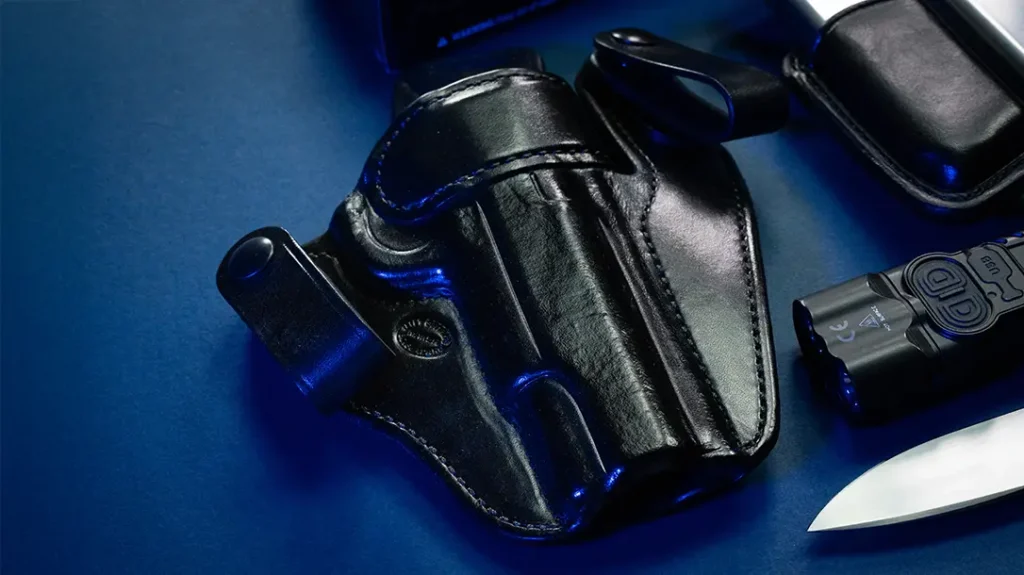
Their S4C magazine carrier complements the holster perfectly. It holds the magazine tight against the body, reducing printing under a cover garment, but releases smoothly when you go for a reload. Again, that balance between retention and accessibility matters. You do not want mags falling out on the floor, but you also do not want to tear them free during a timed drill.
Even the lightest 1911 is still heavier than most polymer pistols. Holster choice, belt selection, and positioning are not optional considerations. They are the foundation that makes a six-month carry experiment viable.
Ammunition is another place where I lean on brands that have earned my trust. HSM has become one of those for me. It is a slept-on name, which I think is a mistake. They consistently prioritize shootability, reliability, and accuracy. For a carry gun, that is exactly what I want. I need rounds that run in my pistol, land where I expect them to, and do not beat me up during extended training blocks.
Six Months of Experience Carrying a 1911
Six months carrying a full-size 1911 confirmed a few beliefs and changed others. It reinforced my conviction that you should not treat carry guns casually. The practice of carrying concealed is serious business. You are responsible for the muzzle, the trigger, and every round that leaves the barrel. That fact deserves respect.
It also reminded me that learning and experimenting should still be enjoyable. There is nothing wrong with trying a different platform, whether that is a revolver, a 1911, or a polymer pistol you would not normally consider. The key is to take the transition seriously. You owe it to yourself and everyone around you to train with intent, to build safe patterns, and to give each platform the attention it deserves.
From a practical standpoint, I walked away with a deeper appreciation for the 1911 as a carry gun. With a proper holster, good magazines, and a consistent dry fire routine, a full-size 1911 can be carried comfortably and run with speed and precision. It will never be the lightest or highest capacity option, but it offers a level of trigger control, pointability, and mechanical satisfaction that is hard to duplicate.
I still love revolvers. That will not change. But after six months with a 1911 on my hip, I can say this: the stick shift metaphor holds up. If you are willing to learn the timing, work the controls, and respect the machine, a 1911 will reward you in a way very few pistols can.
Shoot safe.
WHY OUR ARTICLES/REVIEWS DO NOT HAVE AFFILIATE LINKS
Affiliate links create a financial incentive for writers to promote certain products, which can lead to biased recommendations. This blurs the line between genuine advice and marketing, reducing trust in the content.