


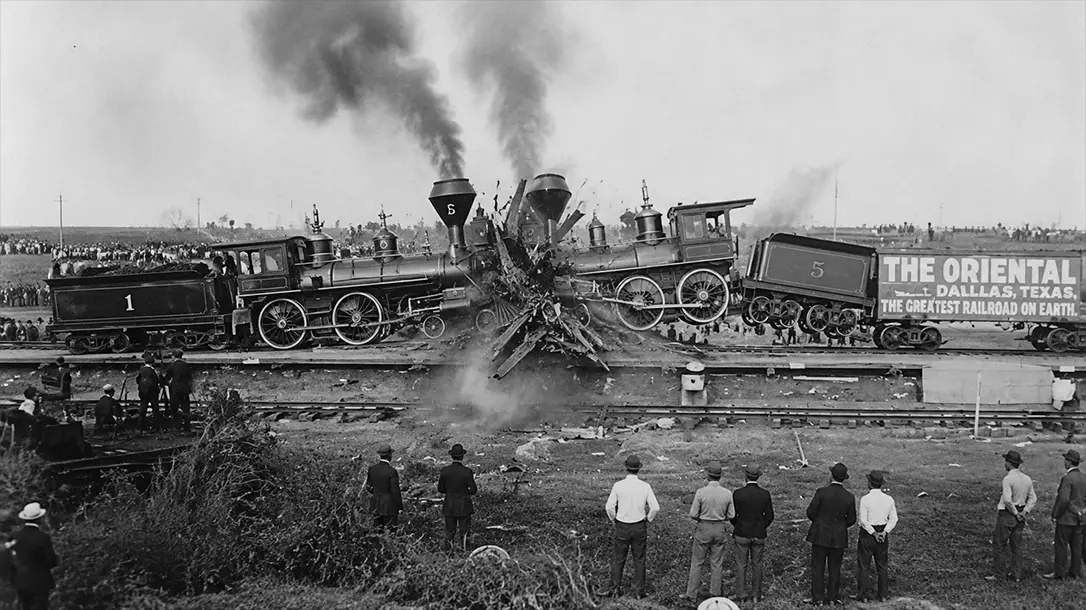
In the Old West, there were numerous forms of entertainment. Wild West shows, circuses, and carnivals were abundant throughout the land. On September 15th, 1896, people gathered for a unique form of entertainment: the crash of two powerful locomotives into each other, with the crowd viewing their grand destruction. However, this publicity stunt didn’t go without a hitch, to put it mildly. The crash led to both injury and death for numerous spectators, yet the promoters flourished in the end. Here are the bizarre circumstances behind the Railroad Crash and Burn.
Railroad Crash and Burn – A Fad of Its Time
Though it may seem extreme to set up a locomotive crash for people’s viewing pleasure, it was surprisingly not unusual back in the Old West. Prior to the Crash at Crush (so named due to Crush being the name of the crash site and the orchestrator), a deliberately staged locomotive crash happened just four months earlier near Lancaster, Ohio. There, the event was a huge success. No fees were charged to the spectators, with profits coming from railroad travel to and from the event. Seeing how something as strange, yet enticing as a railroad crash could be, William George Crush began to plan his own, much larger spectacle in Texas.
Advertisement — Continue Reading Below
Setting the Stage
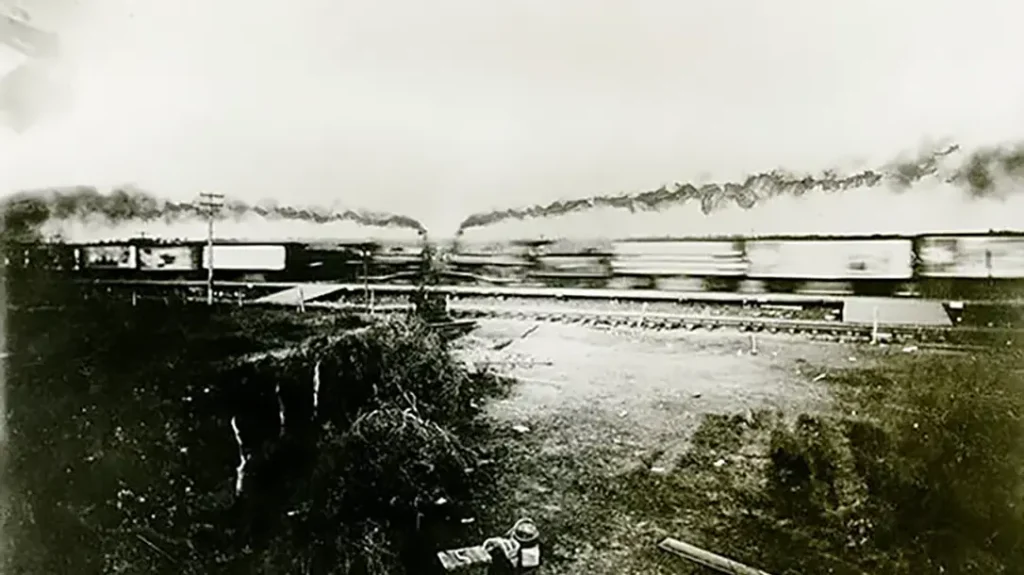
One may wonder how a railroad can afford to literally destroy two of its locomotives for a free-to-watch event? Well, that answer lies in the company’s plan to upgrade its obsolete equipment. The Missouri-Kansas-Texas Railroad (known as Katy, for short) began expanding, and as a result, it went from less efficient 30-ton steam engines to more powerful 60-ton versions.
That left a surplus of old equipment with no purpose. So, the promoters thought, why not destroy them in a spectacular fashion? Crush then discussed his proposal to company officials. They agreed and designated Crush as the event’s coordinator. Like the crash in Ohio, the event would be free, and money earned would come from (reduced for the event) railroad transportation tickets from any point within Texas.
Advertisement — Continue Reading Below
Safety Precautions for a Staggering Huge Crowd
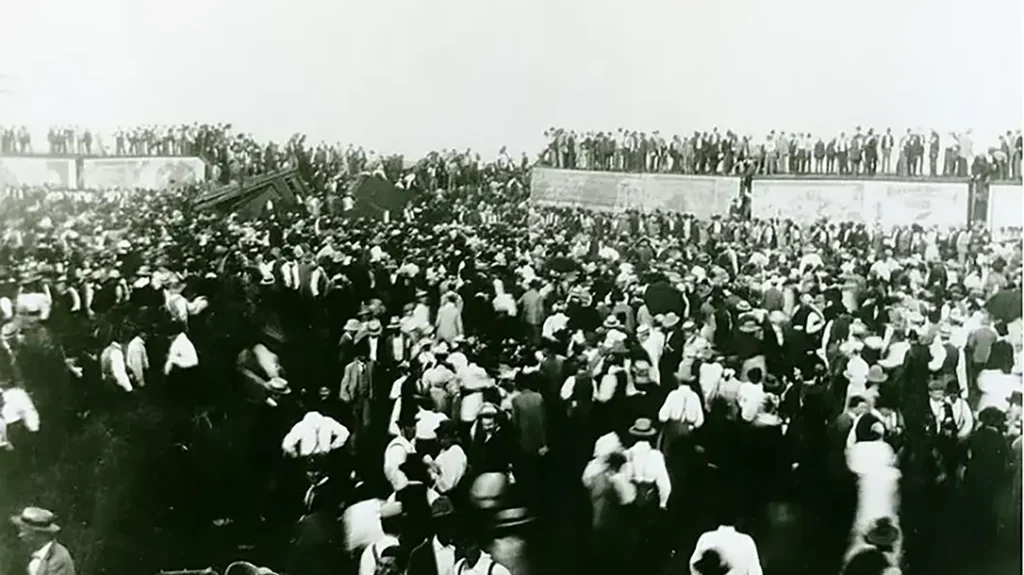
Here’s where the story becomes troublesome. The event drew nearly 40,000 spectators who wanted the best view of the crash. Regular attendees were to remain 200 yards back, but journalists were only pushed back to 100 yards. Additionally, the Katy engineers assured that the boilers of the two locomotives were safe and wouldn’t burst during the impact.
They felt that the construction, which was designed to resist a rupture even during a crash, would hold even at the forty-five miles per hour speeds of both trains. Interestingly enough, it’s speculated that the speeds far exceeded forty-five mph, but it hasn’t been substantiated. Safety was minimal and overshadowed by the immensity of the event, which included a circus tent, grandstand, reporter platform, and numerous shows, games, and vendor stations.
Advertisement — Continue Reading Below
The Explosive Impact
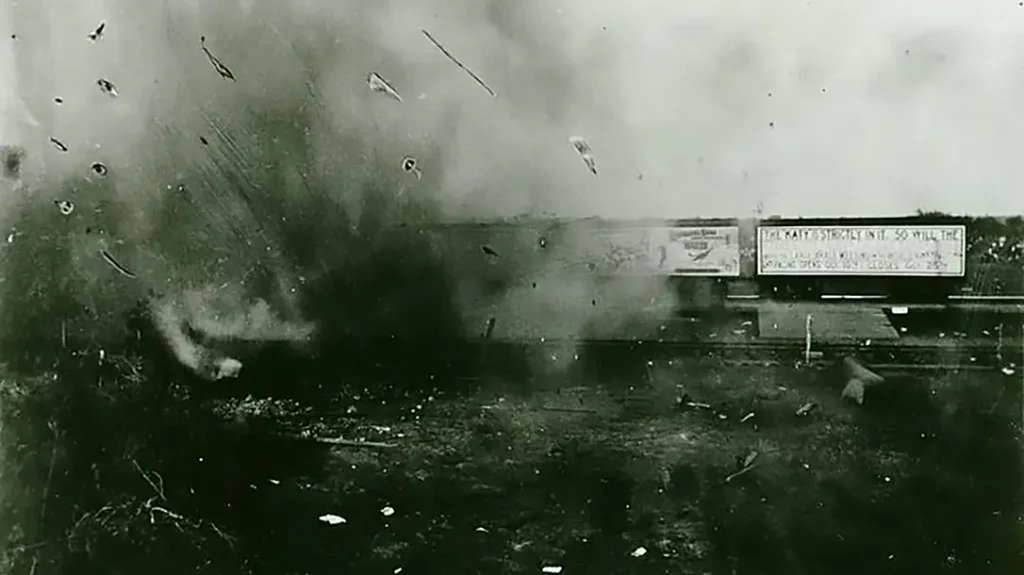
The crowd fought to get closer to the imminent crash site, and as a result, the event was delayed. However, about an hour later, it resumed. The two trains were in position at opposite ends of the track. The train operators started the mighty titans moving and then jumped to safety. The two trains picked up speed (in excess of forty-five mph), with all eyes focused on the impact point. As written by a reporter of The Dallas Morning News the next day, “A crash, a sound of timbers rent and torn, and then a shower of splinters…There was just a swift instance of silence, and then as if controlled by a single impulse, both boilers exploded simultaneously, and the air was filled with flying missiles of iron and steel…”
The shrapnel rained down on the crowd, with two individuals losing their lives and six others badly injured. One man, Jarvis Deane, lost his eye to a projected iron bolt. There was little remaining at the crash site, as most of the metal was crushed or flattened in the crash. However, this didn’t stop some people from the crowd from taking pieces of the scrap wood and metal home as souvenirs.
Advertisement — Continue Reading Below
Railroad Crash and Burn – A Surprisingly Salvageable Aftermath
You may think that the loss of life and multiple injuries would have an incredibly negative impact on the company and the spectacle as a whole. Surprisingly enough, it truly didn’t. While Crush was terminated from the company, he was rehired the very next day and continued to work. Any lawsuits were settled quickly, and the company suffered no long-term bad publicity. In fact, the entire event, even including the deaths and injuries, gained attention from all over the country and actually boosted the company’s business. As for staged locomotive crashes, they continued throughout the following years by various companies and were as popular as ever.
WHY OUR ARTICLES/REVIEWS DO NOT HAVE AFFILIATE LINKS
Affiliate links create a financial incentive for writers to promote certain products, which can lead to biased recommendations. This blurs the line between genuine advice and marketing, reducing trust in the content.
Advertisement — Continue Reading Below