Your actions after shooting or while holding someone at gunpoint may be as or more critical than the shooting itself. A justified shooting or use of a firearm is pretty meaningless if you end up dead during or afterwards. In this article, we will discuss the post shot sequence and its purpose.
What is the Post Shot Sequence?
Whether lawfully carrying concealed, home defense, or as a working professional, you must have some sort of post presentation or shot sequence. One that you practice all the time. One that keeps you from getting shot immediately or shortly afterwards by a second suspect, another concealed carry holder, or the police.
How you act, and where you point your firearm during and after using it, will largely decide if you are a hero or a dead hero. My personal preference would be the former.
Advertisement — Continue Reading Below
Case(S) In Point, Yes, It’s Real!
The robbery suspect is standing in line at a box store, holding a handgun on the clerk. A lawfully armed citizen draws his pistol and points it at the suspect. Soley focused on the task at hand, the suspect’s wife shoots the CCW holder in the back of the head. He never saw or heard it coming.
In this instance, it’s all about how to maintain awareness while engaging a suspect, even if they are compliant. Failing to take into account the surroundings and other suspects cost this hero their life.
Active shooter scenario in a public space:
Advertisement — Continue Reading Below
The hero shoots the active shooter who is carrying a rifle. While the suspect is down, our hero takes the rifle from the active shooter and stands over them with the rifle. Presumably to cover them.
Officers arrive and see a person on the ground, shot, and another person standing over them with a rifle. Dispatch sent them to an active shooter with a rifle, and the police shoot and kill the hero. He probably learned to pick up the shooter’s rifle from some tacticool instructor, or by watching movies.
Situations where that is a real need are so rare as to be nonexistent. Not to mention, it cost a good person protecting others their life.
Advertisement — Continue Reading Below
One of the lessons here, DON’T learn tactics from movies, TV, video games, or instructors preparing you for Armageddon or the Zombie Apocalypse.
What’s Important in A Post Shot or Presentation Sequence?
Follow Through
Follow through is imperative! If you are pointing a gun at someone, stay on the threat until it is safe. Maybe they comply, and the fight is over. However, maybe they are not alone. Perhaps it’s time to lower the gun and look around. Just don’t assume anything.
If shots are fired and they are still there, requiring another shot, then by all means, carry on. However, if they disappear from your view, do not continue to shoot! It means you have to actually look.
Advertisement — Continue Reading Below
The most common response to getting shot is to go down. Is that always the case? Of course not. They may run, move to the side, bend over, all kinds of things. But that’s why you follow through. Follow them and ensure you hit them, and make sure it worked.
Following through ensures you hit what you were aiming at, it worked, and there is no need to continue. Hammering away without thought just sends rounds downrange and risks hitting someone else.
Advertisement — Continue Reading Below
Do not assume that when you send two (or more) rounds down range (no matter how fast), the threat will still be there for round two. In fact, assume nothing. Verify with direct evidence you can see. Did it work, and the threat is no longer active? Don’t drop the gun and admire your work—follow them with the firearm wherever they go. Do not assume they are down.
If it worked, immediately get your head up and gun down to look for more threats, armed persons, or the cops. Maybe take a breath, that always seems to help. Head up, gun down, look around.
Don’t Do Anything That Will Get You Shot
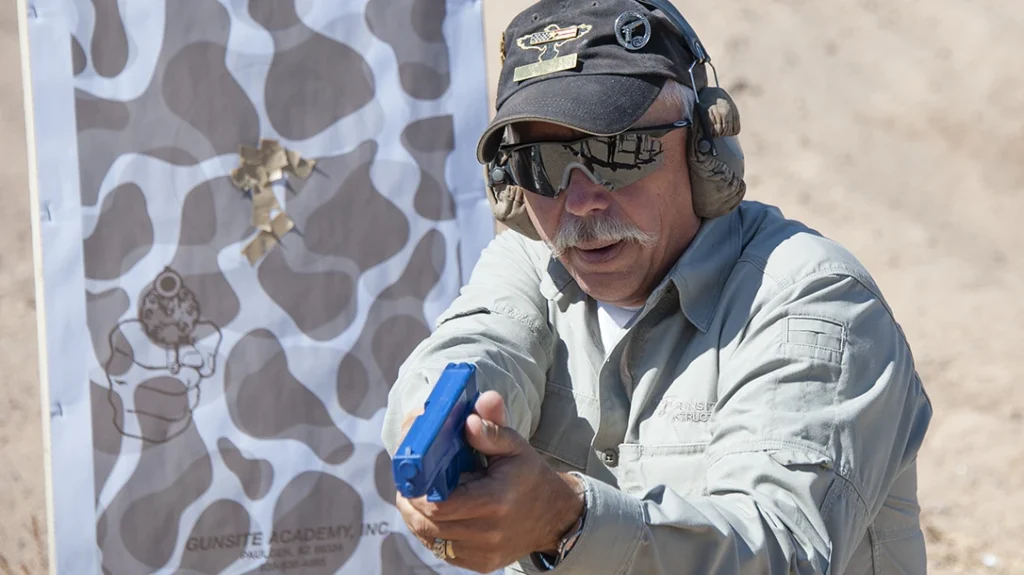
The second factor is simple: don’t do something that will get you shot during or afterwards! Pointing guns at people is provocative and in some states a felony. After the threat is over, point the muzzle down, or at least not at someone.
Advertisement — Continue Reading Below
You can pick whatever “ready” is currently cool, so long as it is NOT pointed at anyone else other than a threat. Low ready, deep low ready, or back in the holster or slung if you can. All the other tacticool “ready” positions are fine in some instances. However, in most cases, the best place to point your firearm is down unless you are engaged with the suspect.
I’ve heard all the explanations for other positions and used them all. Most involve something other than what most people will ever see outside a class, specialty task, or a video game. In most cases, the next armed person you will encounter is the police. If they arrive and you are perceived as a threat, you are going to get shot.
You can have all the tactical discussions about reaction times or any other mostly meaningless things. Just don’t point your gun at someone, especially the police, as they arrive.
Remain Aware
Range dances are just that, things you do because you are on a square range with other armed people. They are largely conceptual, teaching you the thought process and mindset safely. It’s a start, but there is no need to perform some useless dance that may not work.
I call it “range waggle,” where the pistol drops, the gun is waggled left and right, then returned to the holster or slung. That is a dance, not a deliberate sequence. Which one you practice is less about the moves than the mindset when performing them. Mix it up, because the world will.
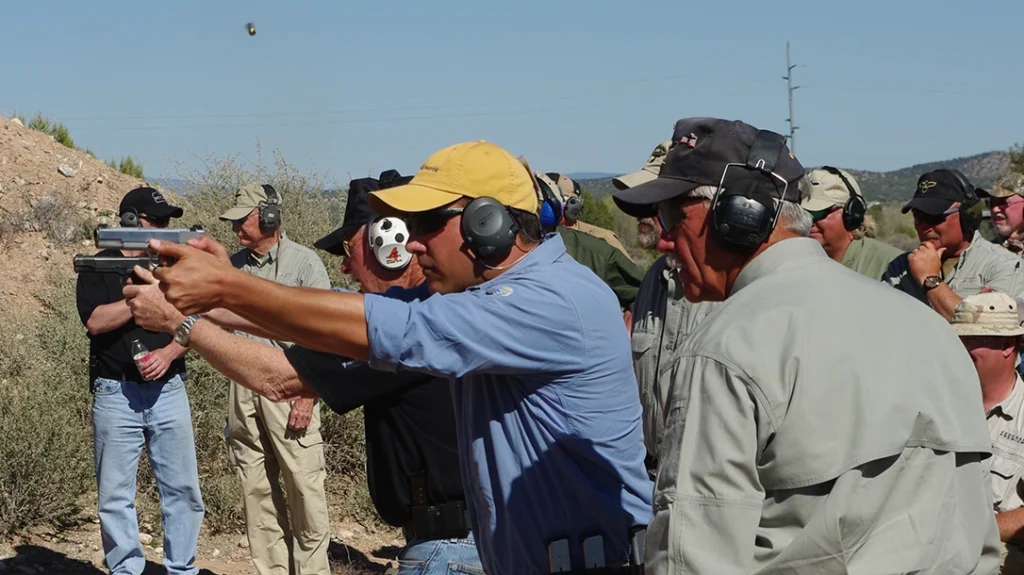
So long as you are pointed down or not at others, you can move so you can see everything better. Maybe protect your back or move to a position where you can see other possible suspects. There is no need for the tactical pirouette.
Maybe it’s time to “exit stage left’, nothing is always the same, but moving is probably the best thing to do. However, if you don’t look up, you will never see it. Head up, gun down, check your surroundings. If there is a better place to be, then go there. Just do it without pointing your gun at everyone.
Practicing the Post Shot Sequence
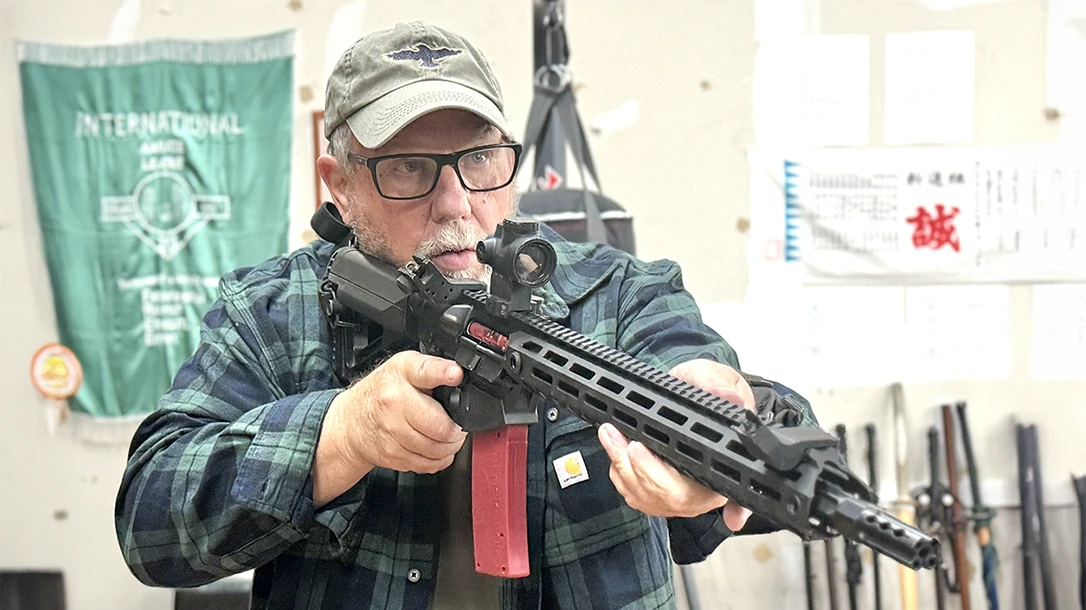
Practice dry, or with pistols like the new Mantis Titan X, or their Blackbeard X rifle setup. Blue guns, or other replicas, are also helpful. I use my SIRT pistol a ton. It lets you practice safely in the real world. You are still not pointing guns (or replicas) at people, but it makes your practice space multidimensional, not just “downrange.”
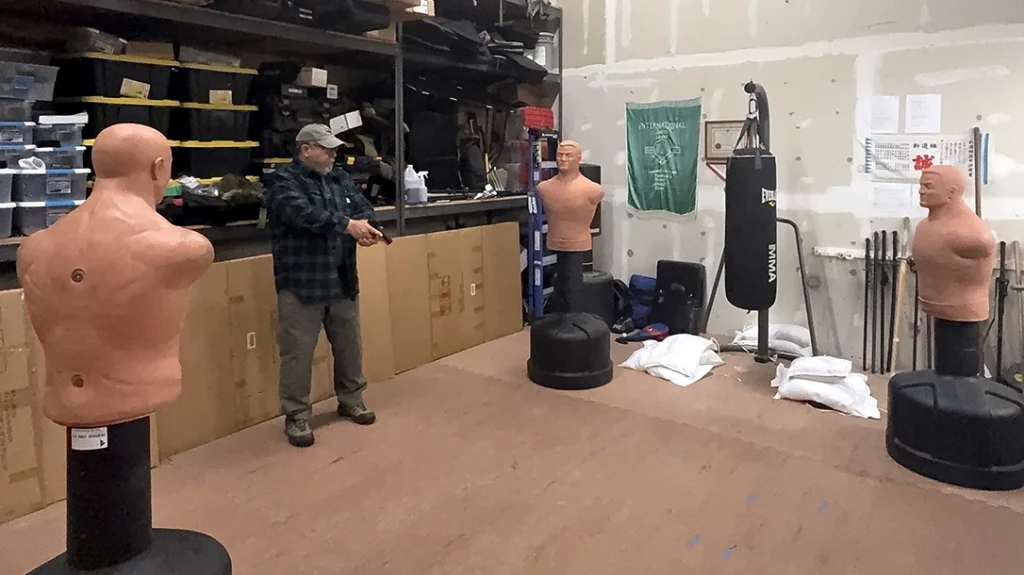
With the luxury of a dojo, I can use multiple 3D targets as multiple threats, bystanders, or even law enforcement as they arrive. Practice in your home, office, or wherever you think an encounter may occur. Just keep it real, keep it safe. Above all, practice with a determined mindset focused on seeing what’s around you and not getting shot by the next armed good guy through the door.