


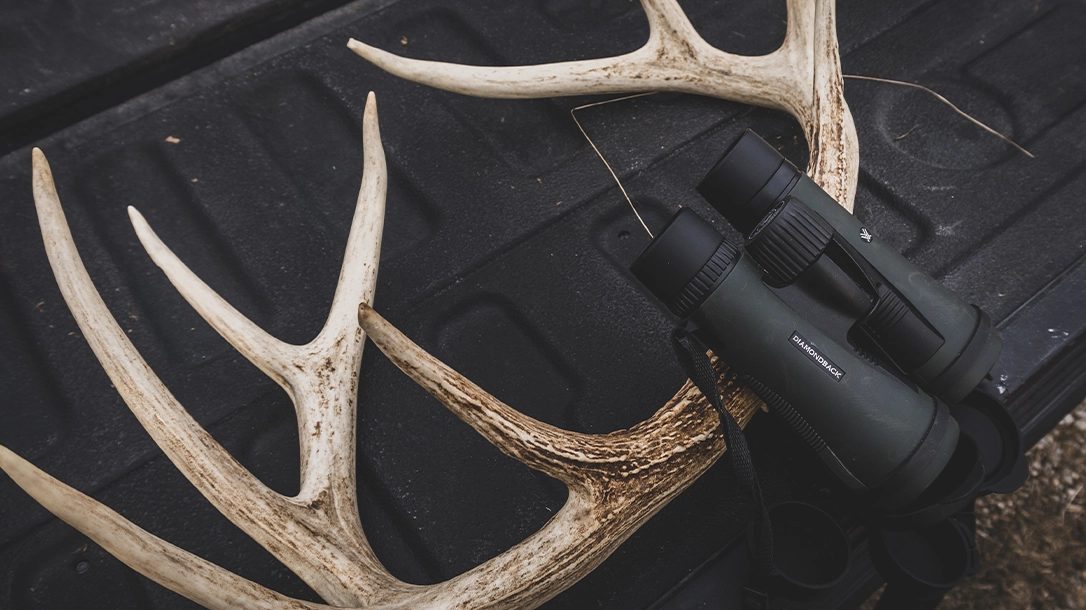
The rut may be long gone, but if you know how to look, the woods are still talking. You just need to slow down and pay attention. Post-rut sign isn’t loud or flashy like it is in November. It’s more subtle. Worn trails that don’t look like much at first glance, beds tucked into overlooked spots, and scrape lines that are fading but far from irrelevant. This time of year is when you can really start piecing together where bucks are spending a majority of their time, and more importantly, where they’re dropping antlers. This not only helps you find more sheds it starts to map out a plan in your whitetail play book for next fall.
I’ve always enjoyed this phase of the season because it feels more like solving a puzzle than chasing a moment. There’s no guessing if you take the time to read what’s in front of you. As you scout, you start to put all the pieces of the puzzle together to revel the bigger picture.
Worn Trails Still Tell the Truth
One of the biggest mistakes I see guys make after the rut is assuming deer movement just shuts down or becomes random. That’s not the case. Deer are still using the same terrain features they used all fall, they’re just doing it with a different purpose. Instead of cruising for does, they’re focused on food and recovery. Those well-beaten trails you find cutting through timber or skirting the edge of a bedding area? They still matter.
What I look for are trails that show consistent use without being completely tore up. A post-rut trail will often have a defined path, but it won’t have the fresh churned dirt you’d see during peak rut activity. Tracks may be lighter now, but they’re steady. When you find a trail like that connecting bedding to a late-season food source whether it’s standing beans, a cut cornfield, or even browse it’s worth slowing down.
Advertisement — Continue Reading Below
This is where a good set of glass comes into play. I spend a lot of time behind my Vortex Optics binoculars, picking apart these trails from a distance before I ever step in and risk bumping deer. You’d be surprised how much you can learn just by sitting back and watching how these trails lay across the terrain. They are also a great place to hang a cell camera to gather intel on what bucks made it through the season.
Bedding Areas Aren’t Always Obvious
Post-rut bedding is a different game. Bucks aren’t necessarily bedding where they were in early season, and they’re definitely not moving like they were during the rut. They’re worn down, they’re cautious, and they’re looking for security with quick access to food. A lot of times, that means overlooked spots.
South-facing slopes get a lot of attention this time of year and for good reason, they catch sunlight and offer warmth. But I’ve found just as many beds tucked into odd little pockets. Think points off ridges, small benches halfway down a slope, downed tree tops in the timber, or even thick cover close to food that most people would walk right past.
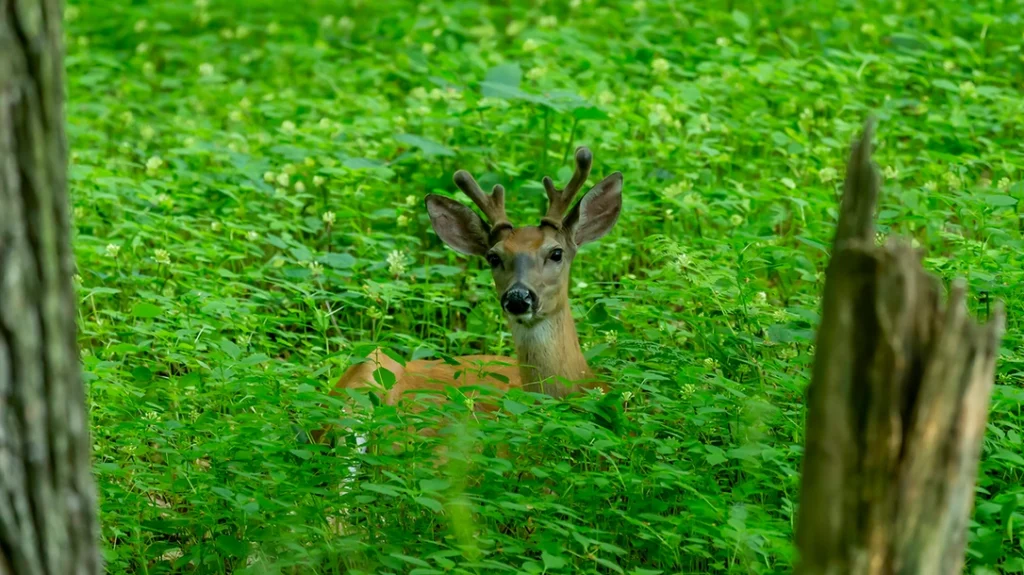
When you find a bed, really study it. Is there more than one? Is there a pattern to how they’re laid out with the wind? Are they positioned to watch a trail or a transition area? Bucks don’t bed randomly, even in the late season. I like to mark every bed I come across using onX Hunt. Over time, those pins start to paint a clear picture. You’ll notice clusters forming, and those clusters often point you toward core areas that bucks are still using consistently. That’s exactly the kind of place you want to key in on when you’re shed hunting.
Advertisement — Continue Reading Below
Scrapes Don’t Just Disappear
Scrapes are another piece of the puzzle that gets overlooked once the rut winds down. Sure, they’re not being worked like they were in November, but they don’t just become irrelevant overnight. A post-rut scrape line can still tell you a lot about how a buck was moving through an area, and in many cases, how he still is.
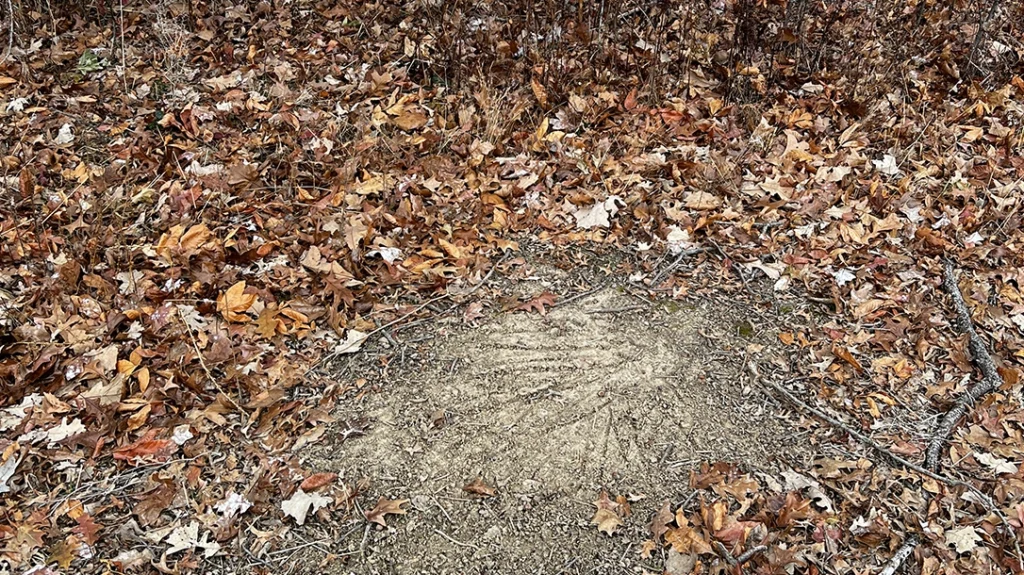
You’ll notice that these scrapes look different now. Leaves have blown back in, the dirt isn’t freshly pawed, and the licking branches might not be as chewed up. But the location is what matters. Scrapes are almost always tied to travel routes, especially ones that connect bedding to food. When I find a line of old scrapes, I’ll follow it. Not quickly, but methodically. A lot of times, that line will lead you right through the kind of terrain bucks prefer to travel like edges, transitions, and subtle funnels. Even if the sign is fading, the story is still there.
Putting It All Together
The real key to reading post-rut sign is understanding how all of these pieces connect. A single trail, bed, or scrape doesn’t tell you much on its own. But when you start linking them together, the picture becomes clear. You might find a worn trail that skirts the edge of a ridge. Follow it, and it leads you past a couple of beds tucked into a point. Keep going, and you hit an old scrape line that runs down into a food source. That’s not random, that’s a system. And systems are exactly what you’re looking for this time of year.
Advertisement — Continue Reading Below
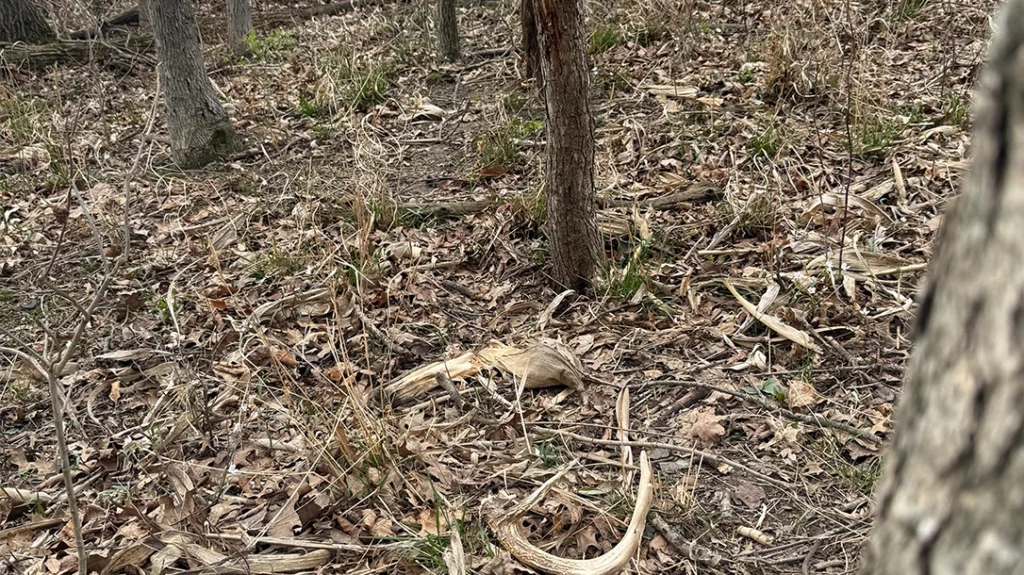
When you identify one of these areas, slow down even more. This is where I like to grid things out and really pick it apart. Shed antlers aren’t always just laying out in the open. A lot of times, they’re hung up in grass, tucked into brush, or laying just off the main trail where a buck shifted his weight.
High-Odds Shed Zones
When you combine all of these things, the trails, beds, and scrape lines, you start to narrow down high odds shed areas. The best spots are usually where these elements overlap near food. Bucks are conserving energy this time of year, so they’re not traveling any farther than they have to. If you can find a bedding area close to a consistent food source, connected by a defined trail system with historical scrape activity, you’re in the game.
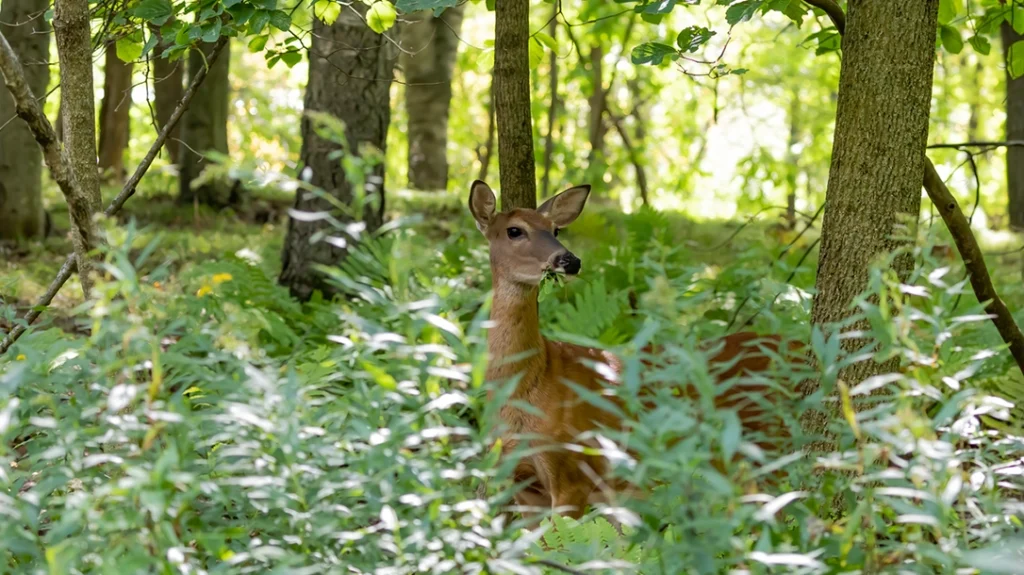
I’ve found more sheds in those types of spots than anywhere else. Another thing to keep in mind is timing. The later you get into winter, the more concentrated deer become around food. That can shrink your search area even more if you’re paying attention.
Slow Down and Let the Woods Talk
At the end of the day, reading post-rut sign comes down to patience. It’s easy to walk right past the kind of subtle clues that make all the difference. But if you slow down, glass ahead, and really study what you’re seeing, the woods will tell you exactly what you need to know.
Advertisement — Continue Reading Below
It’s not about covering as much ground as possible it’s about understanding the ground you’re on. Every worn trail, every tucked-away bed, and every fading scrape is a piece of the story. Put those pieces together, and you’re not just wandering anymore you’re hunting sheds with purpose and building your whitetail playbook for next fall.
WHY OUR ARTICLES/REVIEWS DO NOT HAVE AFFILIATE LINKS
Affiliate links create a financial incentive for writers to promote certain products, which can lead to biased recommendations. This blurs the line between genuine advice and marketing, reducing trust in the content.