


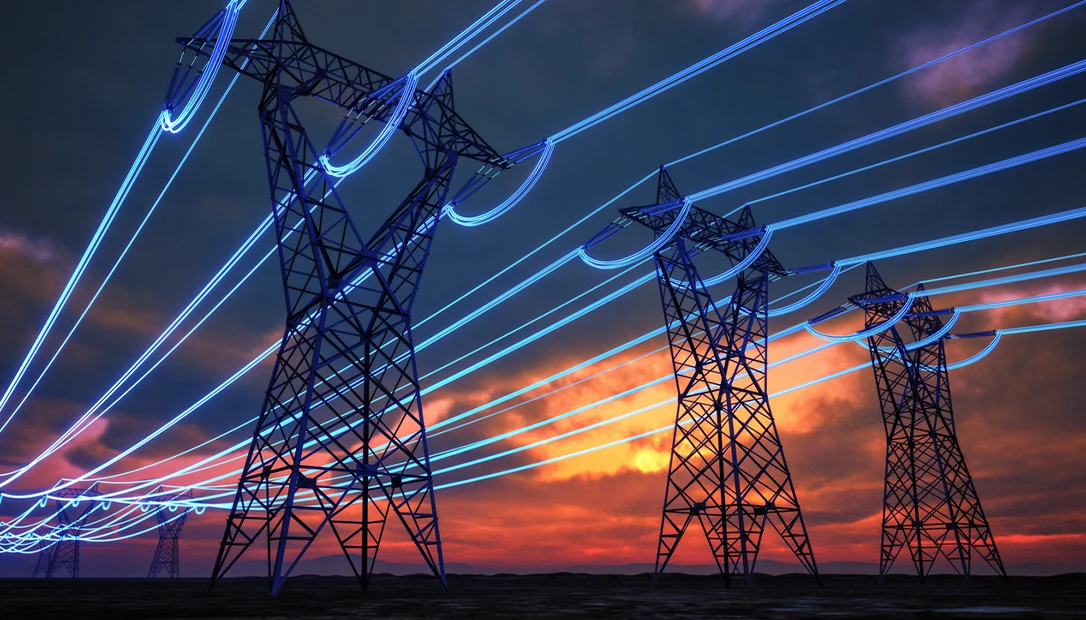
Every few years, the topic of EMP strikes comes roaring back into the conversation. A headline drops, a solar storm makes the news, a social media thread catches fire, or a Hollywood movie ignites discussion online. Suddenly, everyone is asking the same question. Will my car still run?
Students have asked me in class. Friends bring it up over the group chat. Someone inevitably points to a carbureted truck or an old square-body Chevy and says, “That’s why I keep this around.” The assumption is simple. Old vehicles survive. New vehicles die. Travel stops. End of story. The reality is far more complicated.
I come to this conversation from a strange place. In my garage sits a mechanical ignition 1930 Chevrolet. Parked next to it is a 2021 Ford Mach-E electric car that relies heavily on digital architecture. Somewhere in between lives a carbureted 2001 Yamaha VStar motorcycle. Three machines from three different eras, each built around entirely different philosophies of power, control, and electronics.
Advertisement — Continue Reading Below
When you look at EMP through the lens of real vehicles rather than internet folklore, a different picture begins to emerge.
What People Think EMP Strikes Do
First, let’s start with what it actually is. EMP is an Electro-Magnetic Pulse. It’s a short, intense burst of electromagnetic energy capable of inducing electrical currents and voltage spikes in nearby wiring and electronic systems. EMPs can originate from several places, including high-altitude nuclear events, severe solar activity, or certain non-nuclear electromagnetic phenomena.
Advertisement — Continue Reading Below
An EMP disrupts electronics by overwhelming circuits with a sudden surge of energy, which can cause temporary malfunctions, resets, or permanent damage depending on the pulse’s strength and the equipment’s resilience.
When we talk about EMP’s in the wild, the common narrative is very cinematic. A pulse hits, dashboards go dark, engines stall, and highways freeze in place.
The truth is that EMP is not a single uniform event. It is a broad term that covers a range of electromagnetic disturbances with different characteristics and effects. Some are tied to solar activity that primarily stresses power grids. Others are theoretical high-altitude pulses discussed in defense circles. The severity and reach of these events vary wildly, and so does their impact on vehicles.
Advertisement — Continue Reading Below
One of the biggest oversights is the assumption that all electronics instantly fail. Modern vehicles are not delicate computers waiting to be switched off. Automotive systems already live in a harsh electromagnetic environment. Ignition systems, alternators, and onboard radios generate constant electrical noise. Manufacturers design control modules with shielding and filtering because vehicles must withstand real-world interference every day.
BUT, none of that means they are immune. It means the outcome is unlikely to be universal or as predictable as your favorite Hollywood movie would show.
Older Does Not Automatically Mean Safer
Let’s talk about the 1930 Chevrolet for a minute. Mechanical ignition. Simple wiring. No digital control units. On paper, it sounds like the ultimate EMP-proof machine. Except that even early vehicles contain coils, generators, and long runs of wire that can pick up induced energy. Voltage spikes do not care about nostalgia. They travel through conductors.
Advertisement — Continue Reading Below
Older vehicles may have fewer sensitive components, sure, but they are not invincible. Wiring insulation, grounding quality, and physical exposure all matter. A ninety-year-old harness with brittle insulation may be more vulnerable to electrical stress than a modern sealed module designed to meet automotive durability standards.
The takeaway is not that old vehicles are fragile. It is that the simple “pre-computer equals safe” narrative ignores how electricity actually behaves through a car’s wiring harness.
Advertisement — Continue Reading Below
Modern Vehicles Aren’t Made of Glass
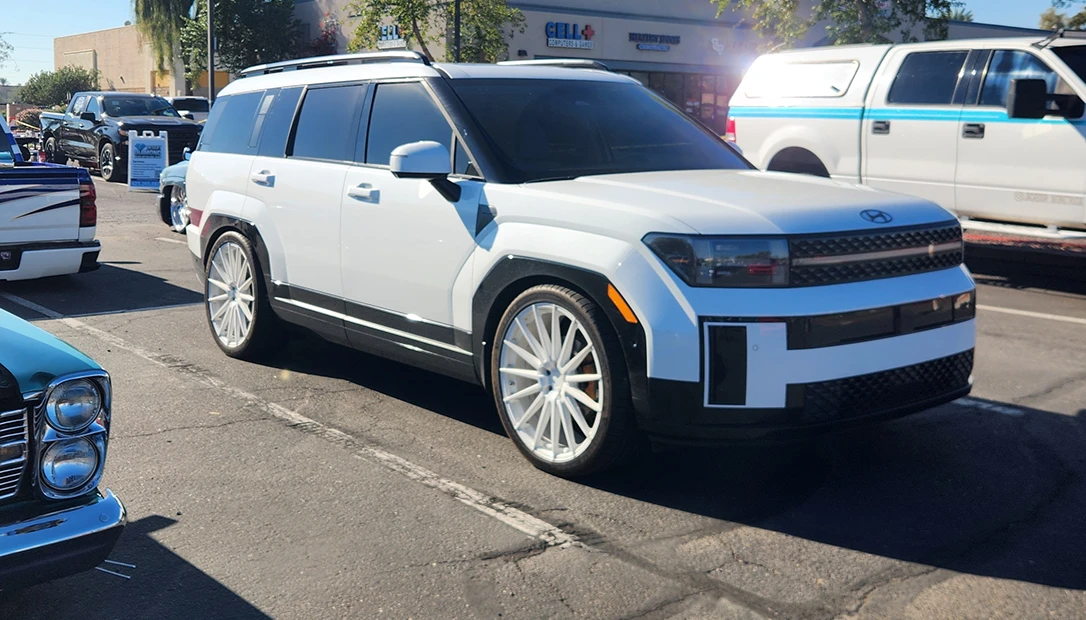
The other extreme. The Mach-E sits at the opposite end of the technological spectrum. Multiple control modules, digital displays, drive-by-wire systems, and battery management electronics. On paper, it seems like the first vehicle that would fail.
But modern vehicles also benefit from decades of electromagnetic compatibility design. Metal body panels provide partial shielding. Control modules are often encased in insulated housings that reduce exposure to transient spikes. Wiring harnesses are routed and shielded to minimize interference.
The real question is not whether a modern vehicle has electronics. It is how those electronics are integrated and protected.
Advertisement — Continue Reading Below
Some modules might reset. Some functions could become unreliable. Yet total catastrophic failure across every modern vehicle is a far more dramatic outcome than most engineers expect.

The Motorcycle in the Middle
The Yamaha VStar sits in an interesting middle ground. Carbureted, relatively simple, but still dependent on ignition electronics and charging components. It represents the category most riders assume is safe. Less complexity must mean less vulnerability. Again, that reality is nuanced.
Advertisement — Continue Reading Below
Motorcycles often have exposed wiring and minimal shielding compared to enclosed vehicles. That openness can make them more susceptible to induced energy in certain scenarios. At the same time, their simpler architecture may make recovery easier if a component fails.
The lesson across all three machines is clear. Vulnerability is not defined by a single year. It is defined by system design.
The True Weak Link
Here is the part of the conversation that almost nobody talks about. The supporting infrastructure. Even if your vehicle survives, can you still travel?
Advertisement — Continue Reading Below
Modern mobility depends on infrastructure. Fuel pumps require power. Traffic signals rely on centralized controls. GPS satellites and cellular networks support navigation and logistics. Payment systems enable refueling, repairs, and everything else you need on the road.
A large electromagnetic event that disrupts the electrical grid could strand drivers, regardless of what’s under the hood. The issue shifts from “Will my engine run?” to “Will the world around my engine function?” A Mach-E without a charging infrastructure is limited. A carbureted motorcycle without fuel distribution faces the same reality. Even the 1930 Chevrolet becomes a static artifact if the supply chain collapses.
That distinction actually reframes the entire discussion. The vulnerability is not only mechanical. It is systemic.
Post EMP Strikes
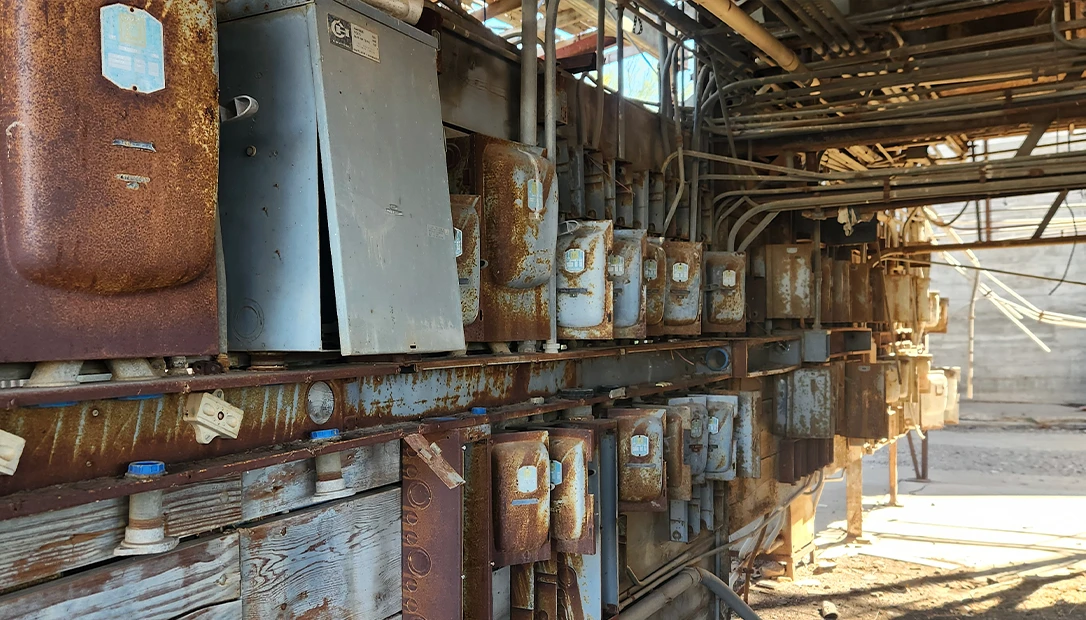
Another common oversight is behavioral. People imagine empty roads and silent cities. The opposite is more likely. If signals fail and communication networks falter, drivers lose coordination. Intersections become chaotic. Accidents increase. Panic spreads faster than any electrical disturbance. A vehicle that runs perfectly may still struggle to move through a landscape shaped by confusion.
Travel becomes less about horsepower and more about awareness. Situational judgment replaces reliance on infrastructure. Your driving environment matters more than your ignition system.
Myth v. Reality
All of these considerations leave us in a place that is less dramatic but far more honest. EMP discussions often drift into absolutes because absolutes are easy to understand. Like many big concepts, the truth sits somewhere in the middle.
My 1930 Chevrolet is not guaranteed survival simply because it is old. My Mach-E is not doomed simply because it is new. The Yamaha VStar does not sit in a magical safe zone because it splits the difference. Each vehicle carries strengths and vulnerabilities shaped by design choices rather than internet narratives.
The Real Questions
Instead of asking which vehicle survives an EMP, consider asking better questions.
How dependent is your travel on infrastructure?
What happens if navigation systems disappear?
Can you operate your vehicle without electronic assistance?
Do you understand the limitations of your fuel or charging system?
Those questions shift the conversation from fear to understanding.
Missed Discussion
An option that almost never makes the conversation, despite being painfully obvious… the bicycle. During any large-scale disruption, whether it’s an EMP event or the kind of infrastructure collapse people love to imagine in movies, bicycles quietly solve many problems at once. They require no fuel, no charging infrastructure, no ignition system, and no software updates.
They are mechanically simple, easy to repair with basic tools, and capable of moving a person farther and faster than walking while staying largely independent of the grid. Yet somehow, in every zombie apocalypse film, survivors are fighting over gas cans while bicycles are nowhere to be found. Maybe bicycles are not as cinematic as roaring engines, but when the lights go out, and the roads get crowded, the quiet practicality of two wheels might be the most realistic form of mobility left.

Final Pulse
Standing between a ninety-year-old Chevrolet, a modern electric crossover, and a carbureted motorcycle has changed how I think about technology. Each machine reflects its era’s understanding of reliability. Each carries its own form of resilience.
If an EMP event ever becomes more than a thought experiment, the biggest challenge will not be deciding which keys to grab. It will be navigating a world where the invisible systems that make travel possible are a complete mess.
The machine you drive matters. The environment you drive through matters more.
And as with most things in the firearms and preparedness world, the strongest advantage is not the tool itself. It is the knowledge behind it.
Oh yeah, buy a bicycle.