


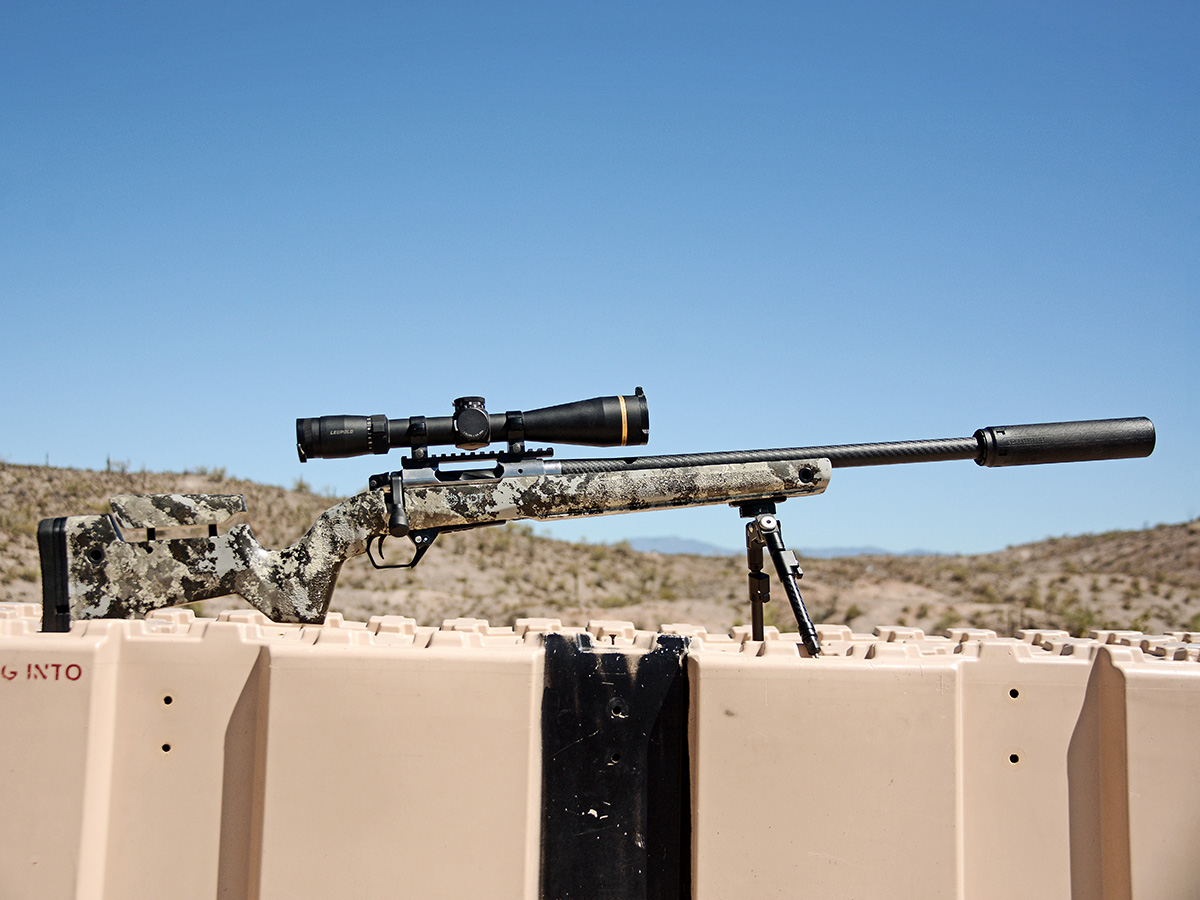
If you’ve been wanting to build a .22 Creedmoor bolt-action rifle, this look at mine should give you some inspiration.
Now that the 6.5 Creedmoor has supplanted the venerable 308 in terms of sales, particularly with regards to new rifles, there’s been an uptick in interest in other calibers based on the parent design. Once it’s necked down, the otherwise mild-mannered Creed takes on a bit of a Jekyll-and-Hyde personality, changing from a ho-hum, jorts-and-New-Balance, reliable-but-dull persona into a fire-breathing nutter.
Optimized for heavier bullet weights, the .22 Creedmoor had some teething problems due to operating at the outer limits of current bullet designs. Tales of 90-grain projectiles coming apart as they were spun at eye-watering rates were pretty common. Today, barrel manufacturers have switched to a slightly larger bore diameter, so as not to stress the bullet quite as badly, and as a result they can be counted on to actually reach the target rather than turning into lead and copper dust. Usually.
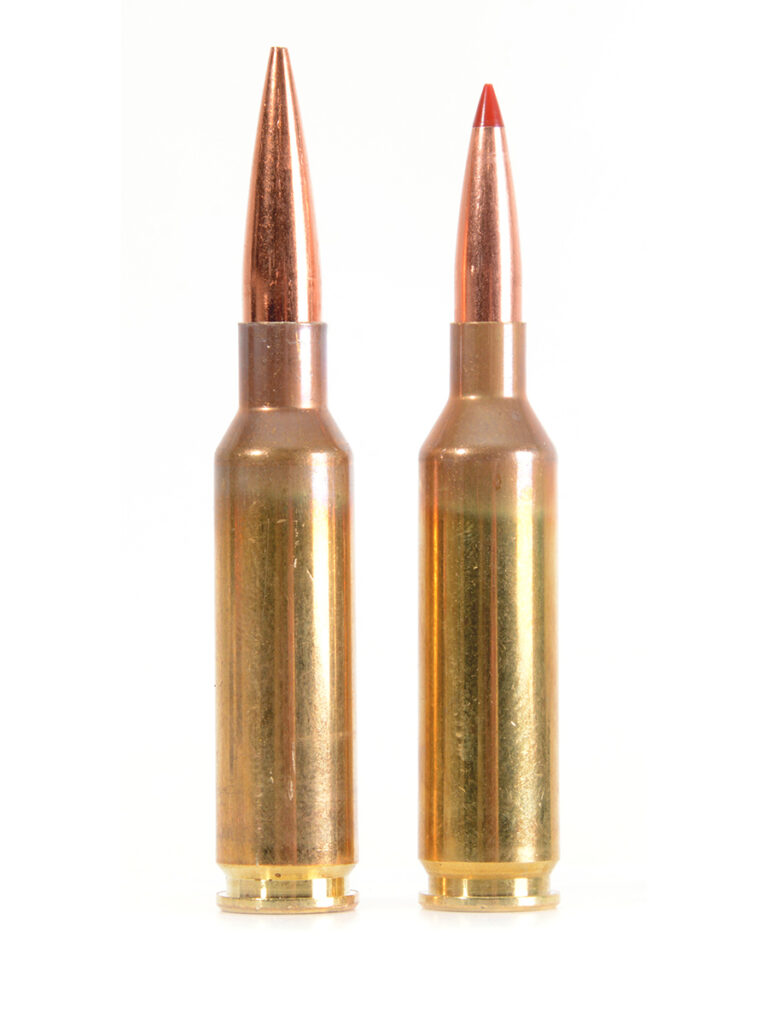
With the Creed able to match or exceed 22-250 velocities, you should probably be asking why not simply opt for the old stalwart. Based on the .250 Savage case, the 22-250 has been burning out barrels since its introduction in the 1930s, and at the time was the best option available for anyone who wanted to vaporize small critters such as groundhogs. The years have not been kind however, and its tapered case and 1/14 twist barrel bring problems of their own. Feeding from AICS mags is a tough proposition due to case taper—it’s the bolt gun equivalent of 7.62×39 in an AR, and bullets heavier than 55 grains have a tendency to be marginally stable at best. The .22 Creedmoor gives the user access to heavy-for-caliber bullets, which really take the .224 to another level in terms of downrange lethality, and an easy-feeding case design.
The lock, stock and barrel of this build sheet are top-shelf components, but if you want to get into the .22 Creed game, there are certainly less expensive options. With a barrel life of around 1,000 rounds, this is one area we’d look closely at for cost reduction, but as we’ve never had a Helix 6 barrel that didn’t shoot lights out, the company was an easy choice for a fast 22. We opted for an 18-inch, carbon-wrapped tube with 5/8-25 muzzle threads to maximize suppressor choices and give plenty of steel at the muzzle end. Helix 6 offers this as a 0.219-inch bore diameter, putting less strain on bullet jackets and allowing us to drive 77- to 88-grain offerings at 22-250 AI velocities. So, we did.
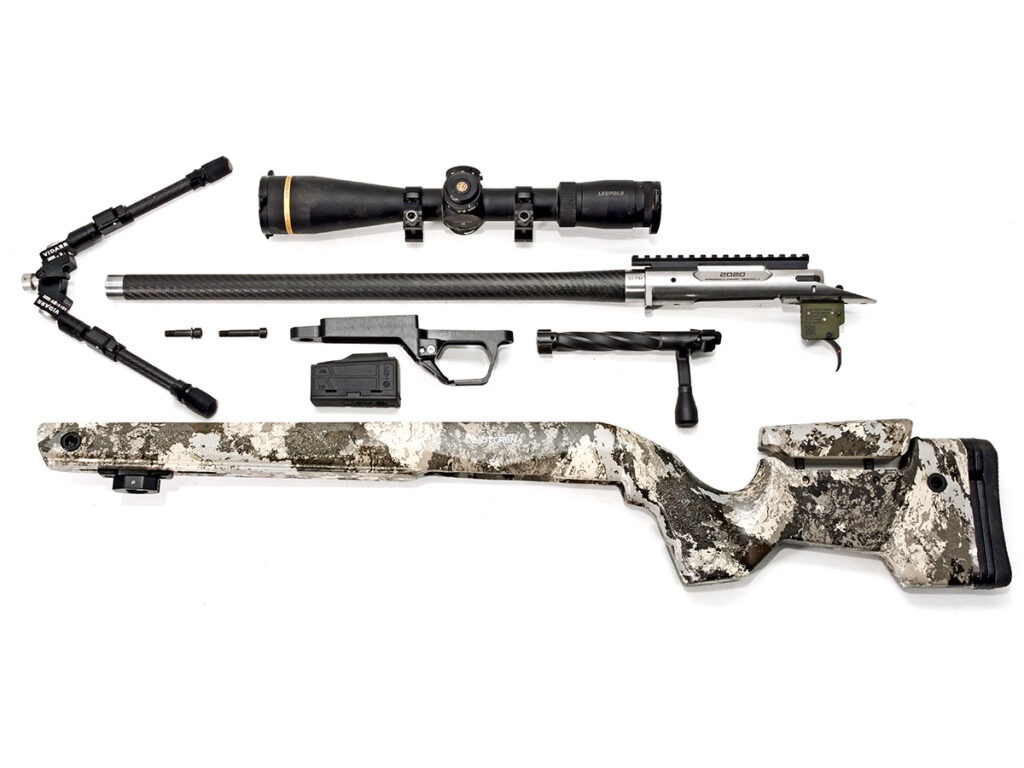
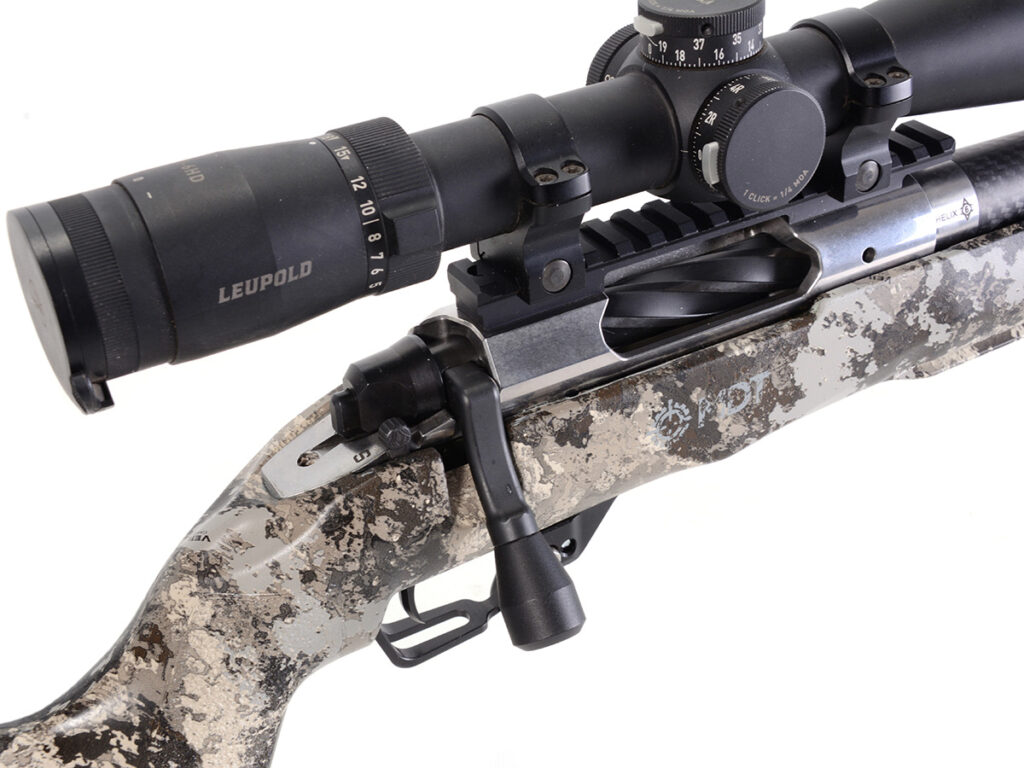
Springfield Armory started quietly selling the actions used in their Waypoint rifles as stand-alone components. So quietly, in fact, that they’re not even listed on the company’s website, but if you call, you can get one sent to your FFL to build out however you see fit. Given the lead times involved in getting an action from some other manufacturers, this is a welcome opportunity to snag a proven, premium, 700-pattern action at a decent price. As far as features go, the Waypoint leaves nothing on the table. EDM bolt raceways are smooth and clean, the bolt stop is massive and easily accessed, and there’s an integral recoil lug. The bolt itself is a two-lug design, but has a Sako-style extractor and is fluted for use in dusty or muddy environments. We were impressed by the action when it first came out, and there’s been nothing in the years since that would cause us to change that opinion.
Stepping outside the usual comfort zone of Timney and TriggerTech, we opted for a Rise Armament trigger for this build. Better known for their value AR-15 triggers, Rise are a comparative newcomer to the bolt gun game, offering two models for 700 pattern actions. The Reliant Hunter seen here is adjustable down to 2 pounds, features more of a rollover-style break and retails for just 180 bucks. We’ve gotten more comfortable with this style, rather than the proverbial glass rod trigger, and so long as there’s zero grittiness, actually prefer it on a hunting rifle.
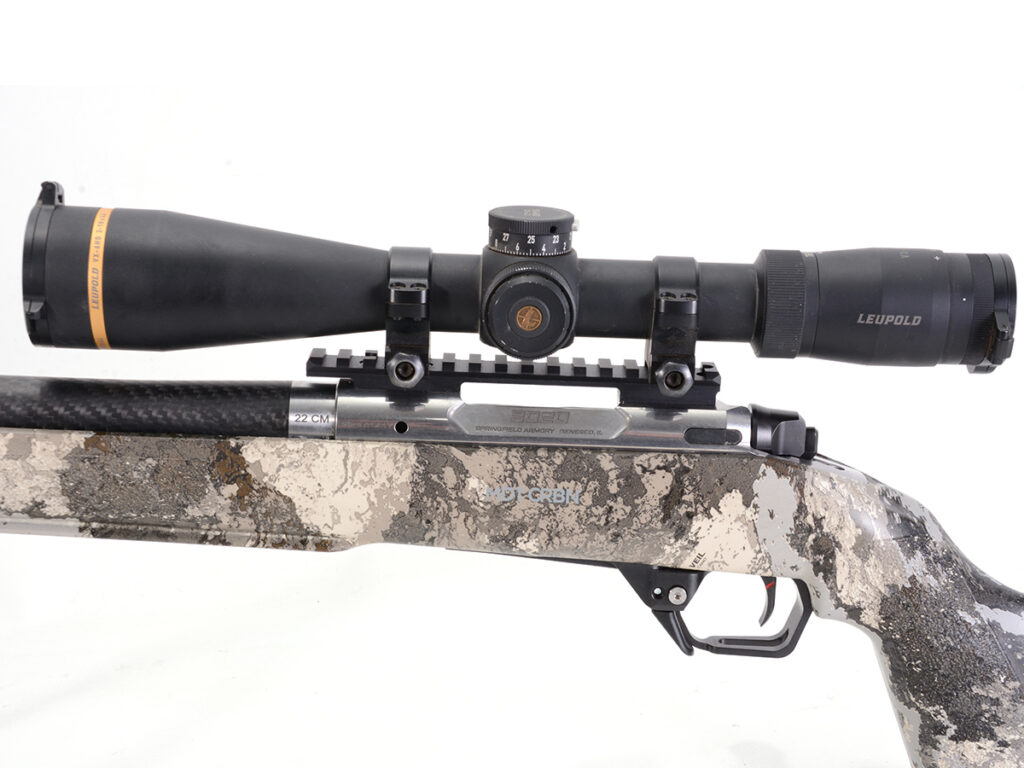
The other components find a home in an MDT CRBN stock, which has an aluminum bedding block wrapped in carbon-fiber composite. Despite its scant, 30-ounce weight, it’s adjustable for riser height and length of pull, and incorporates a full-length ARCA rail at the 6 o’clock position for use on a tripod. When used with a three-round, flush-fitting magazine, its bottom metal looks more like a classic hunting rifle rather than a PRS rig. One of the main criticisms of detachable mag hunting rifles is that in the event of accidentally dropping the mag on a hunt, you’re left with a single shot that’s very difficult to load. MDT neatly sidesteps this problem with a button on the trigger guard that locks the mag catch, making it almost impossible to inadvertently activate.
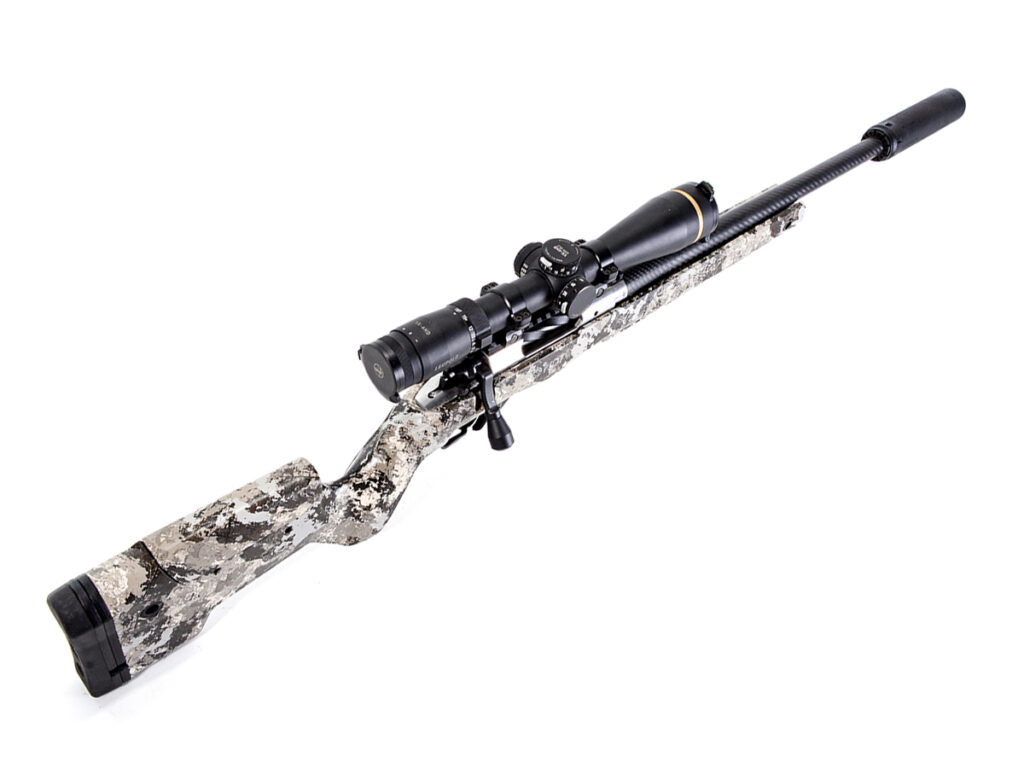
Titanium suppressors are the bee’s knees when it comes to shedding ounces but give up a little in terms of longevity—as a blast baffle material, Ti leaves a lot to be desired. B&T managed to design their way around the problem by 3D printing a titanium can around an Inconel blast baffle, combining the strengths of both materials where they make most sense. The .22 Creed has a lot more powder volume than a 5.56 round, so a higher volume can is a better fit in this application. Our Print XH-556 suppressor is currently bleeding edge tech on both bolt guns and ARs, where its flow-through design leads to very little gas coming back at the shooter’s face. Best yet, it weighs in at just 10 ounces and produces a very pleasant low tone at the shooter’s ear.
One downside the .22 Creedmoor currently faces is that of ammo availability. Hornady and Nosler are the only major sources of factory ammo, but if you roll your own you’ll find this is one cartridge that’s easy to develop loads for. It likes powder a lot slower than you’d typically find in a 223—start with your favorite .300 Win. Mag. fuel and you won’t go far wrong—but anything from H4350 on up will work. For our load development, we used RCBS dies, Peterson brass, Hornady and Sierra bullets, and powders from Hodgdon and Vihtavuori. Charges were thrown on an RCBS Matchmaster, accurate to 0.1 grain.
Topping off the rig is a Leupold Mk6 HD 3-18×44 scope. Since this rig will serve primarily as a hunting rifle to slay coyotes and medium-sized big game, a second focal plane reticle is preferred, as FFPs tend to disappear at low magnification, especially in low light. The Mk6 HD has great glass for morning and evening hunts, and exposed, zero stop turrets to take advantage of the Creed’s extended range.
We’ve become accustomed to installing Spartan Precision adapters on most of our hunting rifles, as this enables us to easily swap bipods from one to the next and allows access to their ecosystem of tripods and other shooting supports. The M-Lok rail on our MDT stock accepted a Spartan adapter, and we used their Vidarr bipod for all of our load development and accuracy testing.
All in all, this was a fun project. Turbo 22s punch way above their weight when teamed with fragmenting bullets like the Hornady 80-grain ELD-X or Sierra 77-grain TMK. And while Fudds might tut-tut at the thought, we’d have no reservations using this build on game animals up to 500 pounds, at ethical ranges.
Parts List
Action: Springfield Armory Waypoint
Barrel: Helix 6
Stock: MDT CRBN
Scope: Leupold VX6 HD 3-18×44
Suppressor: B&T Print XH-556
Bipod: Spartan Precision Vidarr
Editor’s Note: This article originally appeared in issue 11 of CARNIVORE magazine.
More On Hunting Rifles