There are few figures in the knife community more polarizing than Mike Stewart. His most recent venture, Bark River Knives, closed up shop permanently as of March 20, 2026, according to a statement released on social media.
Bark River Knives Closes Its Doors Permanently
In the statement, Stewart said that there were many reasons for the business closure, including mismanagement on his part. One of those gaffes was substituting cheap Chinese steel and claiming it was premium American steel in several of their 2025/2026 knife runs.
Advertisement — Continue Reading Below
Fraudulent Steel Swapping
In his statement, Stewart admitted to using a Chinese steel for several knife runs, labeling them as being CPM 154, which is a premium American steel.
The knife models he specified as being included are:
- Camp Bolo
- Fox River Skinner
- Highwayman 4
- Mini Manitou
- Gladstone Hunter
- Bitterroot Caper
- The last two Bark River Knives Collectors Association knives
I spoke with Jim Stewart, and he said that he’d been opposed to disguising the Chinese steel as CPM 154 or 154CM. He stated that he’d offered a couple of other options or approaches, but that the elder Stewart declined to pursue them. In speaking with a couple of former employees of Bark River Knives, they also said the same, that Jim seemed to only go along with it because Mike said so.
Advertisement — Continue Reading Below
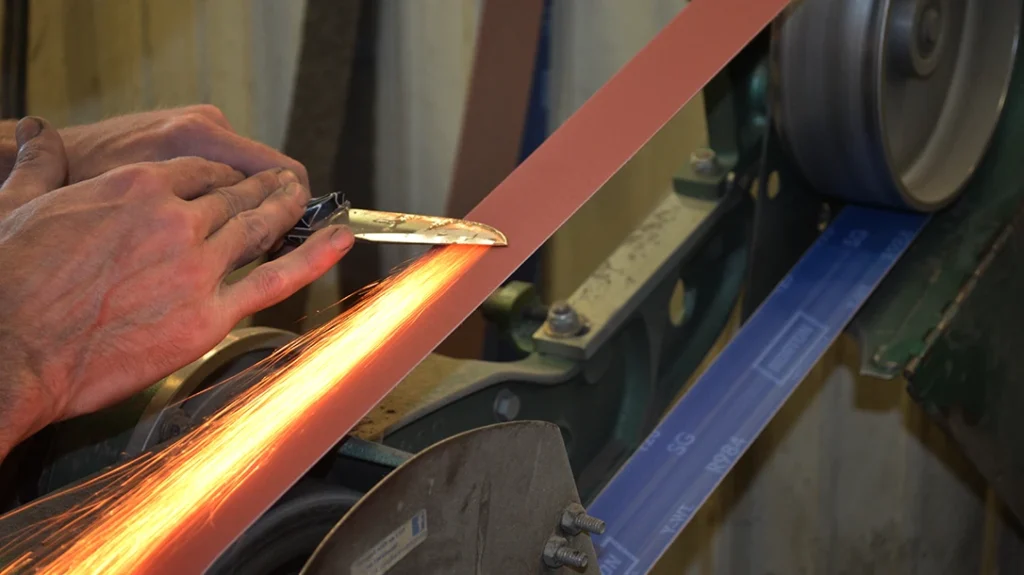
Stewart claimed full responsibility for the “blunder,” as he put it. He stated that neither his wife, Lesley Stewart, nor his son Jim Stewart, both of whom work at Bark River Knives, was to be blamed. He insisted, though, that the knives were properly marked as “Made in U.S.A.” because they had undergone a minimum of five operations at their shop.
Made in America According to the FTC
In checking with the Federal Trade Commission (FTC), here’s what they say about Made in America claims:
Advertisement — Continue Reading Below
For a product to be called Made in USA, or claimed to be of domestic origin without qualifications or limits on the claim, the product must be “all or virtually all” made in the U.S.
Further:
“All or virtually all” means that the final assembly or processing of the product occurs in the United States, all significant processing that goes into the product occurs in the United States, and all or virtually all ingredients or components of the product are made and sourced in the United States. That is, the product should contain no — or negligible — foreign content.
Advertisement — Continue Reading Below
Given that a knife consists primarily of a steel blade and tang to which handle material is attached, at a guess I’d say that those knives Mike Stewart mentioned contain far more than negligible amounts of foreign content.
A Pattern of Behavior
This is not the first time Bark River Knives has been in trouble over mislabeled steel. Back in 2006, this whistleblower report was published, alleging the use of Japanese steel, though evidently nothing came of it.
There was also another instance a few years ago where knives had been mismarked. However, this was blamed on someone accidentally grabbing the wrong stencil at the Bark River Knives shop.
Advertisement — Continue Reading Below
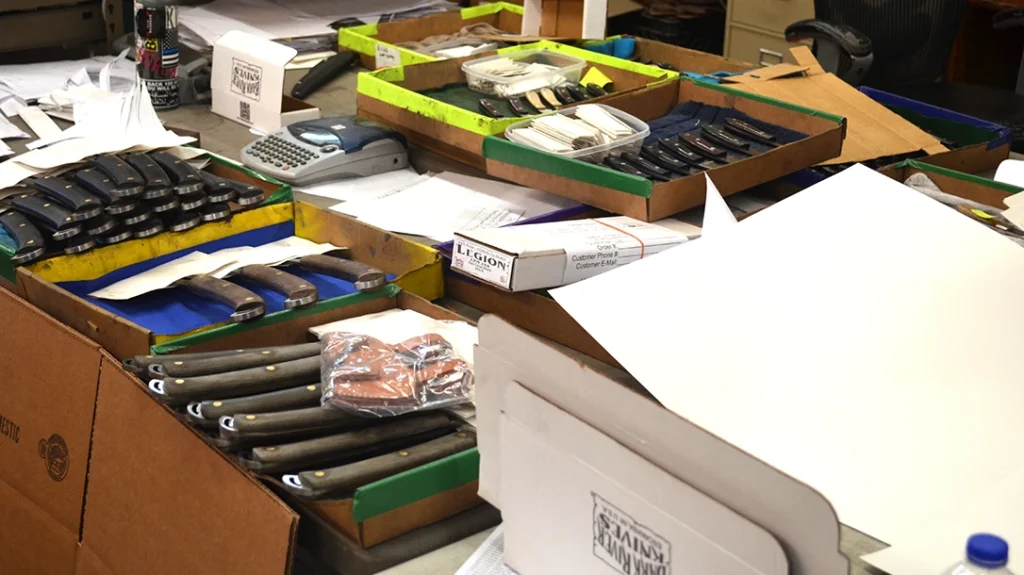
Several people on social media questioned why employees didn’t say anything about the recent steel swaps until now. While speaking with a few former Bark River Knives employees, more than one remarked how the company would prey upon people who had nowhere else to go and hire them on.
Mike Stewart would even brag about hiring people fresh out of jail or with similar employment challenges. Thus, implying that he was giving them a second chance. However, this enabled management to manipulate and control employees, confident that they’d go along with almost anything just to keep their jobs.
Advertisement — Continue Reading Below
Distributor Reactions
Knife distributors were caught off guard by these developments, particularly as they were announced while many were busy with Blade Show Texas. Over the weekend, Jason Thoune, owner of DLT Trading and likely the number one distributor for Bark River Knives, was quick to condemn the bait-and-switch with the steels and said he would address everything on Monday.
In a live-streamed video Monday afternoon, he reiterated that the steel swap was inexcusable and that DLT Trading had no idea it had been done.
Thoune also mentioned that DLT Trading had been purchasing steel from Niagara for Bark River Knives for perhaps as long as the last seven years. It appears Bark River Knives had been cut off from steel suppliers due to a lack of payment. Thoune stepped in, trying to help keep the company afloat until they could get back on their feet.
A former Bark River Knives employee confirmed to me that they had fielded countless calls from creditors demanding payment. Each time, Mike Stewart would refuse to take the call.
In the video, Thoune stated that if any of his customers wanted to return any of the impacted knife models, they were welcome to do so. Alternately, if a customer liked the knife, they could contact DLT to receive a price adjustment to reflect what the knife should have cost with the cheaper Chinese steel.
KnivesShipFree is also offering a full refund on purchases of the Chinese steel knives.
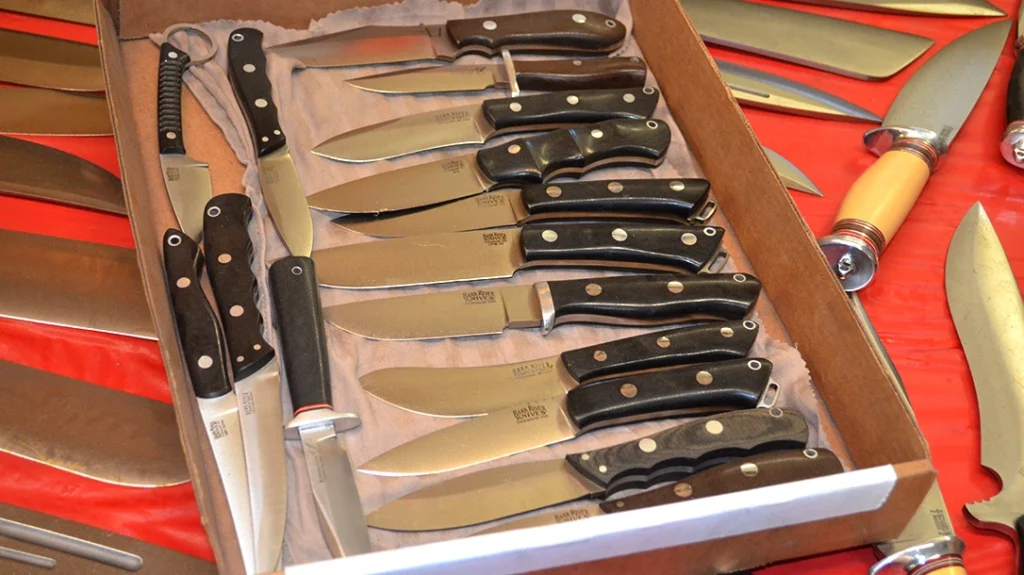
What Happens Next?
As it stands, Bark River Knives is facing at least two lawsuits that have already been filed. One involves Altbanq Lending, which is suing Bark River Knives for breach of contract, with a sum of about $350,000 at stake.
What appears to be a similar type of suit involving Litefund Solutions, LLC, was just filed on March 20, 2026.
There is also a strong possibility of Federal charges for fraud violations.
Thoune has stated that he is having knives from Bark River Knives tested by Niagara Specialty Metals to ensure their composition matches what he was told they were. He’s taking at least one knife from every batch that could be questionable, including several that weren’t included on the Chinese steel list Mike Stewart posted.
Once that information is confirmed, Thoune will decide how he’s going to handle the remaining Bark River Knives inventory. No matter what, his company will be losing a substantial amount of money, well into six figures, just from advances made to Bark River Knives for product that will now never be produced.
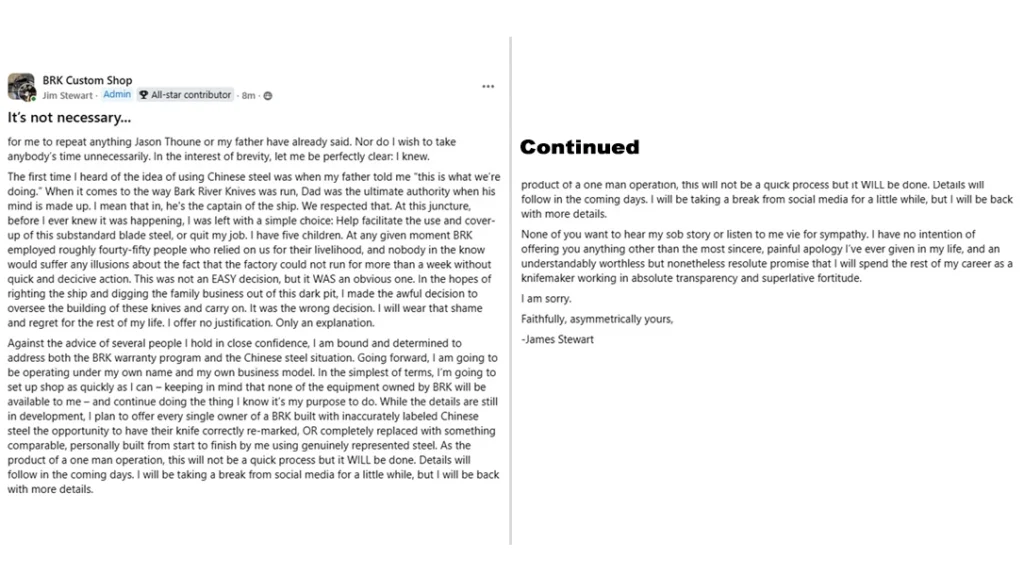
In a separate statement, Jim Stewart said that he will be opening his own knife brand in the near future. He plans to open a shop as quickly as possible. Once that is established, he will be offering to make things right with customers who purchased the Chinese steel knives.
They will have the option to either have their knives remarked with the proper steel or have new knives made with quality steel, which will be properly identified up front. When he mentioned to me his plan to open a new shop, I suggested that the hill he’s going to have to climb to gain any sense of trust from anyone is pretty damn steep.