


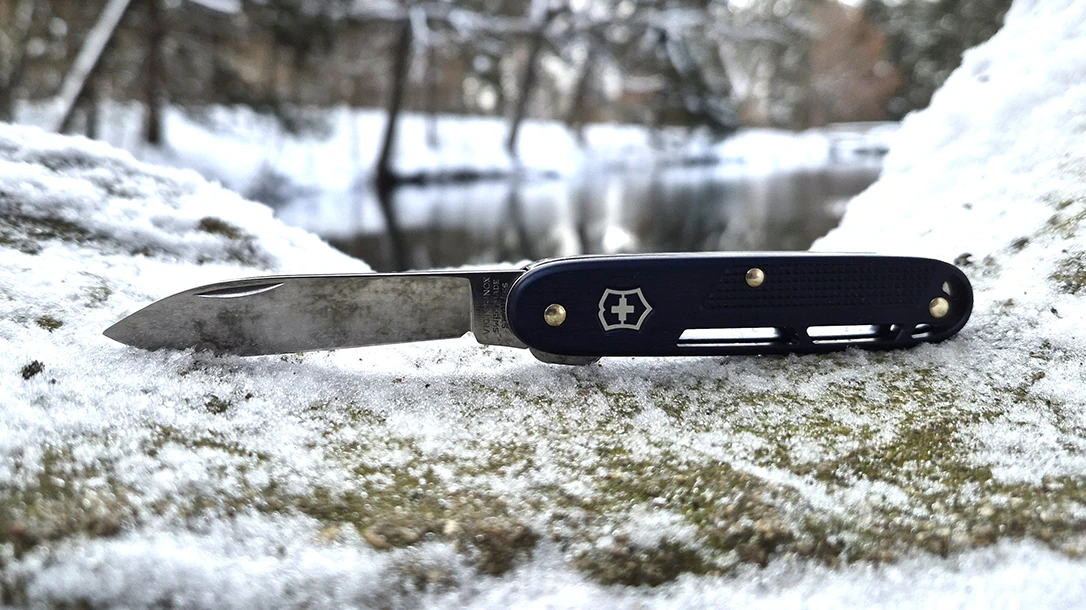
Victorinox has been making Swiss Army knives since 1897. In that time, they’ve become one of the most recognizable knife designs on the planet. You’ll find them just about everywhere. The new Onefold Alox model from Victorinox is a new take on an old classic. It’s innovative and interesting, as well as eye-catching.
The Victorinox Onefold Alox
There are three things about the Onefold that help it stand out in the Swiss Army knife lineup:
- It’s just a folding knife, no other tools on board
- The blade locks
- There’s a pocket clip
It isn’t without its faults, but it’s a solid contender for an EDC knife.
Advertisement — Continue Reading Below
A Locking Blade
This isn’t the first Swiss Army knife to have a locking blade. They’ve done them a few times before. However, it was usually on their larger models like the Hunter Pro and the Evoke series. The Onefold Alox is much closer to the size of what you might think of as a standard Swiss Army knife.
You should never consider any blade lock to be foolproof, but the Onefold Alox’s liner lock comes pretty darn close. With most liner locks I own, you push the locking bar to the left to fold the knife closed. Often, the lock is only engaging a fraction of the blade.
Advertisement — Continue Reading Below
With the Onefold Alox, the liner lock travels from the right side of the handle and engages the left side of the blade. This means that in order for the lock to slip, it would have to traverse the entirety of the tang before the blade could slip closed.
The downside of this liner lock is that it is very stiff. I’ve opened and closed this knife well over 100 times so far, and it hasn’t loosened up at all. That’s not entirely bad. However, having the Onefold Alox’s liner lock move in the opposite direction of every other liner lock I’ve owned took some time to get used to.
One Blade to Rule Them All
Well, maybe that’s a stretch. But it is worth noting that the Onefold Alox is unlike most other Swiss Army knives, especially in this size, in that it has just a single knife blade, nothing else. I know a lot of people who put the standard style Swiss Army knife in the multi-tool category. That’s not going to apply here.
Advertisement — Continue Reading Below
On the one hand, having just one knife blade certainly cuts down on the weight. The Onefold Alox tips the scales at a very modest 1.9 ounces, where the Huntsman, my current favorite Swiss Army model, is nearly double the weight at 3.4 ounces. Of course, it’s also double the thickness and has about 15 tools folded inside.
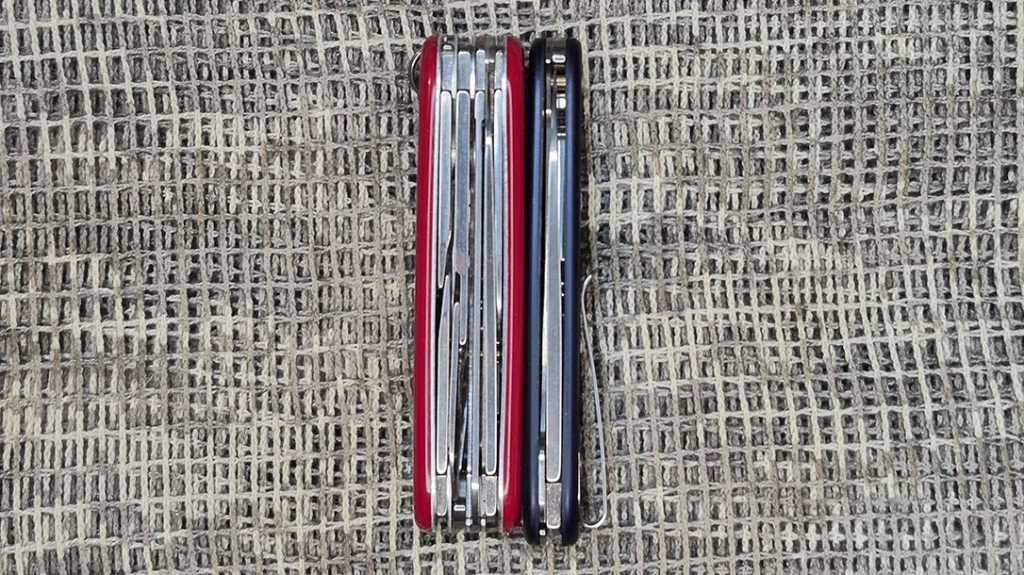
Given the size, the singular blade, and the overall aesthetics, I’d consider this to be more of an urban/suburban knife. It’s not something I’d toss in a pocket before hitting the trail for a few days.
Advertisement — Continue Reading Below
Design and Features of the Onefold Alox
Let’s take the Onefold Alox for a spin and kick the tires, so to speak. The Alox in the name comes from the aluminum oxide material used for the handle. Victorinox has been using alox since about 1957. It’s durable, corrosion-resistant, and looks amazing. These scales are skeletonized and textured. The knife is available in dark blue, as shown here, as well as red or silver.
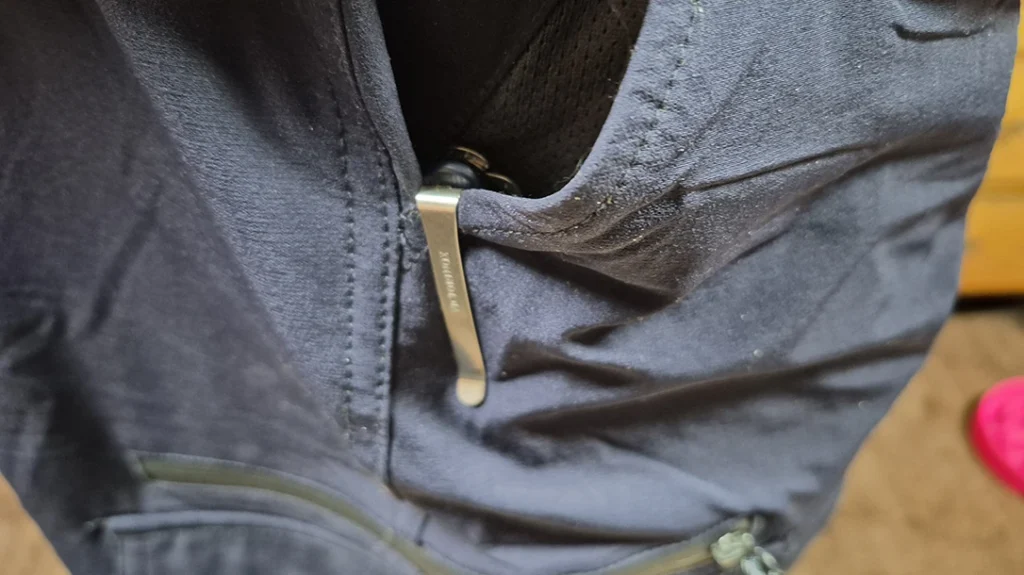
The pocket clip, something of a rarity in the Swiss Army knife collection, is riveted in place, positioning the knife in tip-down, right-hand carry. It has good retention without being obnoxiously tight, and it isn’t difficult to remove from your pocket. That said, I don’t use pocket clips all that often. For a smaller knife like this, I prefer to just let the knife drop into my pocket.
Advertisement — Continue Reading Below
The blade is 2.5 inches long from tip to the small sharpening choil. As with all Swiss Army knives this size, there’s a nail nick to pull the blade open. The liner lock creates a little tension as the blade swings open. The blade has a mirror-polished finish.
Onefold Alox Performance
I’ve been carrying the Onefold Alox for a few weeks, using it as my primary EDC more often than not. It’s seen work around the house, on a few hikes, and even a bit in the kitchen. It’s comfortable to use, though it does feel a little lost sometimes in large hands.
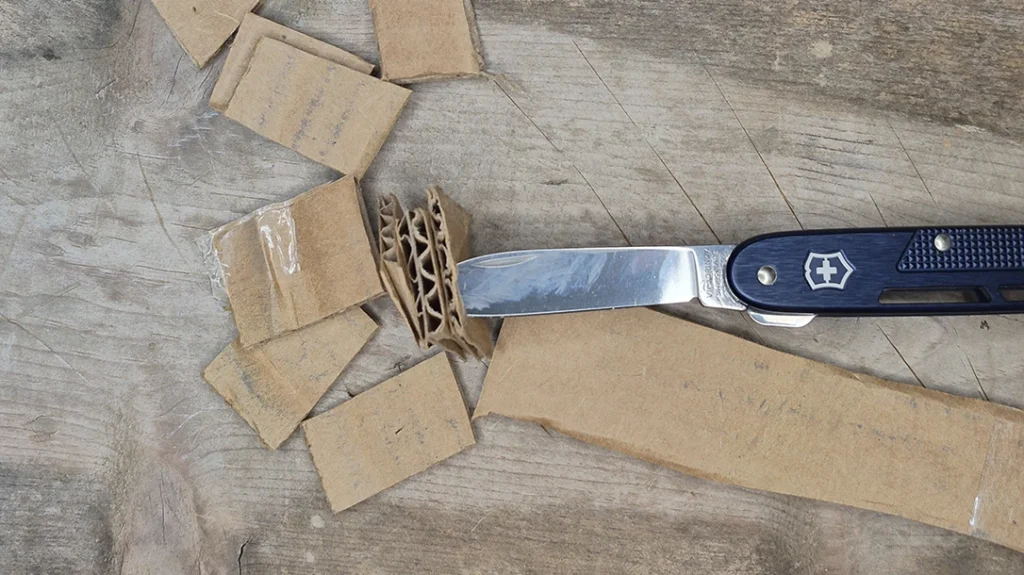
Immediately prior to sitting down to peck out this review, I put the Onefold Alox through a few somewhat formal tests. I started with corrugated cardboard. After slicing several long strips and then cutting those into pieces, I shoved the tip through a few of those pieces. The knife handled the cardboard just fine, which was expected.
Advertisement — Continue Reading Below
Next up was some nylon web belt material I found sitting in my test materials box. Pulling the knife through loops of it was no problem. However, slicing the material as it sat on a board was a little difficult toward the end of the testing. This wasn’t overly concerning, given the work the knife had put in already.
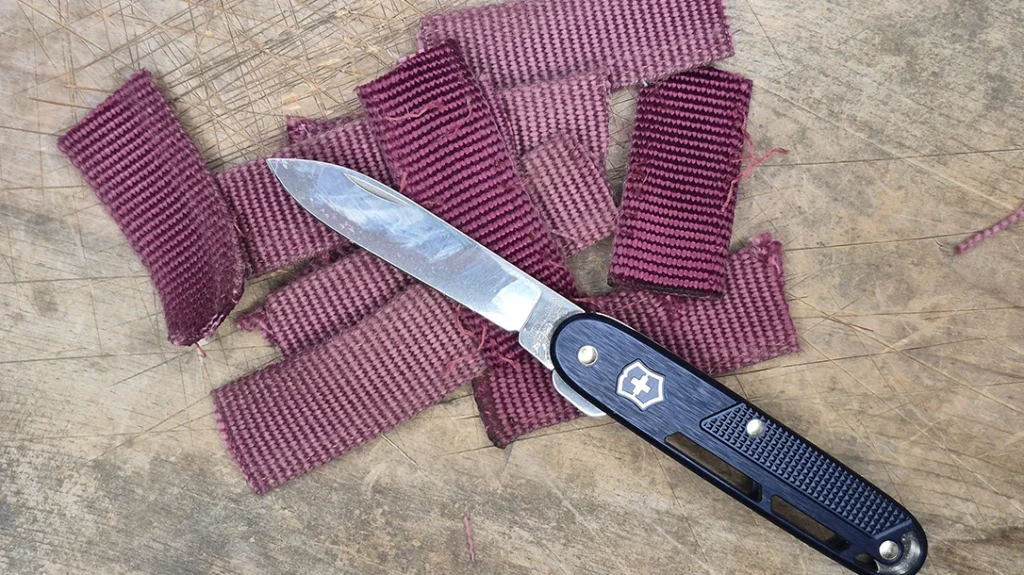
I make it a point not to sharpen the blade on a knife during the evaluation period, as I want to gauge edge retention. And it was at this point that I noticed degradation of the sharp edge.
Finally, the old standby, paracord. The blade sliced through four loops of cord at the same time with ease. I then nipped the cord into bits using push cuts. Again, it did okay for the most part, but a few of the cuts were rougher than others.
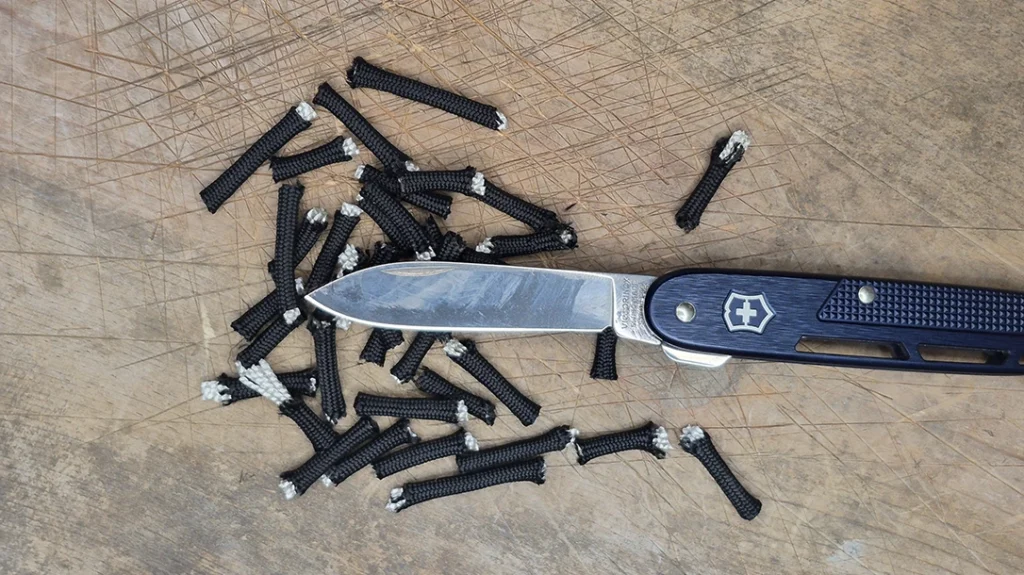
All in all, the Onefold Alox performed well, particularly for its size and design. This isn’t a hunting or survival knife, and it doesn’t need to perform like one.
Who Needs the Onefold Alox?
This is a good EDC option for anyone looking for a great quality knife at an affordable price. The Onefold Alox runs $56.00, which isn’t bad at all for what you’re getting.
However, as I mentioned before, this knife is far better suited for office or home use than rough work out on the trail or worksite. I can’t imagine trying to release the liner lock, as stiff as it is, with frigid fingers in the dead of winter.
I like the Onefold Alox concept and design quite a bit. It fills the gentleman carry niche well. But if you’re looking for a robust EDC for wood tramping, you might want to go with the Huntsman.
WHY OUR ARTICLES/REVIEWS DO NOT HAVE AFFILIATE LINKS
Affiliate links create a financial incentive for writers to promote certain products, which can lead to biased recommendations. This blurs the line between genuine advice and marketing, reducing trust in the content.