


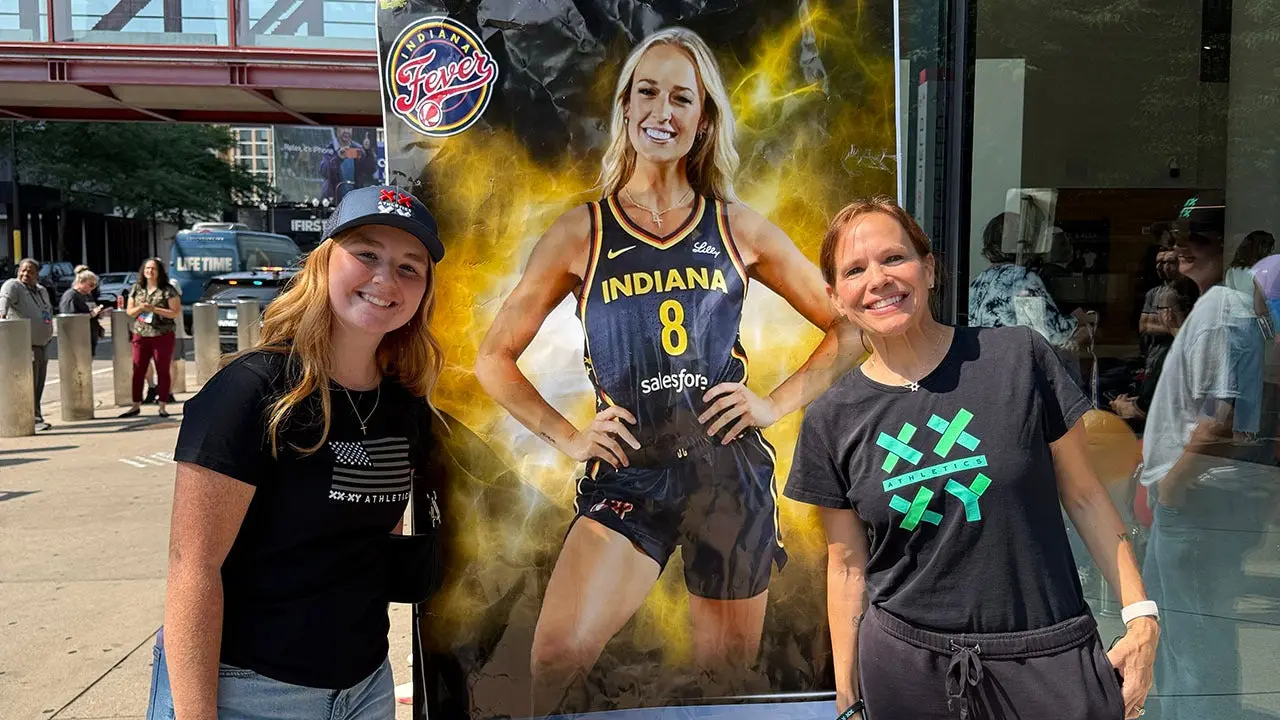
Mother Jones wants you to know XX-XY Athletics founder Jennifer Sey is making money.
It really, really wants you to know.
Madison Pauly’s headline does the work before readers even reach the first sentence: “The Woman Profiting Off the WNBA’s Trans Panic.”
You see, Mother Jones wants you to think Sey isn’t simply a woman who believes males shouldn’t compete in women’s sports and runs a company built around that position. In Pauly’s telling, she’s “profiting,” and the underlying disagreement isn’t a legitimate debate over sex-based sports categories. It’s a “panic.”
WOMEN’S SPORTS MEDIA OUTLET BACKS TRANS ATHLETES, THEN AVOIDS QUESTIONS FROM REPORTER WHO DISAGREES
Then look at how the people involved are described. Those who oppose males in women’s sports are repeatedly called “anti-trans activists” or tied to “MAGA trolls.”
The other side gets very different treatment. Those people are scared and just want to feel safe. The WNBA is described as a sanctuary that is being taken away from them.
This isn’t the first time Pauly has gone looking for a grift when someone opposes males in women’s sports, either. Last year she wrote a Mother Jones investigation titled “How right-wing superstar Riley Gaines built an anti-trans empire.”
The accompanying podcast was called “All-American Grift” and asked who was “funneling money” into Gaines’ rise. Now Sey is “profiting off” a “trans panic.” At some point, you have to wonder whether Mother Jones can even imagine that people might sincerely believe women’s sports should be for women.
And Pauly uses some of the same tricks in the Sey piece, including the way she presents “research.”
The research doesn’t prove what Mother Jones says it does
Sophie Cunningham told ESPN she wanted to protect young girls in locker rooms and female athletes who shouldn’t have to compete against “biological men.”
Mother Jones calls that part of an “anti-trans panic” and responds that research indicates transgender people are “far more likely to be the victims of violence, including sexual assault.”
But that has nothing to do with Cunningham’s argument.
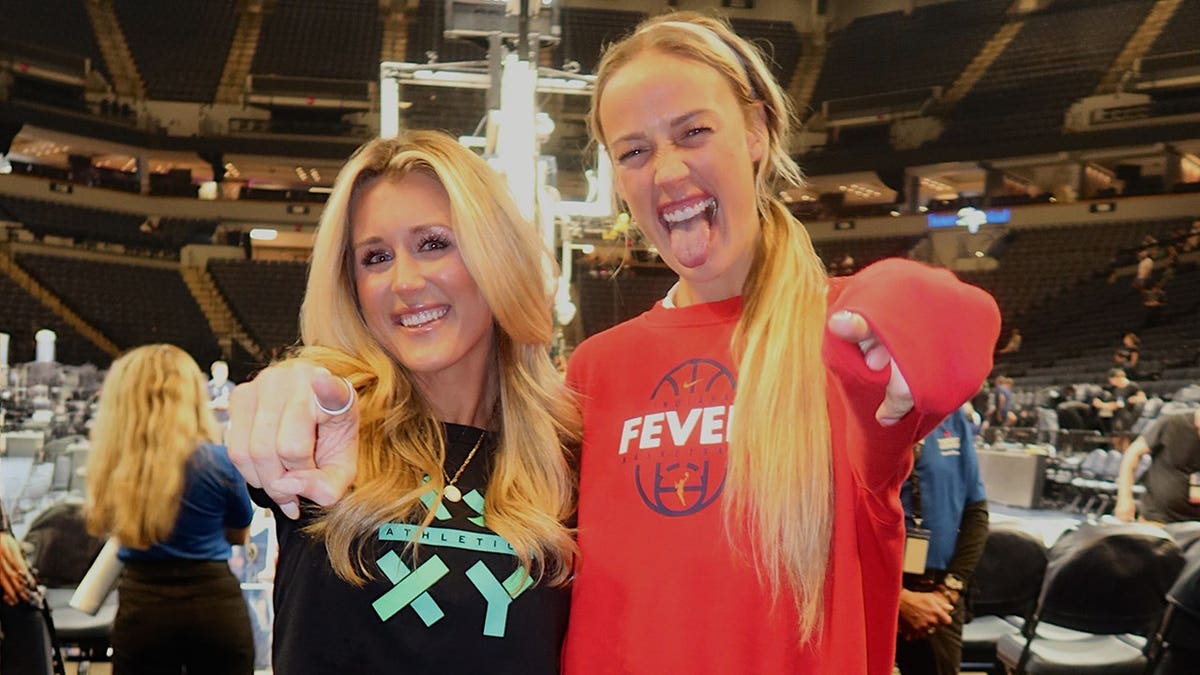
Being at elevated risk of victimization doesn’t tell us whether sex should determine access to female locker rooms. Being a victim of violence and committing violence are two different things. Mother Jones cites evidence about one and uses it as a rebuttal to the other.
MEGAN RAPINOE’S LATEST DEFENSE OF MALES IN WOMEN’S SPORTS COLLAPSES UNDER ITS OWN HYPOCRISY | DAN ZAKSHESKE
One study Mother Jones points readers toward is a 2026 JAMA Network Open review of violence against transgender and “gender-diverse” adults. The headline finding sounds sweeping, but it came from a relatively small subset of the studies the review collected, and the results varied wildly from one study to another.
The researchers themselves were much more cautious than Mother Jones. They warned that most of the underlying samples weren’t randomly selected and shouldn’t simply be treated as representative of transgender people generally.
Then the study leaves the academic journal and those caveats mostly disappear. Mother Jones keeps the part that says “research indicates” and gives readers none of the reasons the researchers themselves said to be careful with the finding. A complicated study becomes a simple talking point and, by the time it reaches the reader, “research indicates” is doing a heck of a lot more work than the research itself.
The sports “science” gets a similar treatment from Pauly. She writes that hormone therapy “has been shown to diminish athletic performance, though studies vary on how much.”
Why is “diminish” the standard?
Women’s sports aren’t a handicap division for male athletes who can medically reduce their performance by some acceptable amount. If women’s sports are a sex-based category, hormone suppression doesn’t change the athlete’s sex.

And even if you accept Mother Jones’ premise for the sake of argument, its own research doesn’t settle the fairness question. The studies it cites found that hormone treatment reduced some performance advantages, but others remained even after years of treatment.
So yes, hormone therapy can diminish performance. That isn’t the same thing as eliminating male-puberty advantages, and it certainly doesn’t explain why women should have to compete against males once those advantages have been reduced enough for someone else’s liking.
Mother Jones found SEC filings but skipped the women who organized the Seattle rally
Mother Jones spends substantial time on the July 28 rally before an Indiana Fever-Seattle Storm game, describing it as a gathering of “anti-trans activists” and folding it into a larger story about Sey, XX-XY Athletics, right-wing politics and a manufactured WNBA controversy.
So, I contacted the woman who says the rally was her idea.
Jean Chadbourne told OutKick she decided to organize the event shortly after Cunningham’s ESPN interview. She contacted Amy Sousa in the Pacific Northwest, and they later reached out to Sey and Brandi Kruse.
Chadbourne also told me she’s a lifelong registered Democrat who previously worked in the reproductive-rights movement and with incarcerated people. She founded Women Are Real, a grassroots women’s group that she says is about 65% Democratic and includes a substantial number of lesbian and bisexual women.
Readers can disagree with Chadbourne about many of her political and social positions. But if you’re portraying this fight as a MAGA-driven “anti-trans” movement, the Democratic woman who helped launch the first rally is relevant.
Mother Jones never contacted her.
XX-XY’s role in that first rally was also far smaller than the broader article would lead readers to assume. Sey couldn’t attend, and Chadbourne says the women traveling from California paid their own expenses. XX-XY didn’t conceive or fund the rally.
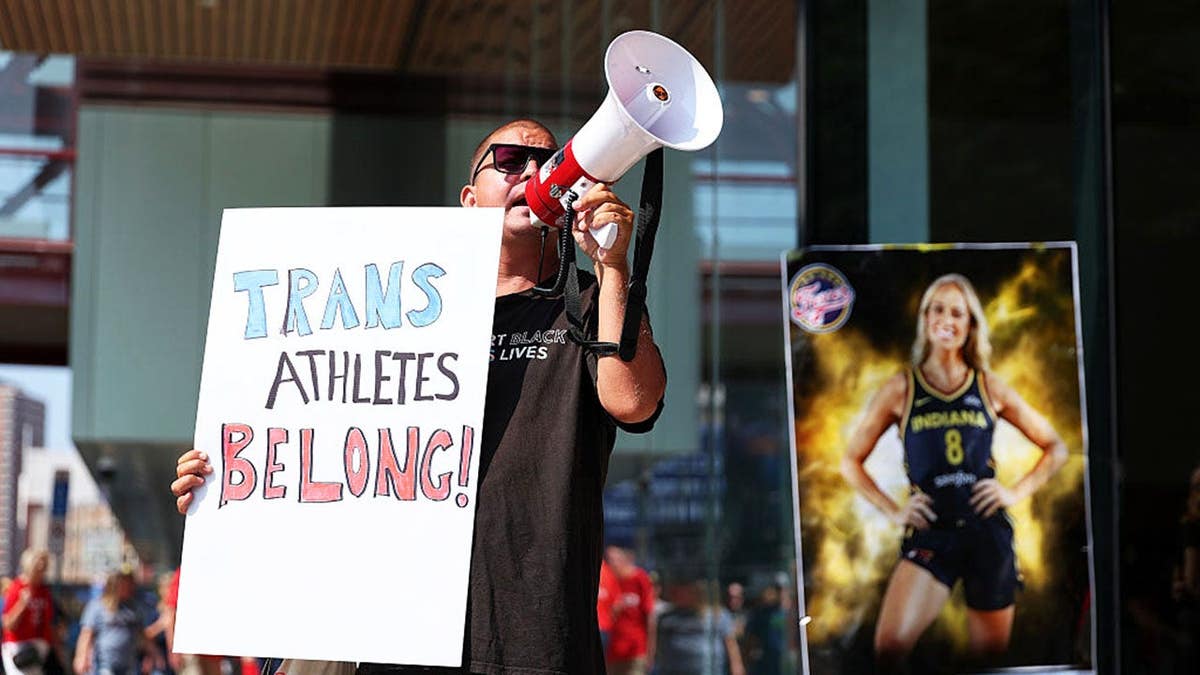
Amy Sousa separately told OutKick that she’s helped organize the Cunningham rallies since that first Seattle event. Mother Jones didn’t contact her personally either. Brandi Kruse, who Mother Jones labeled a “right-wing podcaster,” also wasn’t contacted.
None of these women are difficult to find. Media coverage identified Women Are Real, Sousa and Kruse as organizers of the first rally. Mother Jones managed to locate business-registration records and SEC documents, track donors and legal groups, and find sympathetic WNBA fans but didn’t bother calling the women involved.
But sure, let’s call this a “well-researched journalistic endeavor” instead of what it is: a hit piece.
Ahnaleigh Wilson gets reduced to a brand deal
Mother Jones also identifies Ahnaleigh Wilson as “a high schooler with an XX-XY brand deal.” That’s true, but it’s wildly incomplete.
Wilson started speaking publicly about women’s sports after finishing second in a girls’ 1600-meter race in 2024 to a male athlete. She was 14 years old. By that fall, she was already discussing what happened and why she believed the rules were unfair.
Her involvement in this issue came before the WNBA controversy and before Mother Jones introduced her through a sponsorship.
Wilson later attended the Storm game wearing an XX-XY shirt and holding a sign supporting Cunningham. Seattle Storm minority owner Celeste Keaton confronted Wilson and another teenage girl courtside. Wilson and others said Keaton used profanity toward them, and the WNBA later fined Keaton and suspended her from five home games.
Mother Jones mentions the confrontation and the discipline. Then, at the end of the story, Pauly introduces a transgender WNBA fan named Valerie, who says games had been “a nice, fun two hours, completely safe” from what she describes as growing anti-trans hostility. Now, she says, “It doesn’t feel that way,” adding that some days she feels “scared and just really, really sad.”
Wilson gets nothing close to that treatment. The teenager says an adult WNBA owner screamed and cursed at her over a cause that directly affected her as a high school athlete, leaving her in tears. Mother Jones tells readers about Wilson’s XX-XY brand deal, but Pauly wants people to feel empathy for an anonymous transgender fan instead.

Mother Jones also doesn’t appear to have contacted Wilson or her mother. The story doesn’t say it did, despite noting unsuccessful outreach elsewhere. Wilson’s mother told OutKick that neither Pauly’s nor Mother Jones’ name sounded familiar, while acknowledging she couldn’t say with certainty that no contact was attempted.
Mother Jones found out who sponsored Wilson and how she got her courtside tickets. It apparently never asked her why she was there in the first place.
The “profiting” argument gets awkward when Mother Jones asks readers for money
Mother Jones’ case that Sey is “profiting” rests heavily on sales, T-shirts and a reported $1 million in first-year revenue.
First, revenue isn’t profit. A company can generate $1 million in sales and make money, break even or lose money after expenses. The story doesn’t establish which applies here.
More importantly, making money doesn’t establish motive.
Mother Jones should understand that better than most. The word DONATE sits at the top of its website while readers scroll through a story about someone else “profiting” from a political issue. Farther down the page, the publication asks for one-time or recurring donations to support its “independent, investigative journalism.”
Yes, Mother Jones is a nonprofit and XX-XY is a for-profit company. That doesn’t mean financial incentives disappear on the nonprofit side.
Mother Jones clearly understands that people can make money while doing work they genuinely believe in. It just stops applying that logic when the person making money is Jennifer Sey, Riley Gaines or anyone else who has the audacity to believe women’s sports should be reserved for women.
And that’s really the through-line in both Pauly stories. Gaines is a “grift.” Sey is “profiting” from a “panic.” The activists are MAGA. The money always gets investigated because the possibility that these people sincerely believe what they’re saying barely gets considered.
Maybe they actually mean it.
No grift required.