


Every year, people wait on summer for a chance to relax and unwind. Days are longer, the weather is warm, and the outdoors beckon. Kids are out of school, and the vacation countdown begins. There’s a general feeling that things are easier. And in many ways, it is easier.
But summer brings its own set of problems, and most people don’t prepare for them. Summer preparedness mistakes don’t involve big disasters. They cause inconvenience, discomfort, and escalation of problems stemming from heat, crowds, traffic, and overscheduling. Here are the ones people overlook most.
TL;DR: Summer preparedness mistakes rarely look like disasters. People treat heat as an annoyance, assume the power stays on, skip vehicle maintenance, and let routines slide. Each one is small on its own. Together, they turn an ordinary summer into a miserable one. Fix them before the next heat wave.
Quick Look at What You’ll Learn
Underestimating Heat
In cold weather, people automatically bundle up and prepare. In hot weather, they treat heat as an annoyance instead of a threat.
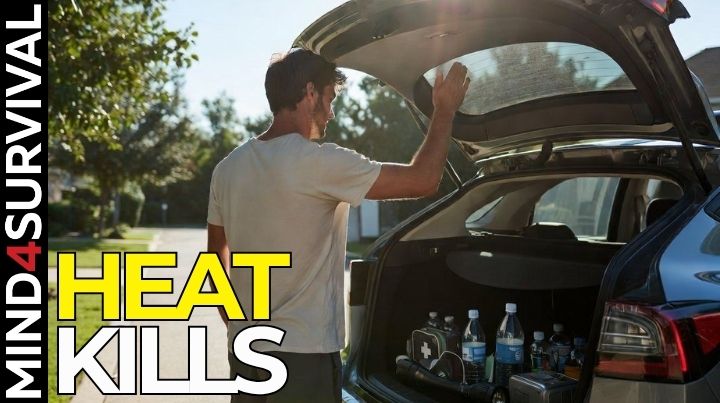
Heat is the leading cause of weather-related deaths in the United States. NOAA’s 30-year averages put heat ahead of flooding, tornadoes, hurricanes, and lightning—heat kills roughly twice as many Americans in an average year as the next-deadliest weather hazard. The Centers for Disease Control and Prevention has recorded a rising number of deaths either partly caused by heat, such as heart attacks triggered by extreme temperatures, or directly caused by it, such as heat stroke.
Know The Red Flags
If a person shows confusion, has slurred speech, or passes out, call 911 immediately. Move them to a shady spot and aggressively cool them with cold or ice water while waiting for paramedics. If the person is confused or unconscious, do not try to get them to drink.
Stay ahead of it
- Pre-hydrate. Don’t wait until you’re thirsty. Once you feel parched, you’re already mildly dehydrated.
- Drink on a schedule. If you’re out in the heat, drink a cup (8 ounces) of water every 15 to 20 minutes. Do not exceed 48 ounces in an hour. Drinking too much water too quickly dilutes the salt in your blood and can cause a different medical emergency.
- Replace minerals. Supplement with an electrolyte drink or hydration packet if you’re sweating for more than an hour.
- Time your day around the heat. Air temperature usually peaks in the mid-to-late afternoon, roughly 3:00 to 5:00 p.m., not at noon. Sun exposure is strongest between 10:00 a.m. and 4:00 p.m. Schedule exercise, yard work, and outdoor projects early in the morning or in the evening.
- Dress for it. Loose-fitting, light-colored, moisture-wicking clothes reflect heat rather than absorb it. A wide-brimmed hat protects your head and neck.
Forgetting That Summer Increases Consumption
People don’t realize how much more they use in the summer: more water, electricity, fuel, cold food and drinks, and more impulse buying.
You think you have enough bottled water on hand, only to burn through it. Your air conditioner runs constantly, and your electric bill jumps. You take more weekend trips, spend more, and blow past your budget.
Preparedness is partly about recognizing seasonal changes before they catch you off guard. Check your supplies against your summer burn rate, not your winter one.
Assuming the Power Will Stay On
Summer outages happen more often than people expect. In winter, the concern is warmth. In summer, an outage can make your home miserable within hours. Food spoils faster. Sleeping gets harder. Tempers flare.
During a heat wave, the risk climbs because everyone is pulling from the grid at the same time.
Cover the basics before it happens:
- A small rechargeable fan
- A battery bank, charged
- A flashlight and spare batteries
- A plan to keep the fridge and freezer closed
- Cross-ventilation and a way to cool yourself without AC
- An alternative cooking method
If someone in your family depends on electricity for a medical device—a CPAP machine, a refrigerator for insulin, an oxygen concentrator—call your power company and ask about their medical registry or critical-care program. Registering gets you on their list for advance notice of planned outages and load shedding.
Understand what it does not do. Most utilities state plainly that registering does not guarantee priority restoration or continuous service. Treat the registry as a notification tool, not a backup plan. Size your own backup power—a battery station, spare device batteries, or a relocation plan—around a realistic outage duration for your area.
Skipping Vehicle Maintenance
Many breakdowns occur because people assume their car is “probably fine.”
Summer driving is hard on vehicles. Hot pavement, traffic, long drives, overworked cooling systems, and higher fuel consumption all add stress. This is the season when people suddenly start taking road trips after months of short routine drives. Summer exposes weak batteries, worn tires, low coolant, and neglected maintenance in a hurry.
The heat also raises the stakes. Being stranded for an hour in mild weather is annoying. Being stranded in extreme heat with little water and no shade is something else entirely.
Before your next road trip, check your fluids, tires, and battery. Then build a kit for the car:
- Water
- Phone charger
- Small flashlight
- Basic first aid supplies
- Jumper cables or a jump-start battery pack
Letting Routine Disappear
Summer schedules get messy. People stay out later. Sleep shifts. Travel increases. Grocery routines slide. Spending loosens. Exercise disappears. Normal structure fades.
Some flexibility is healthy. Abandoning your routine entirely creates small preparedness problems that build over time.
Food rotation gets ignored. Supplies stop getting replaced. Laundry piles up. Devices stay uncharged. Cash flow becomes less predictable.
None of these matter much alone. All of them happening at once create stress and disorganization.
One thing I’ve learned is that preparedness works best when it stays connected to normal life. Once everything becomes reactive and improvised, small problems multiply.
Summer pushes people into “I’ll deal with it later” mode. Until it blows up, keep your habits.
Ignoring Crowds
Summer means more people everywhere: at airports, festivals, beaches, malls, on public transportation, in tourist areas, and at events.
Crowds wear people down. Long lines, heat, noise, delays, parking problems, and overstimulation drain you mentally faster than you expect.
That’s where bad decisions happen. People stop paying attention to their surroundings. They get impatient. They ignore their instincts. They rush. They leave valuables unattended. They forget basic awareness because they’re mentally overloaded.
Preparedness is about supplies, and it’s also about being present, paying attention, and listening to your gut.
Treating Summer Like It’s Automatically Easier
People associate summer with comfort and freedom, so they lower their guard without meaning to.
But summer brings wildfire smoke, heat waves, crowded travel, storms, rolling blackouts, dehydration, vehicle trouble, higher spending, and packed public spaces.
Most of these aren’t catastrophes. They’re quality-of-life problems. But when enough of them are at once, everyday life becomes surprisingly hard. That’s why we prepare.
The Bottom Line
Don’t let relaxed routines and summer ease lull you into a false sense of security.
Drink water before you feel terrible. Charge your devices before the next storm. Maintain your car before the road trip. Get backup lighting before the grid gets stressed. Recognize that heat can kill.
Summer magnifies small mistakes. You don’t need much gear to handle summer disruptions. Pay attention, and prepare early, before the problems pile up.
Frequently Asked Questions
What is the leading cause of weather-related deaths in the United States?
Heat. Over NOAA’s 30-year averages, extreme heat kills more Americans in a typical year than flooding, tornadoes, hurricanes, or lightning. Hurricanes and tornadoes produce dramatic single-event death tolls, so people remember them. Heat kills a few people at a time, all summer long, with no single headline event, which is why it gets underestimated.
How much water should I drink when I’m out in the heat?
About 1 cup (8 ounces) every 15 to 20 minutes while you’re active in the heat. That works out to roughly a quart an hour. Don’t exceed 48 ounces in an hour. Drinking far more than that dilutes the sodium in your blood and can trigger a medical emergency of its own.
How do I tell heat exhaustion from heat stroke?
Heat exhaustion brings heavy sweating, weakness, nausea, and clammy skin. The person is still mentally with you. Heat stroke changes their mental state: confusion, slurred speech, agitation, or loss of consciousness. Any change in mental status is a 911 call. Cool them aggressively with cold water while you wait for paramedics.
Does registering with my power company protect me during an outage?
It puts you on the list for advance notice of planned outages, which matters. Most utilities state clearly that it does not guarantee priority restoration or uninterrupted service. Register anyway, then build a real backup plan: battery power for critical devices, spare device batteries, and somewhere to go if the outage runs long.
What should I keep in my car during the summer?
Water, a phone charger, a small flashlight, basic first aid supplies, and jumper cables or a jump-start battery pack. Check your fluids, tires, and battery before any long drive. Heat turns a routine breakdown into a real problem, and the shoulder of a highway offers no shade.