


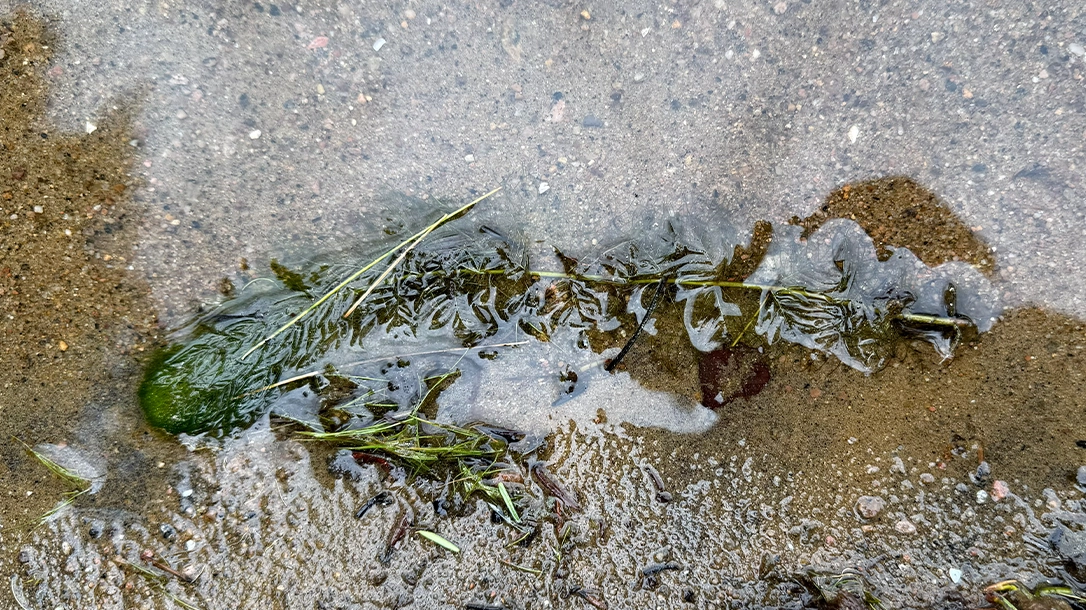
There’s nothing better than spending a day on the water, whether you’re fishing, paddling, or simply enjoying the outdoors. Unfortunately, our lakes, ponds, and rivers aren’t just visited by people. Over time, non-native plants and animals have found their way into waterways across North America. This happens through recreation, trade, and accidental introductions.
While some introduced species have little impact, others become invasive, spreading rapidly and outcompeting native plants for sunlight, nutrients, and space. These invasive species can dramatically alter aquatic ecosystems, affecting water quality, fish habitat, and recreational opportunities.
One of the most widespread and problematic aquatic invaders is Eurasian watermilfoil.
Advertisement — Continue Reading Below
What Is Eurasian Watermilfoil?
Eurasian watermilfoil is an aquatic plant native to Europe, Asia, and North Africa. It was introduced to North America in the late 1800s through the aquarium trade, with some of the earliest records tracing its arrival to New York State.
Once established, the plant grows rapidly toward the water’s surface before spreading outward to form dense floating mats. After reaching the surface, Eurasian watermilfoil can grow as much as two inches per day. These thick mats block sunlight from reaching native aquatic vegetation, disrupting the natural balance of the ecosystem.
Advertisement — Continue Reading Below
The plant thrives in freshwater lakes, ponds, and slow-moving rivers. It begins growing earlier in the season than many native species. It also reproduces through fragmentation, meaning even a small piece broken off by a boat propeller, trailer, or current can take root elsewhere and start an entirely new infestation.
How to Identify Eurasian Milfoil
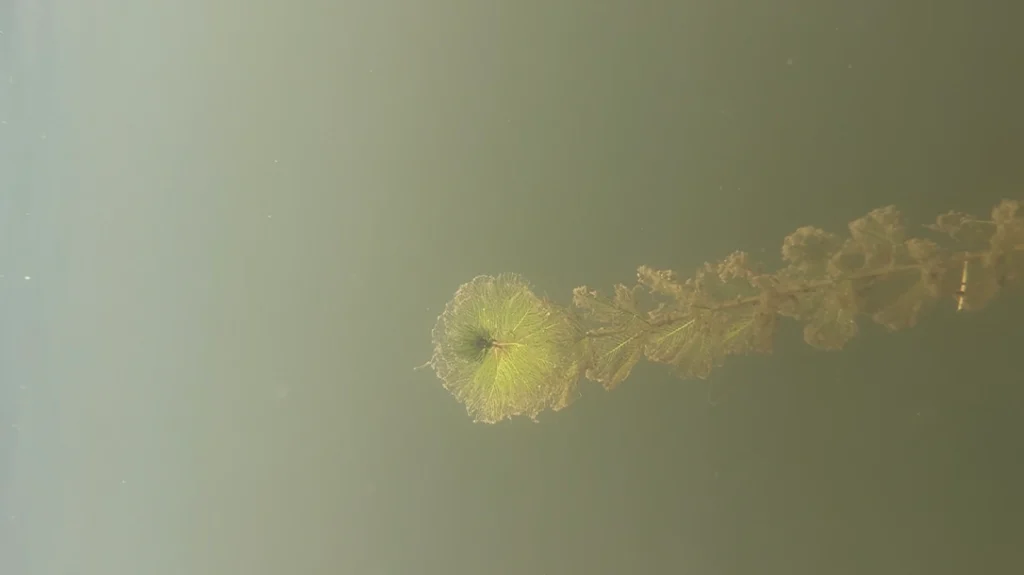
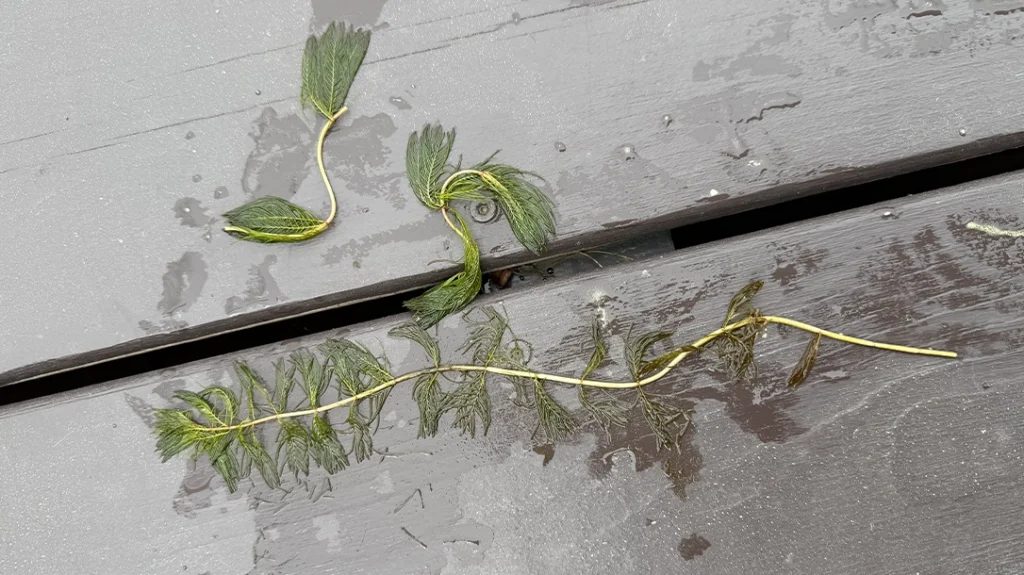
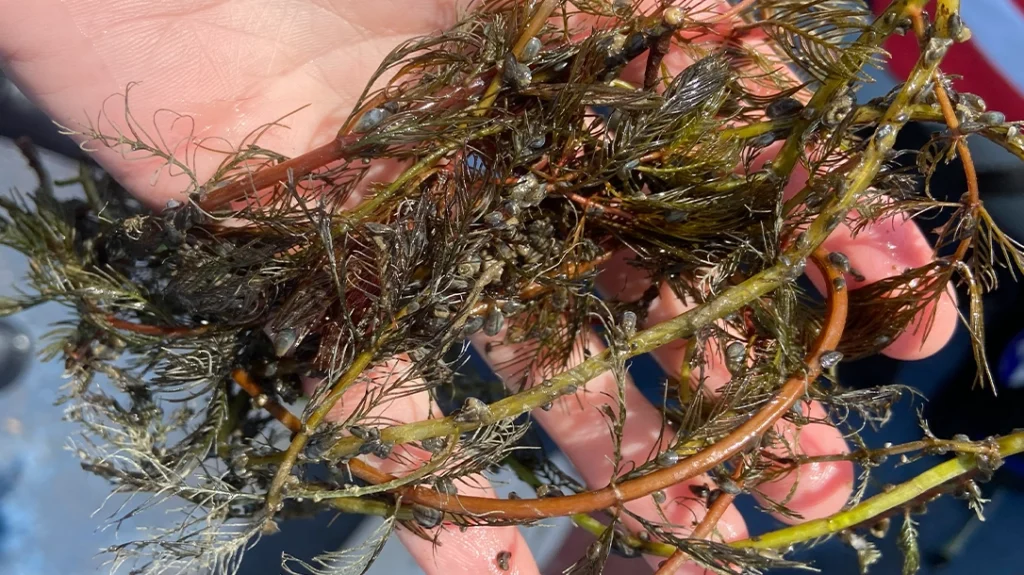
There are native and non-native milfoil. But there are key differences between native milfoil and invasive Eurasian milfoil. It has feather-like underwater leaves, around 12-21 pairs per leaf. Native milfoil has much less than that. The leaves are arranged in whorls around the stem. Eurasian milfoil roots in the lake bottom while growing up toward the surface. They can have either red or brownish stems.
Advertisement — Continue Reading Below
While Eurasian milfoil will grow in thick and take out the other native species, the native milfoil grows in balance with the other native plants. Eurasian milfoil tends to spread quicker due to the fact that more can spread from just the leaf of the plant while native forms out of seed. It is unfortunately hard to miss in the summer months when they begin forming their thick mats on the surface and can cause recreational boaters stress due to the likeliness of their propellor or fishing line getting caught in it.
How Eurasian Milfoil Spreads
The reason that it is so difficult to eradicate is due to it’s impressive ability to reproduce. A small fragment can develop into an entirely new plant. Something as small as a tiny piece stuck on a propellor can start a new infestation. It can spread by being stuck to boats and trailers, fishing gear, personal watercraft, and improper disposal of aquarium plants. While so much of it can be spread by human activity, there are also ways that it can spread naturally like water currents, storm events, and wildlife movement. Surprisingly, even a bird can move a plant from one body of water to the next.
Impacts of Eurasian Milfoil
The native plants in the area don’t stand a chance when the milfoil begins to grow out of control. It outcompetes native vegetation and causes loss of plant diversity. They create monocultures underwater and can claim a large piece of land to grow. When one native species leave, the rest tend to follow.
Advertisement — Continue Reading Below
With the native plants getting choked out, the fish have much less to feed on, and then the waterfowl have less fish to feed on. With less options for food or habitat, there isn’t room for other species to thrive and the cycle of having less biodiversity continues. Many don’t realize the impact one invasive species can have on the entire ecosystem. It can change water circulation, affect oxygen levels, and influence nutrient cycling.
Managing Eurasian Milfoil
While it is difficult to eradicate the plant, there are a few different ways to manage the spread. Often times the type of management you can do depends on the body of water, and conditions of said body of water.
Advertisement — Continue Reading Below
Mechanical Removal
This is done on larger bodies of water where fast removal is important. This method doesn’t tend to be the most effective. Essentially it acts like an underwater lawn mower, cutting them at the stem and leaving the roots intact, setting them up to regrow in 50-70 days. This is better kept for places that have no other option but mechanical.
Hand Harvesting
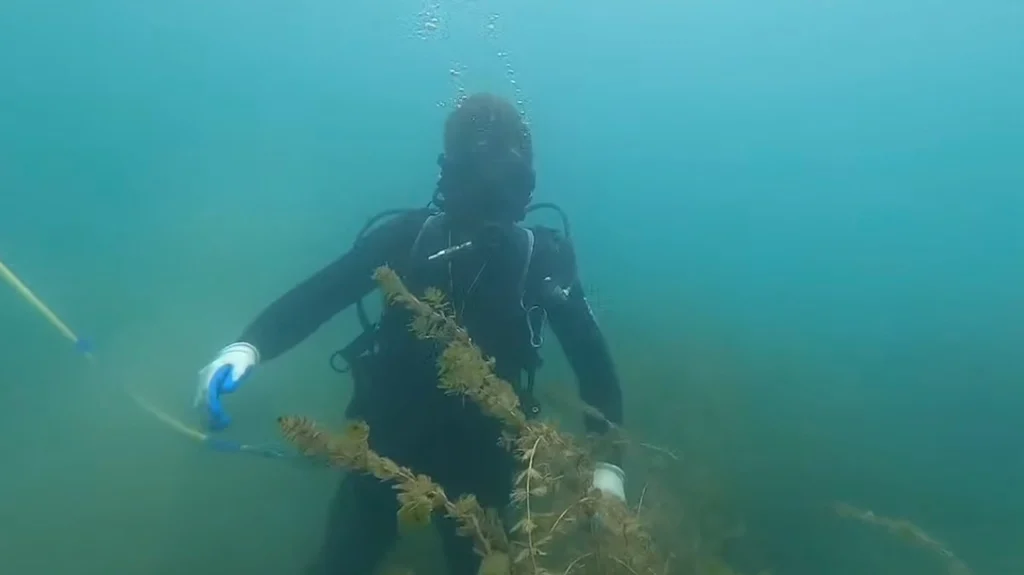
Another method is hand harvesting by professional divers. This is a common approach in smaller infestations due to the inability for a small team of divers to take on a very large body of water. When using this method it is important to remove the entire root crown to stop the spread. After it is uprooted it is then placed in either mesh bags or suctioned up in a special underwater vacuum. If done carefully and properly this can prevent regrowth easily in smaller areas.
Advertisement — Continue Reading Below
Benthic Barriers
Benthic mats are a type of underwater, weighted weed mat that is designed to stay on the bed of the body of water to block sunlight from the plants. By blocking the sun it prevents photosynthesis from occurring and starves the weeds. It is very effective for smaller bodies of water, and water that is clear and easy to see in.
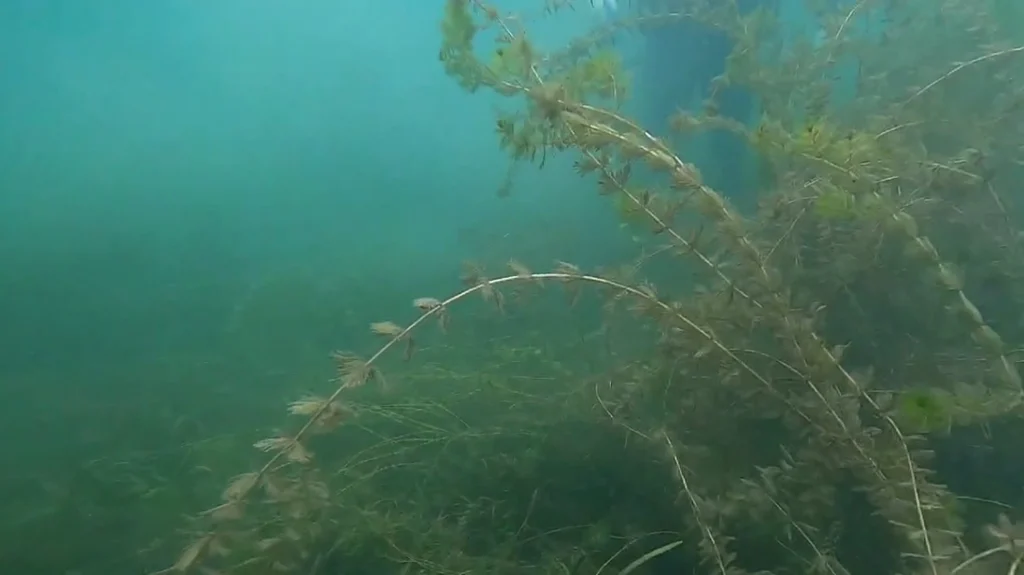
Without being able to see the entire area you are trying to cover it is hard to know exactly where you should roll the mat out at. It is environmentally friendly in the way that you do not need to use any chemicals or herbicides, but can be harmful to other species around it that could also get placed under the mats and killed.
Herbicide Treatments
Selective systemic herbicides like 2,4-D, triclopyr, or fluridone can be used early in the season to stop the growth before it starts. They travel to the root system and kill the plant entirely. In some large areas this may be the best option. Using this approach takes careful consideration. While some may love this method because it does a great job, others can be against it due to their feelings around herbicides/chemicals being put into the water. It also requires special permits to do so.
Biological Controls
Biological controls can be an eco friendly approach to removal, it is the introduction of other species to the plant that feeds on it and removes it over a longer period of time. Some species are the milfoil weevil, milfoil moth, and milfoil midge. Grass carp can also be used but it isn’t the best method because they prefer native plants and will only eat milfoil as a last resort. Introducing the carp may devastate other native plants and cause a problem of its own.
Prevention: The Most Effective Tool
Clean, drain, and dry. Every time we leave a body of water we can be inspecting our boats and trailers, draining water from our equipment, and allowing all gear to dry before entering another body of water. Conservation programs bring public awareness to areas by doing boat launch inspections, education programs, and community involvement.
Eurasian watermilfoil is much more than a nuisance. The impacts are felt in the ecosystems, recreation, and local communities. We all play a part in protecting our waterways, and the more awareness we have around it, the better we can manage it.
WHY OUR ARTICLES/REVIEWS DO NOT HAVE AFFILIATE LINKS
Affiliate links create a financial incentive for writers to promote certain products, which can lead to biased recommendations. This blurs the line between genuine advice and marketing, reducing trust in the content.