


A senior Islamic State leader was killed by an airstrike last week, Central Command announced on Wednesday, as the region grapples with a fraught security landscape amid U.S. base closures in Syria and the escape of ISIS personnel from detainment.
Ali Husayn al-Ulaywi was killed in a precision airstrike on June 19 as part of the U.S.’s ongoing campaign to eradicate the militant group, the command said.
“CENTCOM and our partners remain committed to rooting out remaining remnants of ISIS to ensure its enduring defeat,” Adm. Brad Cooper, the CENTCOM commander, said in the Wednesday statement. “We will continue to defend the U.S. homeland, our service members, and allies and partners across the region.”
After the December 2024 fall of former Syrian President Bashar al-Assad, different armed groups scrambled to control various corners of the country. Early this year, Syria’s rapidly shifting front lines allowed around 150 ISIS detainees to escape custody, according to a recent Inspector General report.
As security deteriorated, U.S. forces secured the Panorama detention facility in northeastern Syria and in the weeks that followed, CENTCOM transferred over 5,000 ISIS detainees from Syria to government-run facilities in Iraq.
The report also found that up to 20,000 residents left the al-Hol displacement camp — which housed ISIS family members and affiliates — without monitoring.
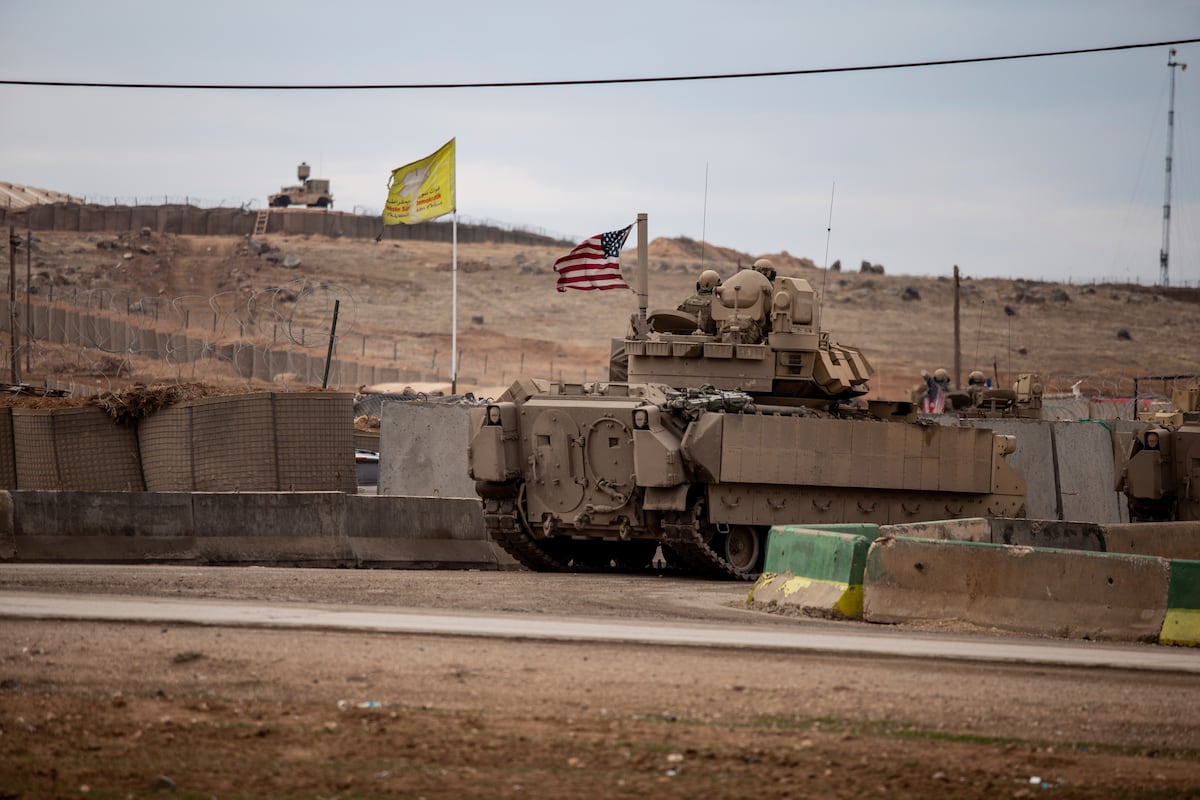
In April, the American forces shuttered their remaining bases in Syria after a decade in the country in support of Operation Inherent Resolve, the U.S. campaign combating the spread of ISIS. The report, which covered the first quarter of 2026, said U.S. forces also withdrew from the Baghdad Diplomatic Support Center, which was a logistics hub, but remained in the Iraqi Kurdistan region and at the Embassy Baghdad Compound.
The recent discovery of previously-hidden chemical weapons material has further complicated the fragile landscape, creating concerns of proliferation on the black market.
Eve Sampson is a reporter and former Army officer. She has covered conflict across the world, writing for The New York Times, The Washington Post and The Associated Press.