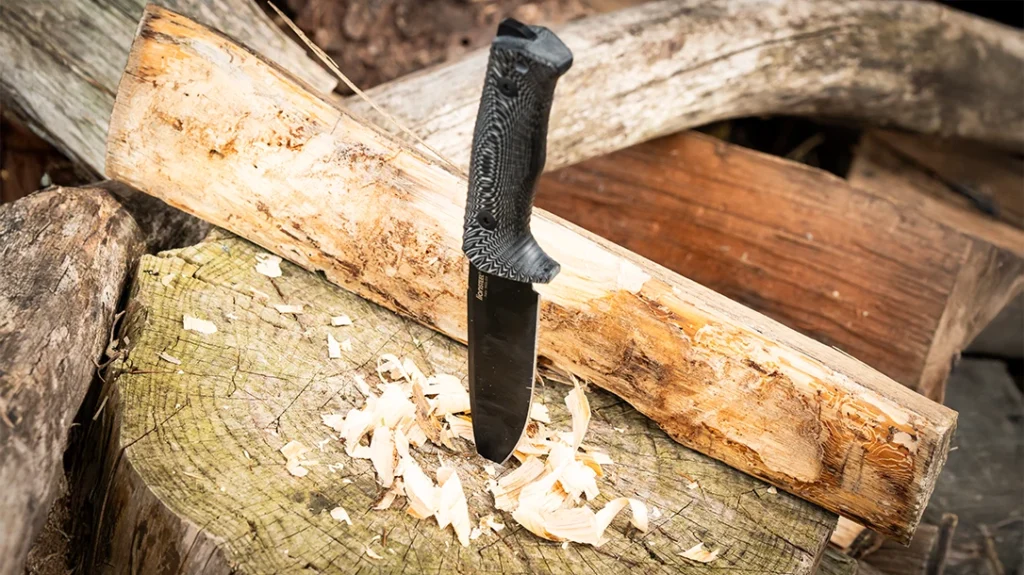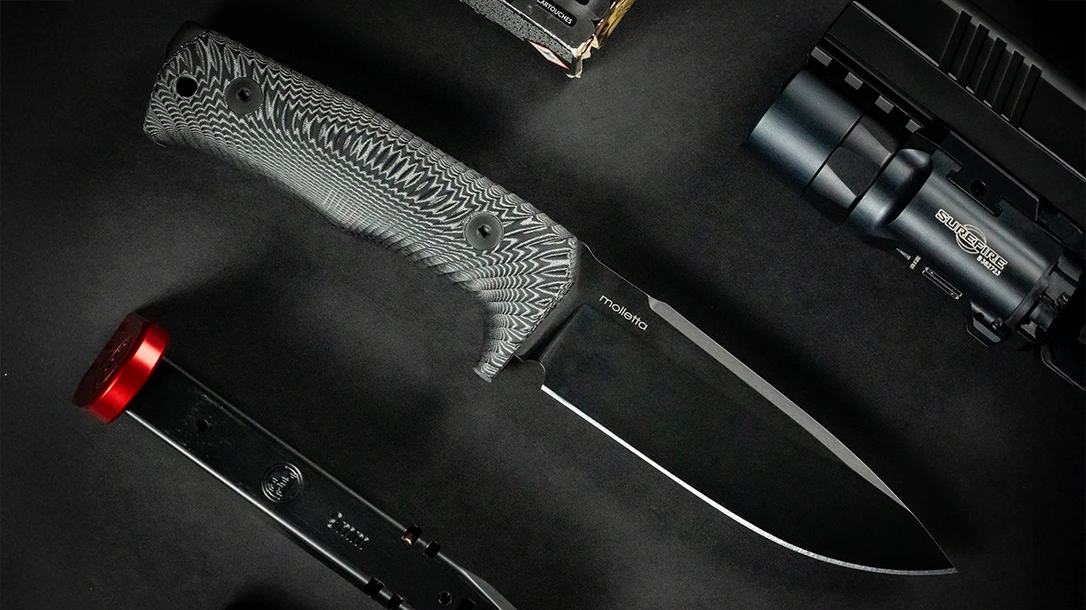
For as long as there have been people, there has been a need to cut, dress, and prepare food. Not to mention the knife’s place as a defensive and survival tool. It is one of the most enduring pieces of equipment in human history. It should come as no surprise that the Italians, better known in popular culture for pasta and performance cars, are also producing serious outdoor tools. LionSteel, with its T5, is a beautiful example of what the Italians have to offer the knife industry at large.
The LionSteel T5
LionSteel is a family-owned knife maker rooted in the historic blade-making town of Maniago, Italy. Founded in 1969 by Gino Pauletta and his wife Cesarina, the company has grown from a small workshop into one of the most respected modern production knife manufacturers in the world.
Advertisement — Continue Reading Below
Now led by the next generation, LionSteel continues to blend traditional craftsmanship with forward-thinking manufacturing. The company’s emphasis on in-house production, premium materials, and refined fit and finish has earned it global recognition and multiple industry awards.
Today, it sits at a point where heritage and innovation meet in a way that feels intentional rather than forced.
T5 First Impressions and Finish
Enter the LionSteel T5.
Advertisement — Continue Reading Below
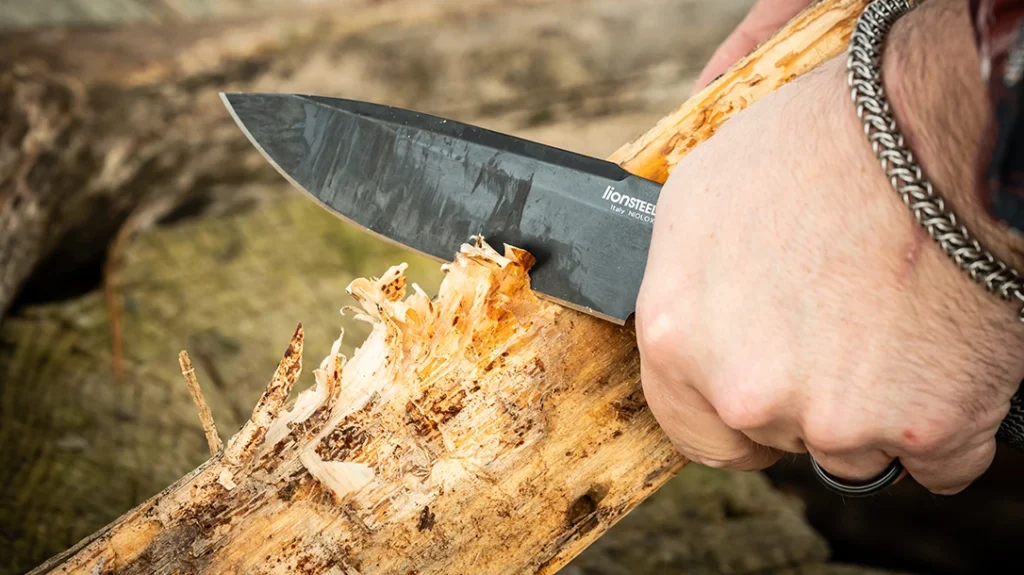
The version here is configured with a black PVD-coated blade and a milled Micarta handle. The finish immediately stands out. There is something to be said for a subdued, non-reflective blade in an outdoor environment, especially in winter conditions where light can be harsh and visibility matters.
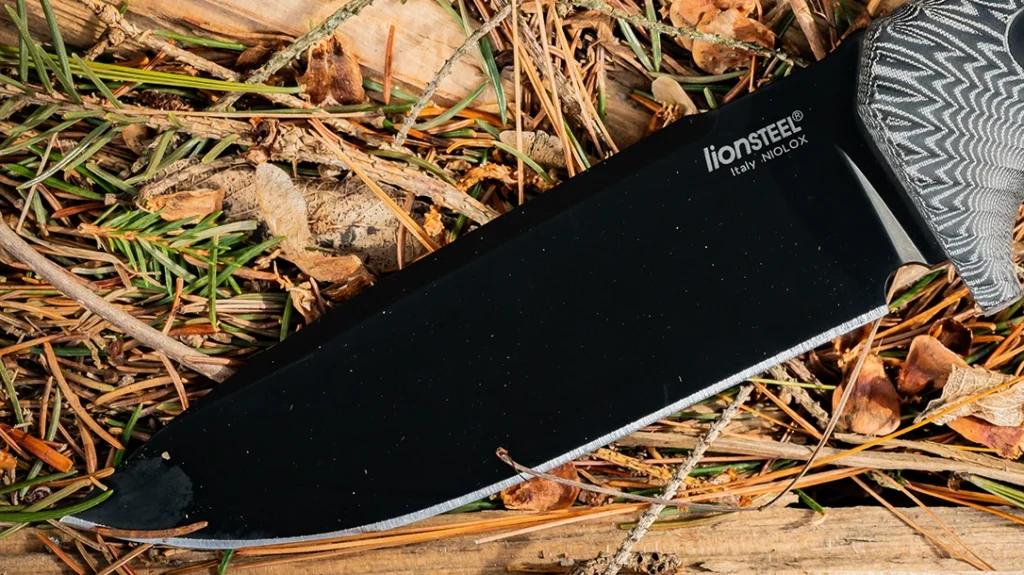
I often lean toward stainless finishes for food preparation. However, the reality is that PVD coating offers a level of durability that is difficult to ignore.
Advertisement — Continue Reading Below
Physical Vapor Deposition, or PVD, is a process where a coating material is vaporized in a vacuum and bonded to the surface at a molecular level. The result is an extremely thin, uniform layer that increases hardness, wear resistance, and corrosion protection without adding noticeable thickness. It holds up far better than traditional finishes and maintains a low-profile appearance even after extended use.
It is not perfect. Like any coating, it will show wear on high-contact areas over time. One practical note for those who rely on a ferro rod is that the coating will need to be removed in a small section to create a sharp striking edge. That can be done at the pommel or along the jimping relief, and it is an easy modification.
A Handle Worth Talking About
The handle is where the T5 starts to separate itself.
Advertisement — Continue Reading Below
At first glance, the Micarta looks clean and understated. On closer inspection, the detail becomes more apparent. The surface is milled, then tumbled, which creates a texture that offers excellent grip without introducing sharp edges or hot spots. This matters in extended use, particularly in cold weather, where your hands are already fighting the environment.
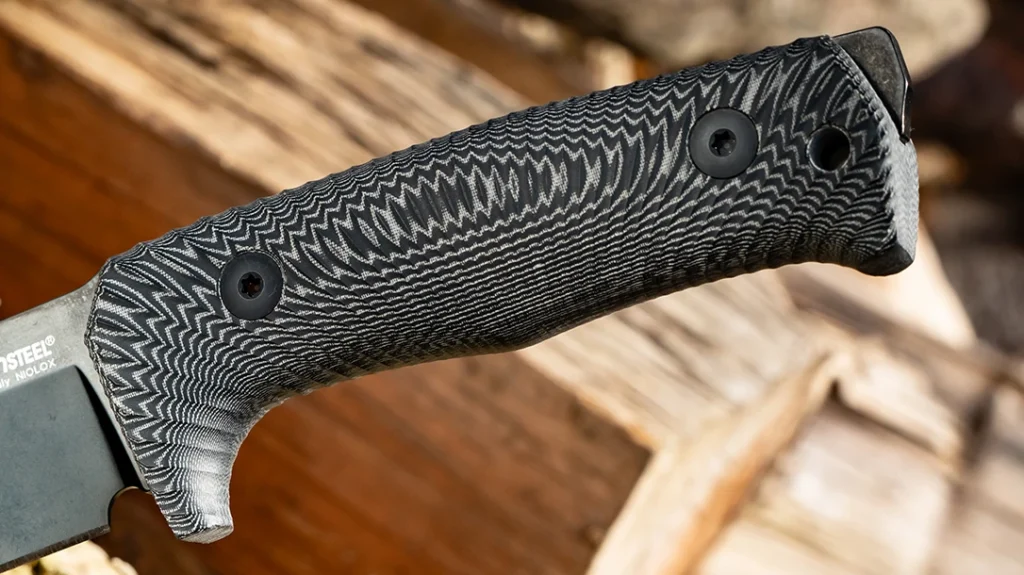
What really sets it apart is the construction. This is a monolithic design. The blade sits within a single-piece handle structure rather than being sandwiched between two scales. Most knives rely on a clamshell approach, which works well but can introduce seams that are either poorly blended or positioned in a way that becomes uncomfortable during heavy use.
Advertisement — Continue Reading Below
Here, there are no seams to contend with. The transition from handle to blade is smooth, and the entire grip feels cohesive. It is one of the more thoughtfully executed handle designs I have come across in this category. This shows immediately when you start working with the knife.
Blade Geometry and Real Use
With a stock thickness of 0.197 inches, it falls within a very usable range. It is thick enough to provide rigidity for driving the knife into material, but thin enough behind the edge to maintain slicing performance. That balance is critical for an outdoor knife expected to handle a range of tasks.
During testing, the knife was driven into a hardwood facing block using another piece of wood as a baton. It was taken to the midpoint of the blade before being pulled free. The tip remained intact, the edge held, and the PVD coating showed no meaningful damage. That kind of abuse is not a daily task, but it is a good indicator of structural integrity.
Advertisement — Continue Reading Below
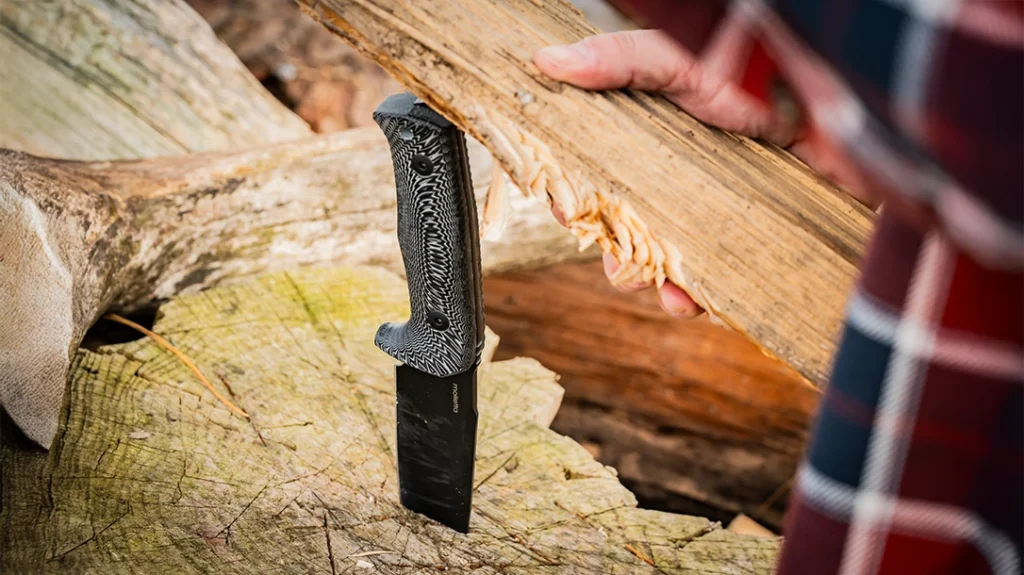
The blade measures 9.92 inches overall with a 5-inch cutting edge. It is a full-tang design and weighs 9.3 ounces, giving it enough mass to work without feeling burdensome on the belt.
The steel used here is Niolox, also known as SB1, developed by Lohmann (Germany). This niobium-alloyed steel brings together edge retention, toughness, and moderate corrosion resistance in a very usable package. The fine carbides formed by the niobium help maintain a consistent edge while keeping the grain structure refined. Typically hardened in the 59 to 61 HRC range, it strikes a balance that favors real-world performance over extremes.
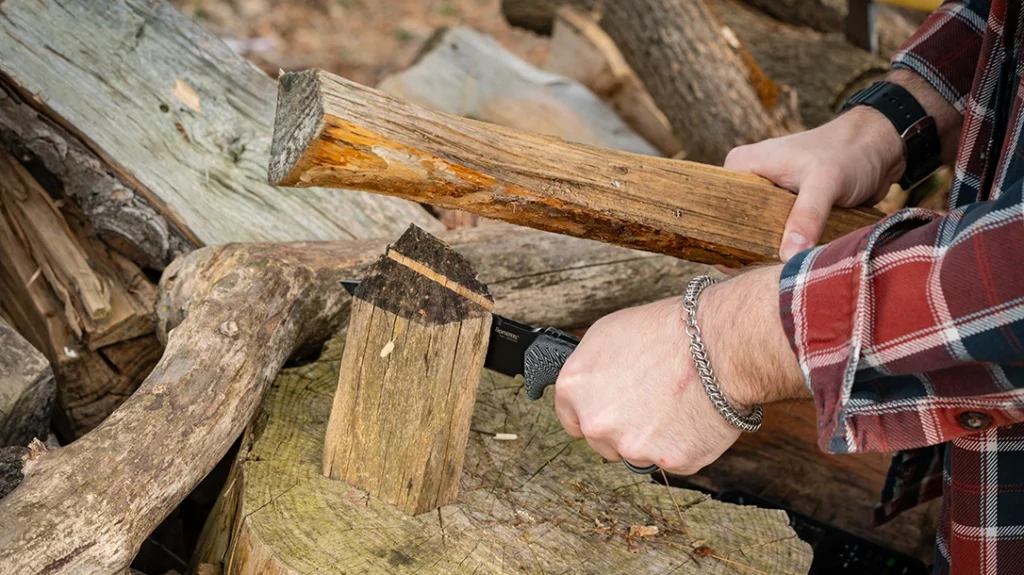
The geometry supports that intent. A large primary bevel extends approximately one inch up the blade and carries into the belly. This helps with slicing tasks like food preparation. The drop-point profile provides a robust tip for maximum penetration. While no one is advocating for prying with a knife, the reality is that the tip sees pressure. This design acknowledges that and reinforces it accordingly.
The LionSteel T5 In Hand
The spine of the blade features three large jimping cuts. However, the more interesting feature is the thumb relief cut just forward of the handle. This is where the knife invites your hand to settle.
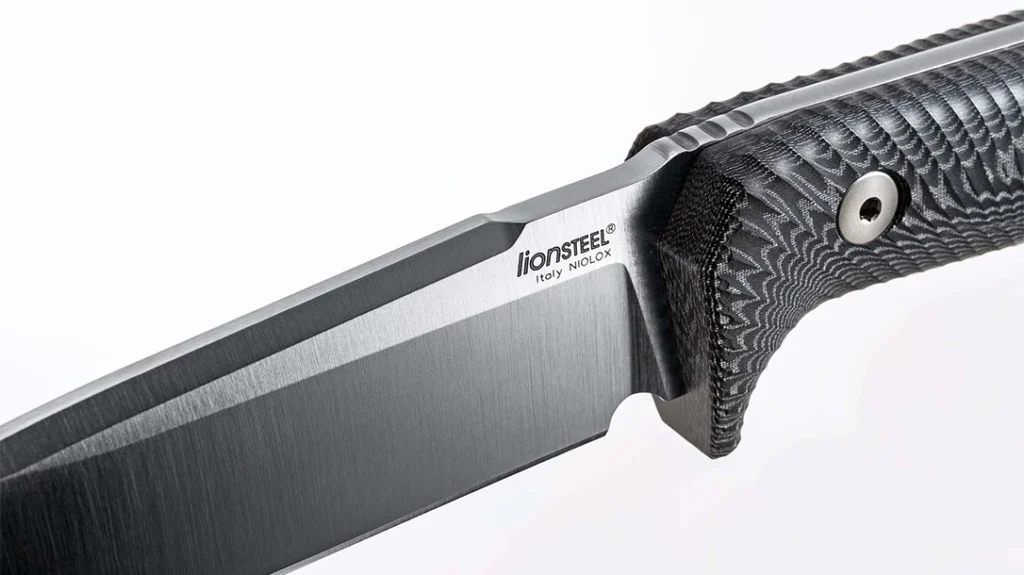
In use, especially when feathering wood or preparing kindling, that position provides a level of control that feels natural. It allows you to guide the blade precisely without fighting the tool. In cold weather, where dexterity is reduced, this kind of thoughtful ergonomics becomes even more important.
Carrying the T5
LionSteel offers two sheath options for the T5, and both are worth discussing.
The leather sheath is well executed and includes a button strap for secure retention. What stands out is the integrated MOLLE-compatible attachment system on the back. By unsnapping the rear section, the sheath can be threaded directly into a MOLLE setup without additional hardware. It is a simple solution that expands carry options without overcomplicating the design.
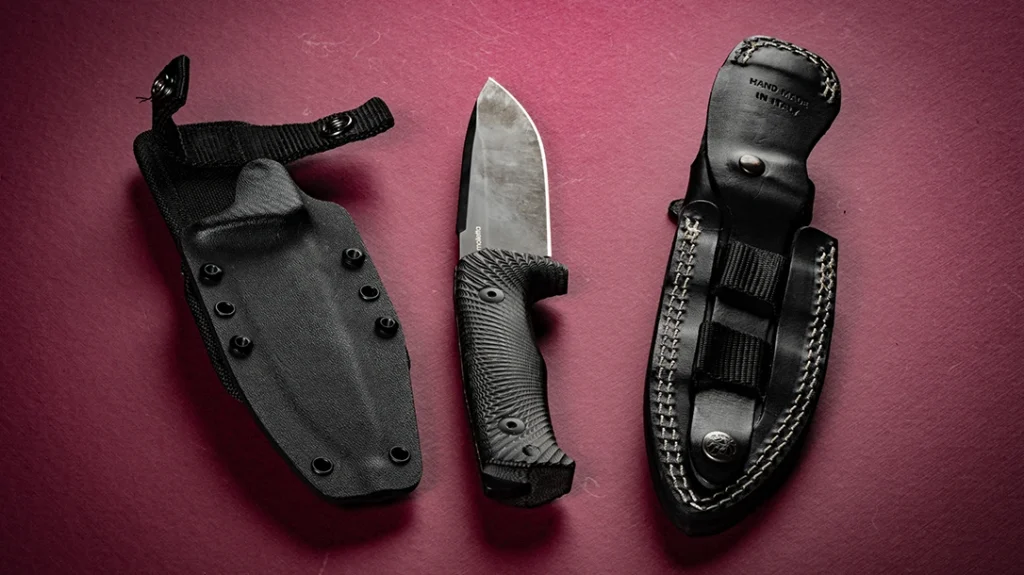
The Kydex option provides a different approach. It features positive retention with an audible snap, along with a nylon backing that incorporates a similar button retention system. The Kydex insert and nylon backing can be separated, giving the user flexibility in how the knife is carried.
Between the two, the leather sheath feels slightly more intuitive in use, particularly in cold conditions where fine motor skills are diminished. That said, both options are well thought out and built to a high standard.
Field Use in the Adirondacks
This knife saw real use on a winter trip into the Adirondacks. A four-mile approach on cross-country skis set the stage, followed by typical camp tasks that ranged from processing kindling to preparing food.
In cold weather, tools either prove themselves quickly or become a liability. The T5 fell firmly into the first category. The handle remained comfortable and secure, even with gloves or cold hands. Likewise, the blade performed consistently across different materials, from dry wood to food prep.
It was also well received by others on the trip. That kind of feedback is important to me. When a tool passes from one set of hands to another, and the response is consistently positive, it says something about its design.
The Elegant T5 Workhorse
The LionSteel T5 sits in an interesting place. It carries the visual refinement that Italian manufacturing is known for, but it does not rely on that alone. The design choices, material selection, and execution all support real use in the field.
There are small considerations. The need to expose a sharp edge for ferro rod use is one. The PVD coating, while durable, is still a coating and will wear over time in high-contact areas. These are not deal breakers. They are simply part of understanding the tool.
At a retail price of 216 euros, with the Kydex sheath available separately at 58 euros, the T5 positions itself as a premium option that justifies its cost through performance and design.
So, is it an elegant workhorse or just elegant?
It is both. The refinement is real, but it is backed by capability. This is a knife that looks good on the bench and works just as well when it matters.
Slice safe.