


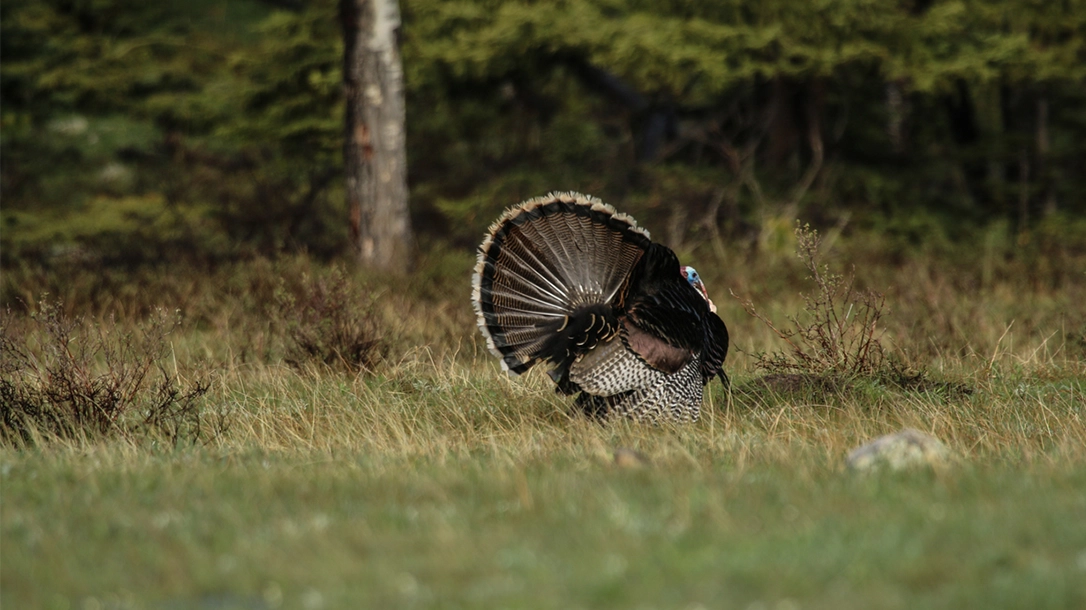
Turn on the evening news and you’ll find division everywhere. It shouldn’t be surprising that the turkey woods aren’t immune. Few topics fire up hunters faster than one word: reaping.
For those unfamiliar, reaping, sometimes called fanning, is a tactic where a hunter hides behind a turkey fan or decoy and uses it to provoke a dominant gobbler into closing the distance, often to just a few yards. It’s aggressive, visual, and undeniably effective. It’s also one of the most debated tactics in modern turkey hunting.
Is Turkey Reaping Legal?
Reaping is legal in many states, but not all. Michigan, New Hampshire, New Jersey, Pennsylvania, and Rhode Island, have banned it outright. Tennessee allows it only on private land. That was the case in South Carolina until just this past year, when turkey reaping was outlawed there as well, citing declining turkey populations. It’s a tactic that agencies are watching closely, due to the potentialy dangerous nature of the method.
Despite those potential safety risks, fanning or reaping of turkeys statistically has not proven to be an unsafe act, according to the Congressional Sportsmen Foundation. The recorded data does not exist to back up the claim that the practice of fanning or reaping wild turkeys has a track record of casualties. Simply stated, many of the claims against fanning or reaping are anecdotal and not backed by scientific, peer reviewed studies nor supported by safety data reporting. That is not to say that the method is without risk.
Advertisement — Continue Reading Below
Hunters Are Split
Talk to enough turkey hunters and you’ll realize this debate doesn’t fall neatly along generational lines. It’s not just “old school vs new school.” I have heard from a lot of hunters on this subject. I thought the responses would be cut and dry. I imagined the young guys were all for it and the older hunters dead set against it. But the answers surprised me.
The first time I had ever heard of “reaping” was from turkey hunting legend, Brad Harris of Neosho, Missouri back in 2011. I was interviewing Harris about an unrelated subject when turkey hunting came up, as it often does. Harris told me about this new technique he and a few of his cohorts were engaging in and it didn’t even have a name yet. Harris sent me a video clip of one of his hunts and I was intrigued but that was as far as it went. When preparing for this article I called up Harris and his tune had changed a bit.
“I don’t do it (anymore),” Harris said. “I was into it pretty heavy for two or three years but now I am back to where I want to hear a turkey gobble to my calls, strutting and looking for me.”
A Different Turkey Hunting Tactic
Some see reaping as just another tool. On one side, hunters like Foster Bartholow and Mike Ponder argue that, in the right setting, and especially on private land, it can be effective and even thrilling.
“It’s a lot of fun,” Bartholow said. “If you’ve never had a turkey at three steps. It’s a different experience. Is it going to work every single day? No, but don’t hate on someone because they are reaping.”
Advertisement — Continue Reading Below
Getting a gobbler to commit at spitting distance is a different kind of adrenaline, one that calling alone doesn’t always deliver.
“You got to know where you are hunting,” Ponder said. “I would never do it on public land. If you are good enough to sneak up on one. It doesn’t always work. About 50% of the time it works. If I’m on the right property I wouldn’t hesitate to try it.”
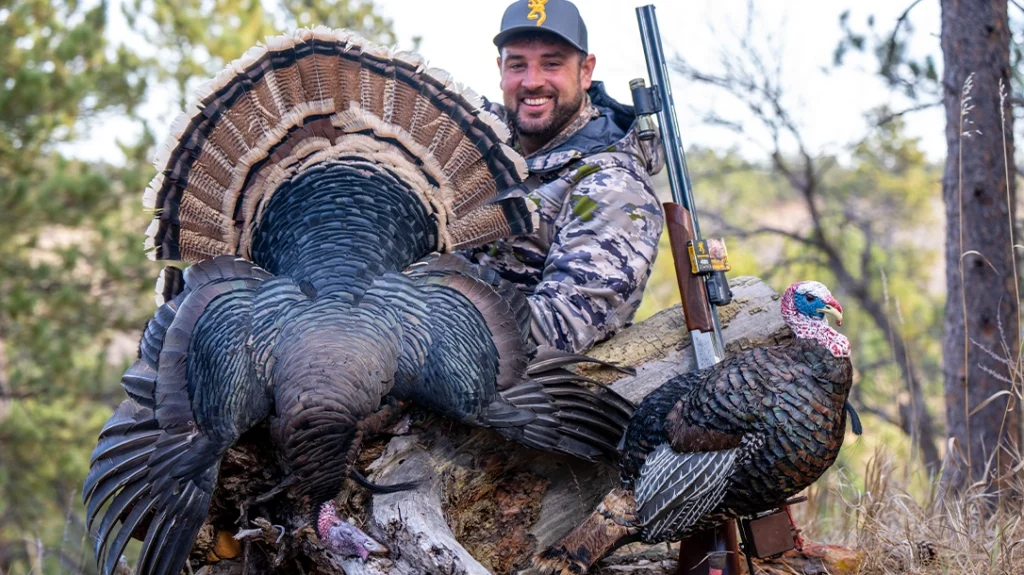
Turkey grand slam record holder of more than 115 turkey slams, Jeff Budz of Okeechobee Florida, loves reaping.
“I eat, sleep and breathe it, where legal,” Budz said. “They say reaping is bad, but those same people go out in their camo blind, red dot scopes shooting TSS and use decoys, but not a fan. That doesn’t add up. Reaping is beating the turkey at their own game as much as you can ever have it. I wouldn’t do it on public ground but on private. Get out of the way.”
Advertisement — Continue Reading Below
Others take a more conditional stance. Preston Pittman, one of the most respected voices in turkey hunting, admits he’ll use it, but only after traditional tactics fail. For him, it’s a last resort.
Risk Versus Reward
Chris Kirby, whose father was turkey hunting legend and founder of Quaker Boy Calls Dick Kirby, has mixed emotions about reaping.
“Decoys were always a big part of Dad’s hunting regime even back in the 80s but when you add movement to it you just have to be careful,” he said. “Personally, I do not do it, nor have I ever done it. It’s just too much of a risk.”
There are also those who are firmly against it. Hunter Ray Eye sees it as a departure from the very foundation of turkey hunting: calling, patience, and understanding the bird. For them, reaping removes the chess match and replaces it with something else entirely.
Advertisement — Continue Reading Below
“I hate it,” Eye said. “It goes against everything I was ever taught about turkey hunting. Years ago, we did public service announcements for radio and television ‘Don’t wear red, white or blue while turkey hunting and now they are out there crawling behind a turkey puppet.”
And some, like Eddie Salter, cut straight to the point: it works, but it may not be worth the risk.
“It’s an effective method of hunting but I wish they’d outlaw it before someone gets killed,” Salter said.
The Safety Question
Safety is a legitimate concern when it comes to turkey reaping. Crawling behind a realistic turkey fan means presenting yourself as exactly what every other hunter in the woods is looking for. That opens up a lot of potential risk, especially on public land. One of the golden rules of firearms handling is know your target and beyond, but people get sloppy and/or excited, and accidents happen. They shouldn’t but they do.
Most people who support reaping often draw a hard line: no public land, no crowded areas, and a deep awareness of surroundings at all times.
Advertisement — Continue Reading Below
So, Where Does It Land?
Reaping isn’t going anywhere. The tactic is legal in many places, embraced by some, rejected by others, and debated by nearly everyone who’s spent time chasing spring gobblers. If there’s one thing you can count on this spring, it’s that no matter where you stand on reaping, someone in turkey camp is going to disagree with you.
WHY OUR ARTICLES/REVIEWS DO NOT HAVE AFFILIATE LINKS
Affiliate links create a financial incentive for writers to promote certain products, which can lead to biased recommendations. This blurs the line between genuine advice and marketing, reducing trust in the content.