


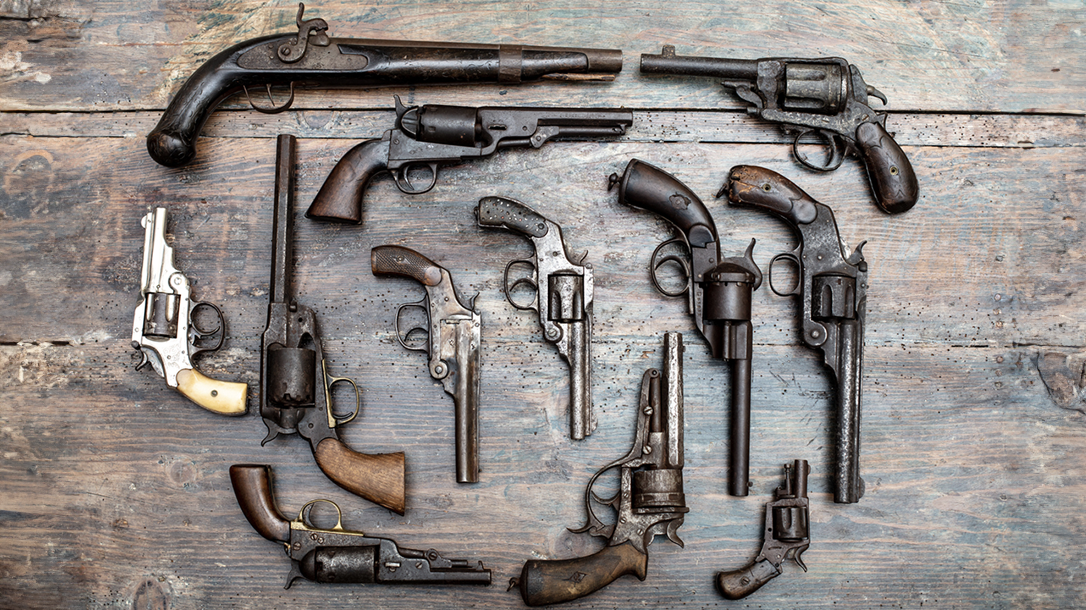
Antique guns are cherished for their historical significance, craftsmanship, and appearance. However, to classify a firearm as antique, it must meet specific criteria established by the Bureau of Alcohol, Tobacco, Firearms and Explosives (ATF). If you are interested in owning one of these historic firearms, here is what you need to know.
What Are Antique Guns?
According to the National Firearms Act and Gun Control Act, a firearm is classified as an antique firearm if it was manufactured in or before 1898. These firearms commonly use black powder, or obsolete ammunition. Many antique firearms are broadly defined as muzzle-loading or cartridge-loading designs, commonly utilizing early ignition systems such as flintlock, wheellock, percussion lock, or matchlock mechanisms.
What is a Flintlock?
A flintlock is an ignition device that operates by releasing a hammer which holds a hard piece of stone called a flint. When the hammer falls, the flint strikes a steel plate, resulting in a spark. These sparks travel through a small opening called the touch hole, igniting the gunpowder and firing a projectile. Flintlock firearms commonly use black powder as the propellant and a pure lead round ball as a projectile. This ignition system was popular in the early 16th to mid-19th century and was commonly found in muskets, rifles, and pistols.
Advertisement — Continue Reading Below
What is a Wheellock?
Wheellock firearms operate by spinning a steel wheel against a piece of pyrite, which creates sparks that pass through a small touchhole and ignite the gunpowder, firing a projectile. Thisignition system was popular from the early 16th to the 17th century and was commonly used by nobles, wealthy individuals, and cavalry units.
What is a Percussion Lock?
A percussion lock ignition system operates using a small copper cap filled with an ignition compound, commonly mercury fulminate. The cap is placed on the nipple, a hollow metal tube located at the firearm’s breech. When the trigger is pulled, the hammer will fall and strike the cap, creating a flash that travels through the nipple. This flash ignites the gunpowder, firing a projectile from the barrel.
Advertisement — Continue Reading Below
What is a Matchlock?
A matchlock ignition system operates by using a mechanical arm, called a serpentine, to lower a small burning cord, referred to as a match, into a pan of gunpowder to ignite the charge. This ignition mechanism became popular for miliary use during the 16th and 17th centuries and was commonly used in muskets.
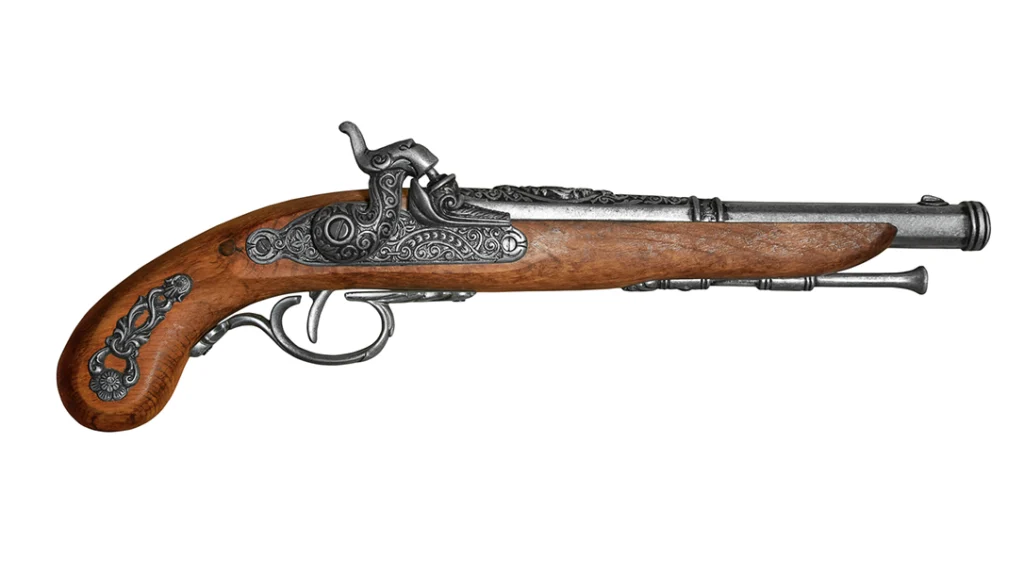
Are Replicas Considered Antique?
A replica is a duplication of a historical firearm, designed to look and feel the same as its original counterpart. Replica typically mimic firearms manufactured in or before 1898 and utilize early ignition systems. Instead of modern rimfire and centerfire ammunition, these firearms use obsolete cartridges, most often black powder. As a rule, if a firearm can be converted to use modern ammunition or is constructed with a modern frame or receiver, it is not considered an antique. Many replica guns are used for display, historical reenactment, as props, or for training purposes.
Advertisement — Continue Reading Below
Cost of Antique Guns
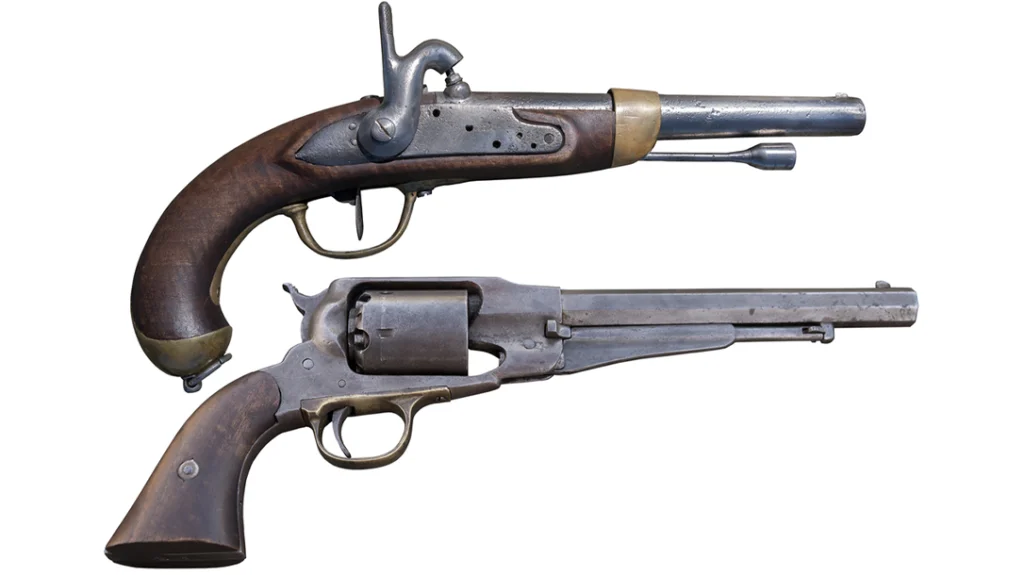
The value of antique firearms varies depending on factors such as historical significance, rarity, condition, and demand. Firearms used by historical figures or in historical conflicts tend to cost more, especially when in pristine condition. For reference, in January 2002, George Washington’s iconic saddle pistols that were gifted to him by Marquis de Lafayette were auctioned off for approximately $1,986,000. Ultimately, the cost of owning an antique gun can range anywhere from a few hundred dollars to several million.
Wrapping It Up
Overall, a firearm is considered antique if it was manufactured in or before 1898. These firearms operate using early ignition systems and primarily use black powder or ammunition that is no longer commercially available. Antique firearms are beautifully crafted and symbolize unique pieces of history, making them a valuable investment that any gun enthusiast would be thrilled to add to their collection.
Advertisement — Continue Reading Below